















Story Highlight
– 3M exposed workers to toxic firefighting foam chemicals.
– Company knew risks of PFOS/PFOA since the 1970s.
– Contamination levels in soil significantly exceed safety limits.
– Workers not informed of health risks during employment.
– 3M plans remediation and investment in water treatment technologies.
Full Story
During a recent investigation by BBC File on 4, it has come to light that numerous factory employees were exposed to hazardous chemicals contained in firefighting foam over several decades. The multi-billion-dollar American corporation, 3M, allegedly failed to inform its workers at the Swansea factory about the use of foams containing harmful “forever chemicals,” which are now recognised as potential carcinogens, despite being aware of the associated health risks for many years.
3M announced in 2002 its intention to cease manufacturing these persistent chemicals, known for their longevity in the environment, but did not entirely eliminate these substances from the factory operations. This oversight purportedly led to an environmental incident just four years later.
The Swansea facility, located in Gorseinon and operational since 1952, was one of 3M’s largest manufacturing plants outside the United States, employing over 1,000 staff members involved in the production of items such as nappy fastenings and video tapes. Following a corporate decision in 2023 to shut down the facility, 3M sought permission from local authorities to redevelop the site.
In the course of the investigation, BBC File on 4 uncovered a report regarding land contamination included among hundreds of documents submitted by 3M to the local council, revealing that the site is polluted with two toxic chemicals known as PFOS and PFOA. Interestingly, 3M did not manufacture these chemicals at the Swansea location; instead, the report attributed their presence to “historic firefighting activities” that utilised a specific type of foam known as aqueous film-forming foam (AFFF).
As part of the investigation, the BBC reached out to individuals involved in firefighting at the factory. The former workers, speaking out publicly for the first time, described their experiences. Ian, a pseudonym for one of the workers who dedicated 40 years to the plant, detailed how he and a dozen colleagues were selected annually to serve as a “fire party,” responding to emergencies much like part-time firefighters. He recounted the training sessions where they practised extinguishing chemical fires, using the company’s firefighting foam, known colloquially as “light water.” Notably, Ian mentioned that he and his colleagues were not informed about the chemicals contained within the foam they were using.
The contamination report highlighted alarming levels of PFOS found in the soil at the site, with concentrations ranging from 50 micrograms per kilogram to more than 1,500 micrograms — figures that are about 500 times higher than typical readings found in British soil. An environmental scientist from Manchester Metropolitan University, Dr David Megson, expressed his concerns regarding these elevated levels, suggesting that concentrations above 600 micrograms could pose health risks through inhalation or skin contact.
PFOS and PFOA, both members of the PFAS family of chemicals, have been linked to various adverse health effects, including damage to the liver, immune system, cardiovascular system, and potential harm to fetal development. Both substances have been banned in the UK due to their toxicity and persistence in the environment. Notably, the World Health Organization classified PFOA as carcinogenic and designated PFOS as “possibly” carcinogenic to humans in 2024.
3M’s knowledge of the health risks associated with these chemicals dates back to the 1970s. A significant civil lawsuit initiated in the US in 1999 revealed that 3M had documented elevated PFAS levels in its workers’ blood and noted potential links to cancer. Rob Bilott, a partner at Taft Law, who led that lawsuit, stated, “They understood, going back many decades, the dangers of these chemicals.” Internal studies conducted by 3M as early as the 1960s indicated significant toxicity in various animal species.
Cheryl, another former worker’s daughter who also chose to speak anonymously, shared her family’s tragic story involving her father, who worked at the factory from the 1970s. She recounted how he was diagnosed with kidney cancer in his early forties, ultimately leading to his death at the age of 54 after battling the disease. While attributing blame solely to workplace exposure is complex, research from the World Health Organization suggests a probable increased risk of kidney cancer due to significant exposure to PFOS and PFOA.
Dr Steve Hajioff, an epidemiologist chairing an independent panel investigating water contamination in Jersey caused by similar chemicals, indicated that while causation cannot always be definitively established, significant exposures to PFAS are likely linked to certain types of cancer, including kidney and testicular cancer.
Cheryl expressed frustration at 3M for not testing the blood of workers to identify potential health issues earlier, a point echoed by Ian, who lamented the lack of protective measures, as workers were not informed of any risks and wore only basic clothing while handling the foam.
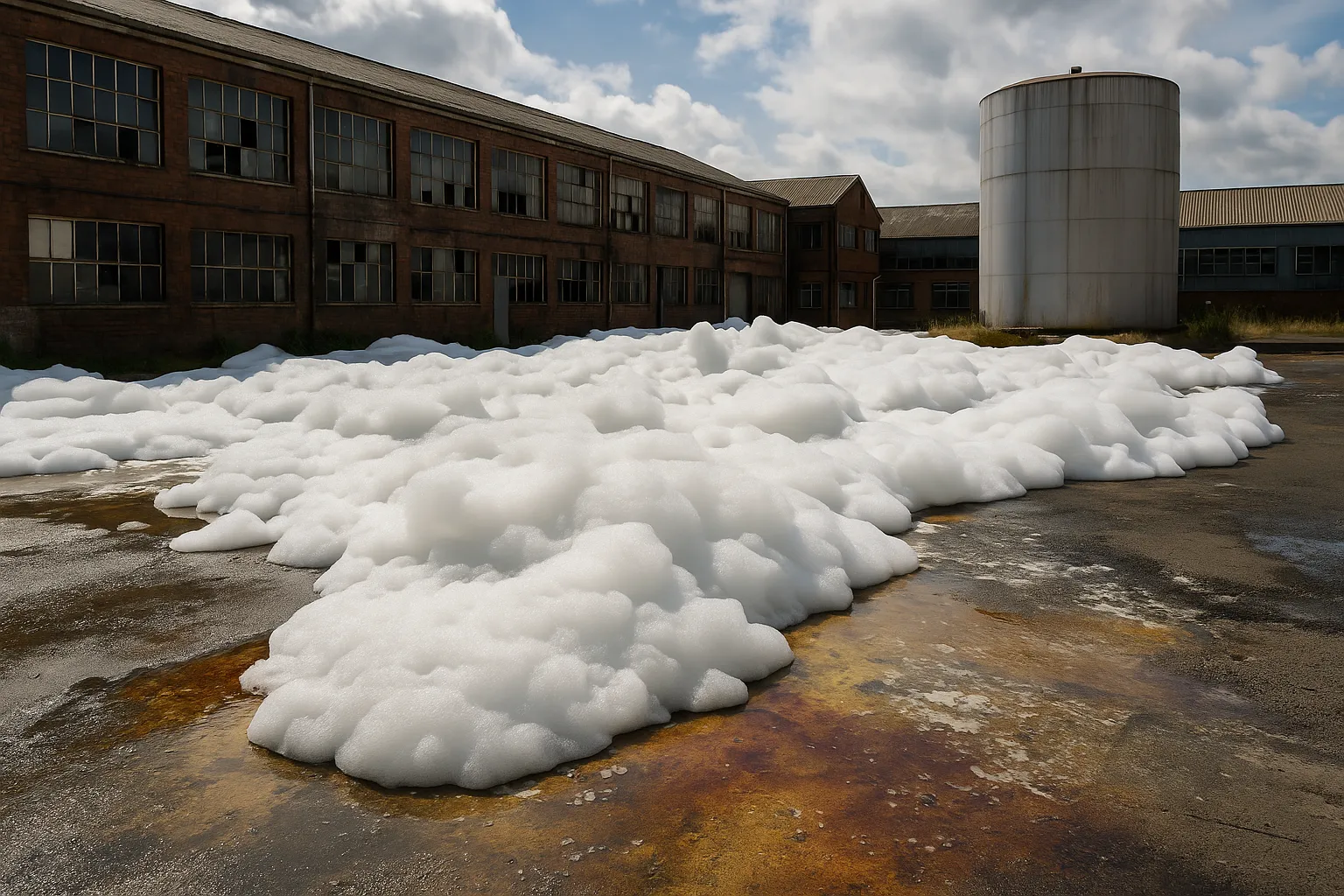
The absence of communication about potential hazards became even more concerning following a severe storm in October 2006, which caused a malfunction in the foam containment system, resulting in a significant release of contaminated material. John Bowers, the health and safety manager at the time, described the situation, noting the foam ended up being mistaken for rainwater and was subsequently pumped into an aeration pond, leading to disastrous consequences.
The level of PFOS detected in the local waterway, Afon Lliw, was over 31,000 times the thresholds deemed harmful to aquatic life. Although authorities issued warnings regarding water regulations, 3M faced no prosecution or fines for the incident. Subsequent tests showed the same aeration pond continued to harbour dangerously high PFOS levels even years later.
3M has now undertaken remediation of the pond and surrounding soil for contamination, completing these efforts in recent months. A company spokesperson reiterated that the health and safety of employees and their communities remain priority concerns and emphasised their commitment to discontinue the use of PFOS and PFOA, including a substantial global investment in water treatment technologies.
While 3M maintains that it is transparent about PFAS information, the ongoing revelation of information related to the health of workers at its Swansea facility raises significant questions about corporate responsibility in safeguarding the well-being of employees and the environment.
Our Thoughts
The incident at 3M’s Swansea factory highlights significant breaches of UK health and safety legislation, particularly the Health and Safety at Work Act 1974. The company failed to provide adequate information and training about hazardous substances, resulting in prolonged exposure to carcinogenic chemicals (PFOS and PFOA) without protective measures for workers. To prevent such incidents, 3M should have conducted regular risk assessments and communicated known risks transparently to employees, in line with the Control of Substances Hazardous to Health (COSHH) Regulations 2002. Early detection through blood testing and continuous monitoring could have mitigated health risks for employees. Moreover, the failure to remediate toxic foam properly post-2002 demonstrates non-compliance with the Environmental Protection Act 1990, contributing to land and water contamination. Training for emergency response teams should have included specific awareness of chemical hazards encountered during firefighting training. Implementing a clear and robust hazardous waste management plan combined with proactive engagement with health authorities could have significantly reduced the risks associated with using firefighting foam and facilitated timely medical interventions for affected workers. Such measures are essential in preventing similar incidents in the future.