










Confined Spaces in the UK: Safe Entry under the Confined Spaces Regulations 1997
Last updated: 7 September 2026
Author: Jade Anderson, Senior Reporter, UK-Safety.News
Reading time: about 14 minutes
What this guide covers
- Why confined spaces kill
- What counts as a confined space
- The law: the 1997 Regulations and L101
- Step 1: Risk assessment
- Step 2: The safe system of work
- Step 3: The permit to work
- Step 4: Emergency arrangements
- Training and competence
- Low, medium and high risk: the industry classification
- Case study: an unrecognised confined space
- Common mistakes
- Frequently asked questions
- Further resources
Why confined spaces kill
Confined space incidents are rare compared with falls or vehicle strikes, but they are unusually lethal and often kill more than one person at a time. HSE’s provisional figures show that 126 workers were killed in work related accidents in Great Britain in 2025/26, and the confined space deaths among them share a pattern: the space was not recognised as dangerous, nobody tested the air, and a colleague went in to help.
Oxygen deficient air has no smell, colour or warning. HSE’s Approved Code of Practice L101 notes that normal air contains 20.9% oxygen and that very low concentrations, below 16%, can lead to unconsciousness and death. Whoever follows a collapsed colleague meets the same air.
HSE’s guidance is blunt: a major cause of death and injury in confined spaces is ill conceived attempts to save others who have collapsed, and multiple fatalities have occurred when rescuers were overcome by the same conditions as the people they tried to rescue. That fact drives most of what follows.
What counts as a confined space
Regulation 1 of the Confined Spaces Regulations 1997 defines a confined space as any place, including any chamber, tank, vat, silo, pit, trench, pipe, sewer, flue, well or other similar space, in which, by virtue of its enclosed nature, there arises a reasonably foreseeable specified risk. Both parts of the test must be met:
- Is it substantially enclosed? L101 says substantially, though not always entirely. An open topped tank or deep excavation can qualify.
- Is a specified risk reasonably foreseeable? Either from what is already in the space or from the work about to be done in it.
The five specified risks
Regulation 1 lists the specified risks, each to a person at work, as a risk of:
- serious injury arising from a fire or explosion;
- loss of consciousness arising from an increase in body temperature;
- loss of consciousness or asphyxiation arising from gas, fume, vapour or the lack of oxygen;
- drowning arising from an increase in the level of a liquid;
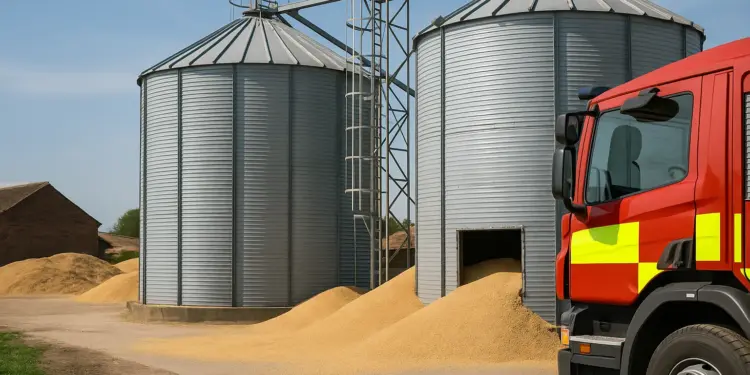
- asphyxiation arising from a free flowing solid, or being unable to reach a respirable environment because of entrapment by a free flowing solid.
A “free flowing solid” includes flour, grain, sugar and sand. Falls, machinery and electricity are real hazards inside confined spaces, but on their own they do not make a place a confined space in law.
Spaces that are easy to miss
L101 stresses that a place not usually thought of as a confined space can become one when conditions inside change: welding that consumes oxygen, or a spray booth during paint spraying.
| Obvious confined spaces | Less obvious spaces that can qualify |
|---|---|
| Storage tanks, vats and process vessels | Manholes and drainage chambers being cleared of a blockage |
| Sewers, culverts and tunnels | Deep or poorly ventilated excavations and trenches |
| Silos, hoppers and grain bins | Freight containers and vehicle or machine interiors |
| Boilers, flues, chimneys and combustion chambers | Building voids, ceiling and floor voids, and ductwork |
| Wells, pits, interceptors and ships’ ballast tanks | Plant rooms and unventilated rooms where solvents, refrigerants or inert gases may accumulate; asbestos enclosures and spray booths in use |
Ask the two part question about every enclosed area on site.
The law: the 1997 Regulations and L101
The Confined Spaces Regulations 1997 apply across Great Britain under the Health and Safety at Work etc. Act 1974. HSE’s Approved Code of Practice and guidance is L101, Safe work in confined spaces (third edition, 2014). If you are prosecuted and did not follow the ACOP, you must show you complied with the law in another equally effective way. The free leaflet INDG258 is a short summary for workers and supervisors.
Who has duties
Regulation 3 places the duty on every employer for work by their employees and, so far as is reasonably practicable, for work by others where the matters are within the employer’s control. Self employed people carry the same duty. So the client who owns the tank and the contractor who sends people into it both have duties; our guide to managing contractors under CDM 2015 covers splitting those responsibilities in writing. Regulation 2 disapplies the regulations for normal shipboard activities by a ship’s crew, for any place below ground in a mine, and for diving operations covered by the diving regulations.
The three duties
| Regulation | Duty | What it means on the ground |
|---|---|---|
| Regulation 4(1) | No entry to carry out work for any purpose unless it is not reasonably practicable to achieve that purpose without entry | Avoid entry: clean from outside, inspect with cameras, redesign the plant so nobody needs to go in |
| Regulation 4(2) | Where entry is unavoidable, nobody enters, works in or leaves the space other than in accordance with a system of work that renders the work safe and without risks to health, so far as is reasonably practicable | A written safe system of work built from the risk assessment, normally run through a permit to work |
| Regulation 5 | No entry unless suitable and sufficient arrangements for the rescue of persons in an emergency have been prepared | Rescue equipment, trained rescuers and resuscitation equipment ready before the first person goes in |
The Management of Health and Safety at Work Regulations 1999 require the risk assessment that decides whether a space is confined at all.
Step 1: Risk assessment
The risk assessment decides whether the space meets the legal definition and, if so, which precautions the safe system of work must contain. It should be done by someone competent in confined space hazards and be specific to this space and task. Drawing on the factors in L101, it needs to answer:
- What has the space held before? Scale, sludge and rust can release gas or absorb oxygen when disturbed.
- What can get in from outside? Adjacent plant, connected pipework, groundwater, contaminated land, or heavier than air gases.
- What will the oxygen level be? Anything differing significantly from the normal 20.9%: depletion from rusting, biological activity, inert gas purging or combustion, or enrichment from leaking oxygen lines.
- What are the physical dimensions? The opening, the internal layout, and whether an unconscious casualty could be lifted out.
- What will the work itself introduce? Cleaning chemicals, welding fume and heat, solvent vapours, engine exhaust or dust.
- Could liquid or solid flow in? Valves, storm drains, pumps that can restart, and stored product that can bridge and collapse.
- Could the temperature rise? Hot plant, steam lines, and exertion in PPE with poor ventilation.
Record the assessment, the controls and who decided them. If the job could be done from outside, say so and do not enter.
Step 2: The safe system of work
L101 lists the elements a safe system of work may need to cover, from supervision and competence through atmospheric testing, purging, ventilation, isolation, equipment, PPE and RPE, access and egress, fire prevention, lighting and static to emergencies and limited working time. The risk assessment decides which apply.
Supervision, competence and communications
Appoint a competent person to supervise the entry with authority to stop it; for higher risk entries that person stays at the entry point and does nothing else. Everyone involved must be trained for their role and, where breathing apparatus or heavy exertion is involved, fit for it. Agree how entrant and attendant will communicate: voice, tugs on a lifeline, radio or intrinsically safe intercom all work, but the method must be tested before entry and must survive the entrant losing consciousness.
Atmospheric testing and monitoring
Test from outside before anyone enters, using a calibrated and bump tested detector on a sampling line or pole. L101 specifies the order: oxygen first, then flammable gases, then toxic gases, vapours and dusts. Sample at several heights because gases stratify: methane rises, carbon dioxide and hydrogen sulphide sink. Where the atmosphere could change during the work, each entrant carries a personal detector with alarms set to the levels your risk assessment and the manufacturer require. Record every reading on the permit.
Ventilation and purging
Mechanical ventilation, with the fan inlet away from exhausts, dilutes contaminants and replaces oxygen. Inert gas purging leaves air that will not support life, so ventilate and retest afterwards. Never use oxygen to “sweeten” the air.
Isolation and residues
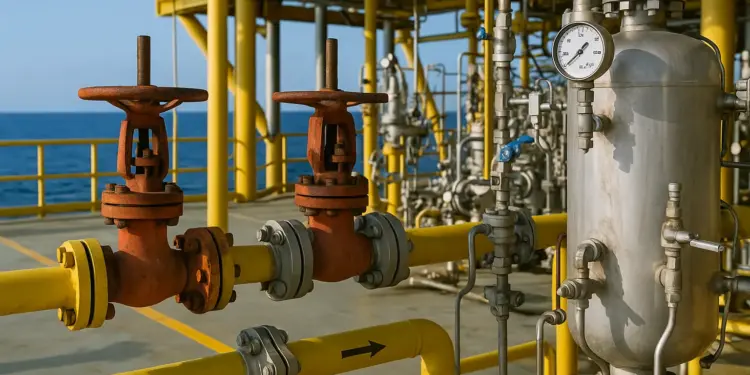
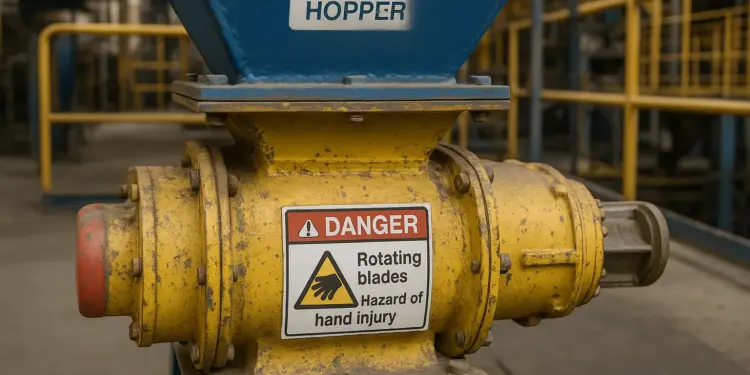
Isolate every pipeline that could admit gas, liquid or solid by disconnection or blanking, not a closed valve alone. Lock off agitators, pumps, conveyors and screw feeders; our lock out tag out guide covers the mechanics. Where sludge or product remains, decide whether it can be removed from outside and how disturbing it will change the atmosphere.
Equipment, PPE and RPE
Use non sparking tools, protected lighting and low voltage equipment where flammable vapour is possible. Where the atmosphere cannot be made safe, breathing apparatus is mandatory; a filtering respirator does nothing about missing oxygen. A harness and lifeline on a rescue winch allow recovery without a second person entering. Gas cylinders and engines stay outside.
Access, egress, fire and time
The opening must allow a person in full equipment to get in and, more importantly, to be lifted out unconscious. Control ignition sources, remove unnecessary flammables, ban smoking and consider static. L101 notes that working time may need to be limited where RPE is used, in extreme heat or humidity, or where movement is severely restricted. Write the limit on the permit.
Step 3: The permit to work
L101 says a permit to work system is usually required where there is a reasonably foreseeable risk of serious injury in entering or working in the confined space. The permit is the formal record that every element of the safe system has been checked and authorised before entry, and that the space has been handed back afterwards. It should record:
- the space, the work to be done and the hazards identified;
- the isolations made, cross referenced to lock off tags;
- atmospheric test results with time, position, instrument and tester;
- precautions required: ventilation, RPE, lighting, communications, standby person;
- everyone authorised to enter, the person in charge, and the time limits;
- the rescue arrangements and where the equipment is;
- signatures for authorisation, acceptance, hand back and cancellation.
Keep an entry log at the opening showing who is inside. A permit that never reaches the site is paper, not a control.
Step 4: Emergency arrangements
Regulation 5 requires suitable and sufficient rescue arrangements before anyone enters, and L101 is explicit that reliance on the public emergency services alone will not be sufficient to comply. The first minutes belong to you. L101 lists what the arrangements should cover: rescue and resuscitation equipment; raising the alarm and rescue; safeguarding the rescuers; fire safety; control of plant; first aid; public emergency services; and training.
Rescue equipment
A tripod and winch or davit at the opening, with the entrant in a harness on the line, is the standard arrangement for vertical entries because it allows recovery without a second person entering. Where a rescuer must go in, they need breathing apparatus, a lifeline and a second attendant, all at the entry point.
Resuscitation and first aid
Regulation 5 requires resuscitation equipment where resuscitation is a likely consequence of a relevant specified risk: in practice oxygen resuscitation equipment, often a defibrillator, and people trained to use them.
Raising the alarm, and never rushing in
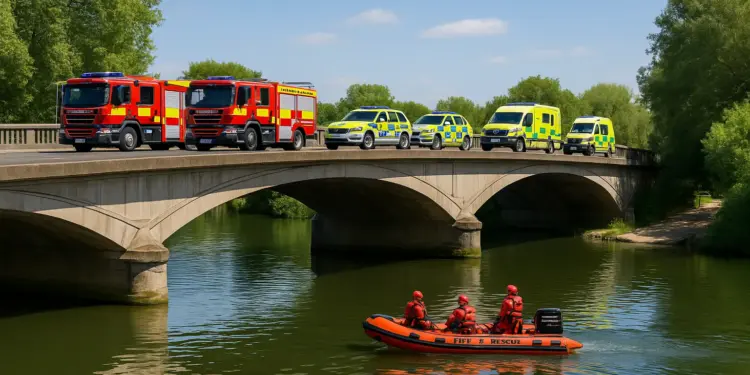
Decide in advance who calls 999, where the crew will be met and how they will reach the space. Have a way of shutting down adjacent plant. Brief every attendant that if the entrant collapses their job is to raise the alarm, start the winch and keep everyone else out; HSE’s guidance states that you should not enter a confined space without ensuring you will not also be affected. Rehearse the rescue on the actual space before the first entry, and time it.
Training and competence
L101 states that workers must have adequate training and experience in the particular work involved to be competent to work safely in a confined space, and that training standards must be appropriate to the task and to the individual’s roles and responsibilities. The regulations do not name a qualification.
In practice, City and Guilds confined space units and the water industry’s training schemes are widely used as evidence of competence and follow the low, medium and high risk classification described below. Treat these as context, not a legal requirement: a certificate shows a person has been trained; the employer still decides whether they are competent for this space and task.
Train for the role. Entrants need to recognise hazards, use the detector and RPE, follow the permit and self rescue where possible. Attendants need to monitor continuously, operate the winch, raise the alarm and refuse to enter. Entry supervisors verify isolations and test results and authorise, cancel or stop the work. Rescue teams need realistic practice with breathing apparatus and resuscitation equipment. Practical skills decay quickly, so annual refreshers are the norm for higher risk roles.
Low, medium and high risk: the industry classification
The 1997 Regulations and L101 do not classify confined spaces into risk bands. Much of UK industry, led by the water sector, uses a three level classification to match precautions and training to the space. It is useful provided everyone understands it is industry practice rather than law, and that the risk assessment for the specific entry overrides the label.
| Industry class | Typical description | Typical controls |
|---|---|---|
| Low risk | Shallow entry, adequate ventilation, easy access and egress, no likely change in atmosphere | Gas testing, a top person, simple communications, escape by walking or climbing out |
| Medium risk | Vertical or restricted entry, a controllable specified risk, a realistic chance the atmosphere could change | Continuous monitoring, harness and lifeline on a winch, escape breathing apparatus, permit to work, dedicated top person |
| High risk | Atmosphere that is or may become unsafe, long or complex routes, or work that itself creates a specified risk | Working breathing apparatus, rescue team at the entry point, formal permit with time limits, continuous monitoring and communications |
The common misuse is to label a space “low risk” once and never revisit it. A drainage chamber that is low risk on a dry day is not low risk after a week of decomposing sewage.
Case study: an unrecognised confined space
On 1 February 2022 an estates worker at Kettering General Hospital was unblocking a drain in a manhole when he lost consciousness. He was found by colleagues and rescued by Northamptonshire Fire and Rescue Service. He was treated in hospital for acute sulphate intoxication and suffered a traumatic brain injury, with lasting memory loss and nerve damage.
HSE found that the trust had not identified the manhole as a confined space, had not carried out a suitable risk assessment, had no safe system of work for clearing drains, and had given the estates team no confined space training or adequate instruction on the method, risks and precautions.
On 9 January 2024 at Wellingborough Magistrates’ Court, Kettering General Hospital NHS Foundation Trust pleaded guilty to breaching section 2(1) of the Health and Safety at Work etc. Act 1974 and was fined £480,000 with £4,286.15 in costs. The HSE inspector said the manhole should have been identified as a confined space and risk assessed accordingly.
The employer was a hospital, the task was routine maintenance, and the space was a manhole, the least dramatic item on the regulation 1 list. Every element of this guide would have been triggered by asking the two part question at the top of it.
Common mistakes
- Not recognising the space. The manhole, the void, the container, the plant room.
- Skipping the “avoid entry” step. Cameras, long reach tools and remote cleaning have removed the need for many entries that still happen out of habit.
- Testing once, at the top. A reading at the opening says nothing about the bottom of a shaft.
- Trusting a closed valve. Valves pass and get opened by people who did not know about the entry.
- Relying on 999 as the rescue plan. L101 says this is not sufficient.
- An attendant who wanders off, or goes in. Brief them that entering is forbidden and explain why.
- Forgetting the work itself. Hot work, solvent cleaning or a running engine can make a safe space lethal within minutes.
A confined space injury involving loss of consciousness, resuscitation or hospital admission is likely to be reportable; see our guide to understanding RIDDOR.
Frequently asked questions
Is a trench or excavation a confined space?
It can be. L101 lists excavations among the places that may be confined spaces. If there is a foreseeable risk of oxygen depletion, gas from contaminated ground or a nearby main, or flooding, it meets the definition.
Do we need a permit to work for every confined space entry?
The regulations require a safe system of work, not a permit as such, but L101 says a permit is usually required where there is a reasonably foreseeable risk of serious injury. For a genuinely low risk space a documented procedure and entry log may be enough, if the risk assessment justifies it.
What oxygen level is safe?
L101 gives normal air as 20.9% oxygen and warns that very low concentrations, below 16%, can lead to unconsciousness and death. Any significant departure from normal, in either direction, needs explaining before entry. Set detector alarms in line with your risk assessment and the manufacturer’s guidance, and treat any alarm as an instruction to leave.
Can the attendant go in to help if the entrant collapses?
Not unless they are equipped, trained and part of a planned rescue with breathing apparatus and a backup. The attendant raises the alarm, operates the winch and keeps others out.
Do the regulations apply to the self employed and to contractors on our site?
Yes. Regulation 3 places duties on employers for their own employees and, so far as is reasonably practicable, for others under their control, and on self employed people. Client and contractor should agree in writing who does what.
Further resources
- HSE: Confined spaces topic pages
- HSE: L101 Safe work in confined spaces, Approved Code of Practice and guidance
- HSE: INDG258 Confined spaces, a brief guide to working safely
- legislation.gov.uk: The Confined Spaces Regulations 1997
- HSE press release: Kettering manhole prosecution
- UK-Safety.News: Lock out tag out
- UK-Safety.News: Managing contractors under CDM 2015
This guide is general information for Great Britain and is not legal advice. Check the current HSE guidance before acting on a specific case.
About the author: Jade Anderson specialises in turning regulations into practical steps for supervisors and safety leads.