Tragedy of heatstroke highlights urgent need for athlete safety reforms
In a tragic incident that underscores the critical need for improved athlete safety protocols, Arizona State University hockey player Matthew...
Read moreDetailsIn a tragic incident that underscores the critical need for improved athlete safety protocols, Arizona State University hockey player Matthew...
Read moreDetails




Last updated: 7 September 2026
Author: Jade Anderson, Senior Reporter, UK-Safety.News
Reading time: about 15 minutes

The gap between what happens and what gets reported is large. In 2024/25 the Labour Force Survey estimated that around 680,000 working people in Great Britain were injured at work, yet only 59,219 injuries to employees were reported under RIDDOR. Some of that gap is legitimate (most minor injuries are not reportable), but a good deal of it is under reporting, and every unreported incident is a lesson the organisation never learns.
Reporting does three jobs at once:
This guide walks the full pathway from the moment something happens to the point where the lesson is embedded. It is written for supervisors, managers and anyone who has been handed responsibility for health and safety alongside their day job.
The word “incident” covers more than injuries. A useful internal system captures all of the following, whether or not they turn out to be legally reportable.
| Type | What it means | Example |
|---|---|---|
| Accident | An unplanned event that caused injury, ill health or damage | A worker slips on a wet floor and fractures a wrist |
| Near miss | An unplanned event that did not cause harm but could have | A pallet falls from racking into an empty aisle |
| Dangerous occurrence | A specified high potential event listed in Schedule 2 of RIDDOR, reportable even if nobody was hurt | A crane overturns, or scaffolding more than five metres high collapses |
| Occupational disease | Ill health caused or made worse by work, diagnosed by a doctor | Occupational dermatitis from handling cleaning chemicals |
| Work related violence | Physical assault connected with work | A customer strikes a shop worker who is then off for more than seven days |
| Damage only | Property or equipment damage with no injury | A forklift strikes a fire door |
| Unsafe condition or act | A hazard spotted before any event | A missing machine guard, or a trailing cable across a walkway |
Treat the last three categories seriously. They are cheap to report and the information they contain is exactly what a good safety programme runs on.
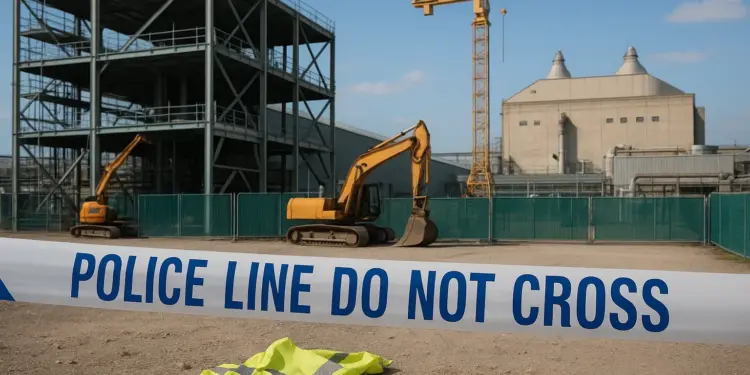
The first hour after an incident sets the tone for everything that follows. The priorities, in order, are people, safety of the area, then evidence. Nothing about reporting or paperwork should ever delay first aid or an emergency call.
Every incident, however minor, should be recorded internally on the day it happens. This is separate from, and much broader than, RIDDOR reporting.
Under the Social Security (Claims and Payments) Regulations 1979, employers with ten or more employees, and the owners of mines, quarries and factories, must keep an accident book. Smaller employers are not legally obliged to, but should, because a record made on the day is worth far more than a reconstruction made months later when a claim arrives.
The traditional format is the HSE’s BI 510 book, though an electronic system is equally acceptable provided it captures the same information and protects personal data. Because the record contains health information, each entry must be kept confidential: the tear out pages of a paper book exist for that reason, and a shared spreadsheet that every employee can open is not compliant.
That last point matters. An injury that looks minor on day one becomes reportable if the worker is still unable to do their normal job more than seven days later, so someone needs to own the follow up.
The single biggest determinant of whether people report is how much friction is involved. A QR code on the notice board that opens a two minute form on a phone will capture ten times more near misses than a paper form in the site office. Whatever you use, make sure it can be completed by someone who is stressed, wearing gloves, or not confident with written English.

RIDDOR is where most organisations go wrong, usually by reporting too little, occasionally by reporting things that do not need to be reported. The regulations require the responsible person to report the following categories to the enforcing authority (HSE, or the local authority for premises such as shops, offices, warehouses and hospitality).
The death of any person, worker or not, as a result of a work related accident. Deaths from natural causes, suicide, or where the person was the driver of a vehicle on a public road are generally excluded.
Any other injury to a worker that leaves them unable to perform their normal duties for more than seven consecutive days, not counting the day of the accident but including weekends, rest days and days they would not normally have worked. HSE refers to these as “over-7-day” injuries. Note that “unable to perform normal duties” includes light duties: if the worker is in but cannot do their usual job, the days count.
An accident that injures a member of the public, a visitor or anyone else not at work is reportable if the person is taken directly from the scene to hospital for treatment. Precautionary examinations and diagnostic tests do not count as treatment. This category catches a lot of retail, leisure and education incidents.
When a doctor has diagnosed one of the following and the worker’s job involves the relevant activity: carpal tunnel syndrome, cramp of the hand or forearm, occupational dermatitis, hand arm vibration syndrome, occupational asthma, and tendonitis or tenosynovitis of the hand or forearm. Occupational cancers and diseases caused by exposure to biological agents are also reportable.
Schedule 2 of RIDDOR lists specified near miss events that must be reported whether or not anyone was hurt. Common examples include the collapse, overturning or failure of lifting equipment; the failure of a pressure system; accidental contact with an overhead power line; an electrical short circuit causing fire or explosion; the unintentional collapse of a structure, scaffold or wall; the accidental release of a substance that could cause injury; and any fire or explosion that stops normal work for more than 24 hours. Read the full list once and keep it to hand; most organisations only ever encounter a handful of the categories.
Gas Safe registered engineers must report dangerous gas fittings they discover, and gas suppliers must report deaths, loss of consciousness or hospital treatment linked to gas.

| Incident | Deadline | How |
|---|---|---|
| Death or specified injury to a worker | Notify without delay, and submit the report within 10 days | Telephone HSE on 0345 300 9923 (office hours), then complete the online form |
| Non worker taken to hospital | Within 10 days | Online form |
| Dangerous occurrence | Within 10 days | Online form (telephone if serious) |
| Over seven day injury | Within 15 days of the accident | Online form |
| Occupational disease | As soon as the responsible person receives the written diagnosis | Online form |
For an injury to an employee it is their employer. For a self employed person injured on someone else’s premises it is the person in control of the premises. For members of the public it is the person in control of the premises where the accident happened. Where a self employed person is injured on their own premises, they (or someone acting for them) must report. On shared sites, agree in advance who reports what, and write it into the contract.
Reports go through HSE’s online RIDDOR forms at hse.gov.uk/riddor. There are separate forms for injuries, dangerous occurrences, diseases and gas incidents. You will receive a copy by email; file it with your internal investigation. The telephone service exists only for fatal and specified injuries, and for other situations that are too serious to wait for a form.
Keep a record of every RIDDOR report, and of every injury that kept a worker off normal duties for more than three consecutive days (these “over three day” injuries are recordable but not reportable), for at least three years. The accident book entry is sufficient provided it holds the required detail.
An investigation is not a search for someone to blame. It is a search for the reasons the organisation’s controls failed, so that they can be fixed. HSE’s guidance HSG245, Investigating Accidents and Incidents, sets out a four step approach that works for everything from a near miss to a fatality.
| Level | When | Who | Typical output |
|---|---|---|---|
| Minimal | Minor injury or near miss with low potential | Line supervisor | Accident book entry and a short note of the fix |
| Low | Injury with time off, or a near miss with moderate potential | Supervisor and a safety representative | One page report with causes and actions |
| Medium | RIDDOR reportable injury, or a near miss with serious potential | Manager, safety adviser, worker representative | Full report with evidence pack and action plan |
| High | Fatality, multiple injuries, major dangerous occurrence | Senior management led team, often with external specialists and legal advice | Formal report to the board, with regulator liaison |
The test for a near miss is potential, not outcome. A scaffold clip falling into an empty walkway deserves the same attention as one that hits someone.
Five Whys is the simplest root cause tool and is good enough for most incidents. Start with the event and ask why it happened; then ask why of that answer, and keep going until you reach something the organisation can change. A worked example:
The fix is a defect reporting system, not a wet floor sign.
The evidence pack should contain: photographs and sketches; the accident book entry; witness statements; the relevant risk assessment and method statement; permits to work; training and competence records for those involved; maintenance and inspection records for any equipment; CCTV or telematics; and copies of any RIDDOR reports. Keep it together, indexed, and in a form that could be handed to an inspector, an insurer or a solicitor at short notice.
Classify causes under human factors, equipment, environment, process, and management or organisational factors. Over time, this classification tells you where to spend your effort.
The value of an investigation is realised only when its actions are complete and its lessons have changed behaviour. Too many organisations have a filing cabinet full of well written reports and an unchanged accident rate.
Keep a single corrective action log for the whole organisation, reviewed at every management meeting. Report on the number of overdue actions by owner; it is remarkable how quickly they close once a name appears on a slide.
Review the risk assessment and method statement for the task. Change the induction if the incident involved a new starter. Check whether the same hazard exists elsewhere on site or at other sites. Confirm that any changed control is actually being used a month later; a new guard that has been removed is worse than no guard, because the risk assessment now says it is there.
Useful indicators include the ratio of near miss reports to injuries (a rising ratio usually means a healthier reporting culture, not a more dangerous site), the average time to close actions, the proportion of RIDDOR reports submitted inside the deadline, and the percentage of investigations that identified a root cause rather than stopping at “operator error”.

Near misses are free lessons. The same failure that produced an empty aisle today produces a crushed foot next month. Yet in most organisations they are the least reported category, because nobody was hurt, the paperwork seems disproportionate and people worry about looking careless.
What works:
Remember that some near misses are dangerous occurrences under RIDDOR and must be reported to HSE regardless of outcome. When in doubt, check Schedule 2.
The contractor’s employer reports injuries to their own employees, even on your site. You report injuries to your own staff and to any member of the public. For self employed contractors injured on your premises, you are the responsible person. Agree the arrangement in the contract, make sure the contractor’s incidents reach your system as well as theirs, and never let a contractor’s poor reporting hide risks in your workplace. See our guide to managing contractors under CDM 2015.
An agency worker is usually treated as an employee of the business that controls their work for RIDDOR purposes, so the host employer reports. Confirm this in writing with the agency.
Reportable if taken from the scene to hospital for treatment. Record every incident involving a non worker in any case, because these are the ones most likely to generate a claim.
Build reporting into the check in process. A lone worker who is injured needs a way of raising the alarm, and a way of reporting a near miss the same day rather than at the end of the week.
Most are not reportable under RIDDOR because they are covered by road traffic law, with exceptions for incidents involving loading and unloading, work on or alongside the road, and escaped substances or loads. They should still be recorded and investigated internally.
Physical injury caused by work related violence is reportable on the same basis as any other injury. Threats and verbal abuse are not RIDDOR reportable but should be recorded, because they predict physical incidents.
Stress and mental ill health are not reportable under RIDDOR, but a system that records work related stress absences as incidents gives management data it would not otherwise have.
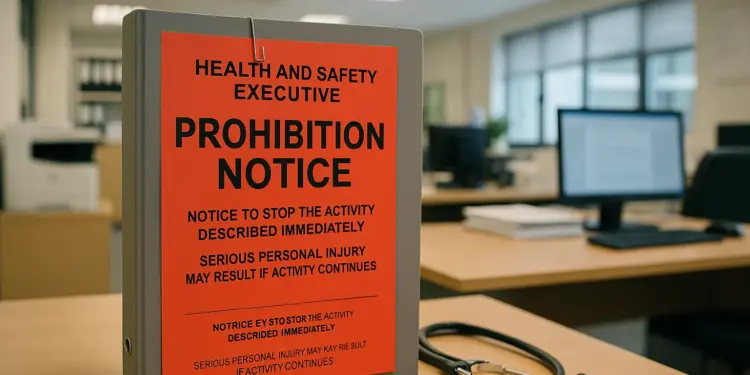
Failing to report a reportable incident is a criminal offence under RIDDOR and the Health and Safety at Work etc. Act 1974. In practice, the consequences arrive in several forms:
None of this should drive defensive reporting. Organisations with good reporting cultures tend to report more, not less, and regulators know it.
The following editable documents cover the pathway described above. They are deliberately simple so that they can be adapted to your own system.
Find these and other templates on our Useful Documents page.
Not on that basis alone. For workers, reportability depends on the type of injury (the specified injuries list) or the length of absence (more than seven days), not on whether they attended hospital. The hospital treatment test applies only to people who are not at work.
Start from the day after the accident and count every calendar day, including weekends, rest days and holidays. If the worker is unable to do their normal duties on the eighth day, the injury is reportable and the report is due within 15 days of the accident. A worker who comes in on light duties is still counted as incapacitated.
If they were working on premises you control, you do. If they were injured on their own premises, they or someone on their behalf must report.
The accident book requirement applies to employers with ten or more employees, so there is no legal duty. Keep one anyway. RIDDOR applies to you regardless of size.
Yes, and you should. A late report is far better than no report, and the online form allows you to explain the delay. Record the reason for the delay in your own investigation file.
Only if it falls within one of the dangerous occurrence categories in Schedule 2 of RIDDOR, such as lifting equipment failure, scaffold collapse, contact with overhead lines, or the release of a dangerous substance. All other near misses are internal, but no less important.
Entries contain personal and health data and must be kept confidential. Completed pages should be removed and stored securely, with access limited to those who need it for investigation, claims or regulatory purposes. The injured person is entitled to a copy of their own entry.
This guide is general information for Great Britain and is not legal advice. Northern Ireland has its own RIDDOR regulations, administered by HSENI, with similar but not identical requirements. Check the current HSE guidance before acting on a specific case.
About the author: Jade Anderson specialises in turning reporting rules into practical steps for supervisors and safety leads.

Copyright © 2026 UK Safety News