













Fire Risk Assessment: Meeting the Regulatory Reform (Fire Safety) Order
Last updated: 8 September 2026
Author: Jade Anderson, Senior Reporter, UK-Safety.News
Reading time: about 12 minutes
What this guide covers
- Why fire risk assessment matters
- The law and what changed from 2021 to 2023
- Who is the responsible person
- The five step fire risk assessment
- Fire hazards and ignition sources
- People at risk and PEEPs
- The fire precautions
- Maintenance and testing frequencies
- Drills, training and fire marshals
- When to review
- Enforcement and penalties
- Case study
- Common mistakes
- Frequently asked questions
- Further resources
Why fire risk assessment matters
Fire is rare in any single workplace, which is why it often gets neglected. However, Home Office statistics show that fire and rescue services in England attended 13,134 fires in buildings other than dwellings in the year ending March 2025. Behind each one, moreover, is a business that lost stock, trading days or, in the worst cases, people.
A fire risk assessment is not a form to be filed. Instead, it is how you work out how a fire could start, who it would hurt, and whether your alarms, escape routes, doors and training would actually get everyone out.
The law and what changed from 2021 to 2023
The Regulatory Reform (Fire Safety) Order 2005
The Fire Safety Order (FSO) is the main fire safety law for England and Wales. In practice, it applies to virtually all non domestic premises: workplaces, shops, offices, factories, warehouses, hotels, care homes, schools, places of worship, and the common parts of blocks of flats and houses in multiple occupation. However, private homes are outside it apart from those shared areas.
Article 9 requires the responsible person to make “a suitable and sufficient assessment of the risks to which relevant persons are exposed” in order to identify the general fire precautions needed. Articles 11 to 22 set out the precautions themselves.
Similarly, Scotland has equivalent duties under the Fire (Scotland) Act 2005 and Northern Ireland under the Fire and Rescue Services (Northern Ireland) Order 2006, so the method below works in all three.
The Fire Safety Act 2021 and the 2022 Regulations
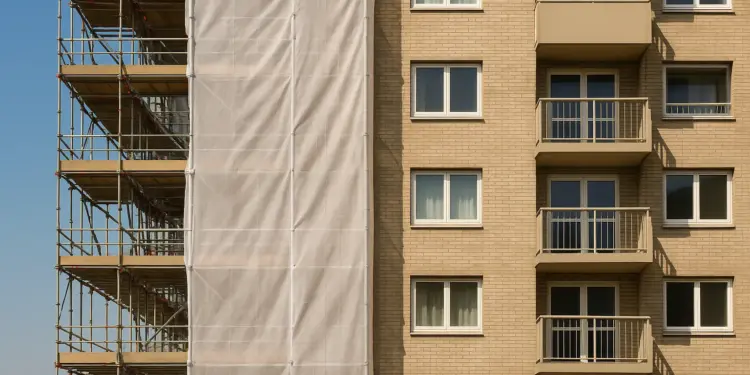
After Grenfell, the Fire Safety Act 2021 confirmed that in any building with two or more sets of domestic premises the Order covers the structure, the external walls (including cladding and balconies) and flat entrance doors. The Fire Safety (England) Regulations 2022, in force from 23 January 2023, added routine fire door checks in blocks over 11 metres and monthly equipment checks in blocks of at least 18 metres or seven storeys.
Section 156 of the Building Safety Act 2022: the changes from 1 October 2023
This is the change that affects the most businesses. From 1 October 2023, four duties stand out.
- Every fire risk assessment must be recorded in full. Previously a record was only required with five or more employees, a licence or an alterations notice.
- Record the name and organisation of anyone you appoint to help.
Article 9(6) now requires that record “as soon as practicable after the assessment is made or reviewed”, covering all findings, the measures taken or to be taken, and any group especially at risk. Separately, fire safety arrangements under article 11 must be recorded too.
- Find and cooperate with other responsible persons. Identify them, exchange names and UK addresses, agree in writing who is responsible for what, and make sure your measures do not undermine theirs. In a higher risk residential building, cooperate with the “accountable person” too.
- Inform residents of any building with two or more sets of domestic premises about the risks identified, the fire safety measures and means of escape, and your name and UK address.
Finally, section 156 requires anyone appointed to assist to be competent; the government has said this element will be commenced later. Even so, courts already expect it.
Who is the responsible person
Article 3 defines the responsible person in a workplace as “the employer, if the workplace is to any extent under his control”. Elsewhere it is the person in control of the premises in connection with a trade, business or other undertaking, or otherwise the owner. In addition, government guidance names “anyone else with control of the premises, for example a facilities manager, building manager, managing agent or risk assessor”. So where there are several, you must “work together to meet your responsibilities”.
| Situation | Responsible person | Shared duties to agree |
|---|---|---|
| Single occupier in its own building | The employer | Contractors must be told the arrangements |
| Tenant in a multi let office or estate | Tenant for the let area; landlord or agent for common parts, structure and shared systems | Alarm interfaces, escape through shared areas, joint drills |
| Block of flats or HMO common parts | Landlord, freeholder or managing agent | Structure, external walls and flat doors; information to residents |
Article 18 requires you to appoint competent help if the competence is not in house. However, that does not transfer the duty: you remain liable for the assessment and must record the assessor’s name.
The five step fire risk assessment
Step 1: Identify the fire hazards
First, walk every part of the premises, including plant rooms, roof voids, yards and bin stores, looking for ignition, fuel and oxygen. In particular, look at how the building is actually used, and also talk to cleaners and night staff, who see it when managers do not.
Step 2: Identify people at risk
List everyone who could be present on each shift, then identify who would find it hardest to escape.
Step 3: Evaluate, remove, reduce and protect
For each hazard ask whether it can be removed, then reduced, then whether the residual risk is controlled. Next, test whether the existing precautions (detection, warning, escape routes, compartmentation, emergency lighting, signs, extinguishers, training) are adequate for the people at risk. Finally, record each shortfall as an action with an owner and a date.
Step 4: Record, plan, inform, instruct and train
Write the findings down in full, prepare an emergency plan that says what people do when the alarm sounds, tell staff about the risks and the plan, and train them.
Step 5: Review
Revise the assessment after significant change and diarise the next scheduled review (see the review triggers below).
What a compliant record looks like
Since October 2023 a bare “significant findings” sheet is not enough. Therefore a defensible record contains: the premises and their use; the date and assessor; the hazards; the people at risk, including groups especially at risk; each precaution and an evaluation of it; the action plan with owners and dates; the emergency plan; the fire safety arrangements; training and drill records; and the review date.
Fire hazards and ignition sources
Cross reference your COSHH assessments for flammable substances, which also fall under DSEAR 2002.
| Ignition source | Where it turns up | Typical controls |
|---|---|---|
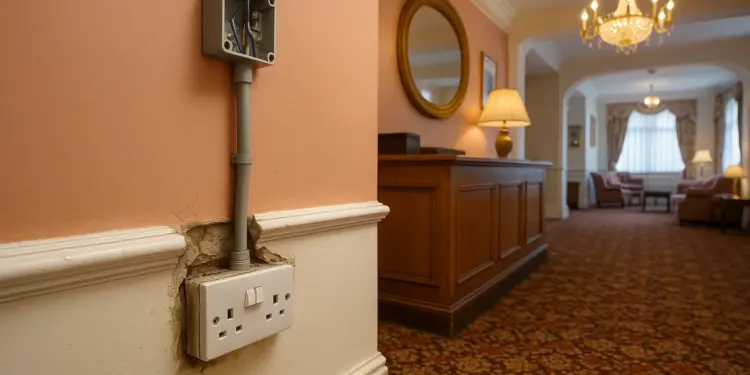
| Electrical faults and overloading | Extension leads, damaged cables, old distribution boards | Fixed wiring inspection, portable appliance checks, no daisy chained adaptors |
| Lithium ion batteries | E bikes and scooters, power tools, forklift and pallet truck chargers | Designated charging area away from escape routes, manufacturer chargers, damaged batteries quarantined |
| Hot work | Welding, grinding, torch applied roofing | Permit to work, combustibles removed, fire watch during and for an hour after |
| Cooking | Kitchens, staff rooms | Extract duct cleaning schedule, suppression where appropriate, never left unattended |
| Flammable liquids, gases and dusts | Paints, solvents, LPG, aerosols, wood dust | Minimum quantities, proper cabinets and stores, ventilation, DSEAR assessment |
Fuel, however, matters as much as ignition. In fact, housekeeping is the cheapest fire precaution you have.
People at risk and PEEPs
The Order protects “relevant persons”: anyone lawfully on the premises and anyone nearby who could be affected. Article 9(7) requires groups especially at risk to be recorded: people who are asleep; people with mobility, sensory or cognitive impairments; lone and night workers; new starters and contractors who do not know the layout; large numbers of the public; and anyone in high risk areas such as kitchens.
Personal Emergency Evacuation Plans
Anyone who cannot get out unaided on hearing the alarm needs a Personal Emergency Evacuation Plan (PEEP): a short written agreement covering how they will be alerted, the route, any refuge, who will assist and what equipment such as an evacuation chair will be used. Buddies named in a PEEP must be trained and rostered on every shift. Similarly, for visitors, a generic plan describes how staff will help.
Residential buildings in England now carry a specific duty. In particular, the Fire Safety (Residential Evacuation Plans) (England) Regulations 2025 came into force on 6 April 2026 for buildings with two or more domestic premises that are at least 18 metres or seven storeys, or over 11 metres with a simultaneous evacuation strategy.
In those buildings, the responsible person must use reasonable endeavours to identify residents who would struggle to evacuate, offer each a person centred fire risk assessment, and agree and write down an emergency evacuation statement.
The fire precautions
Fire detection and warning
Government guidance is blunt: “You must have a fire detection and warning system.” For example, a small open plan unit may manage with a shout or a manual device. However, anything larger, or with sleeping occupants, needs an electrical system designed to BS 5839-1, which grades systems from category M (manual call points only) through L5 to L1 (automatic detection throughout). Either way, state which category you have and why it is adequate.
Means of escape
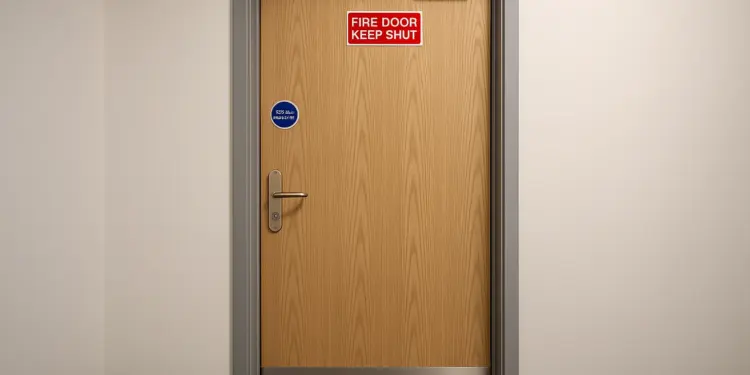
Everyone must be able to reach a place of safety outside without the fire service. So check there are enough exits for the numbers present, travel distances suit the risk, two independent routes exist wherever one could be blocked, exit doors open in the direction of travel without a key, and routes stay clear. In practice, fire doors must also self close fully with intact seals, because a wedged fire door is the most common enforcement finding.
Emergency lighting and signs
Wherever people might have to escape in the dark, emergency lighting to BS 5266-1 is needed on escape routes, at changes of direction and level, at exits and at call points. In addition, escape routes must be signed under the Health and Safety (Safety Signs and Signals) Regulations 1996 so that from any point the next sign is visible.
Fire fighting equipment
Extinguishers exist to help people get past a small fire to an exit. So provide the right type (water or foam for ordinary combustibles, CO2 for electrical, wet chemical for cooking oils), site them on exit routes and by specific hazards, and above all make sure staff know never to fight a fire bigger than a waste bin or one between them and the exit.
Maintenance and testing frequencies
Article 17 requires all fire precautions to be kept in efficient working order and good repair under “a suitable system of maintenance”. The government’s premises guides set out the checks below. So record every one in a fire log book, because it is the first thing an inspector asks for.
| Frequency | Check or test | Who | Reference |
|---|---|---|---|
| Daily | Escape routes clear, exit doors unlocked and opening freely, alarm panel normal, emergency lighting indicators on, signs in place | Nominated staff | Government guidance |
| Weekly | Fire alarm test from a different call point each week, sounders heard throughout; extinguishers in place and unobstructed | Nominated staff | BS 5839-1 |
| Monthly | Short function test of emergency lighting (switch to battery, all luminaires light); fire doors close fully with seals intact | Nominated staff | BS 5266-1 |
| Six monthly | Fire detection and warning system serviced | Competent engineer | BS 5839-1 |
| Annually | Full duration test of emergency lighting (typically three hours); extinguishers serviced; alarm annual service; compartmentation, dampers and structural fire protection inspected | Competent contractor | BS 5266-1, BS 5306-3, BS 5839-1 |
Following the standards is the accepted way of showing the article 17 duty is met.
Drills, training and fire marshals
Training
Article 21 requires fire safety training on induction, when risks change and at suitable intervals, in working hours. In practice, every employee should know what the alarm sounds like, how to raise it, where the exits and assembly point are, who the marshals are and what not to do (use lifts, collect belongings, re enter). Finally, keep a signed record.
Fire drills
Government guidance states: “You should carry out at least one fire drill per year and record the results.” However, shift work, high turnover or sleeping occupants justify more. During the drill, have marshals note what went wrong, then write a short report and close the actions. For example, vary it by declaring one exit blocked.
Fire marshals
Article 15 requires enough competent people to implement evacuation procedures: in practice, trained marshals on every shift and in every zone, with deputies. During an evacuation they sweep their area, direct people to exits, assist anyone with a PEEP, report to the assembly point and brief the fire service. Typically, a half day course refreshed every three years is the norm.
When to review
Article 9(3) requires review “regularly so as to keep it up to date”, and in particular where there is reason to suspect the assessment is no longer valid or there has been a significant change to the premises, the measures or the work, including extensions and conversions.
In practice, typical triggers are a fire or near miss; building work or a change of use; new processes, equipment or storage; a change in the numbers or needs of occupants; a change of responsible person or tenant; and an enforcement notice or insurer’s report.
Beyond those, most organisations also review annually, and in every case the review must be recorded.
Enforcement and penalties
The Order is enforced by the local fire and rescue authority, not HSE. Notably, HSE’s own guidance confirms it has fire enforcement responsibility only on construction sites, nuclear premises and ships under construction or repair. In brief, inspectors have four main tools:
| Action | When | Effect |
|---|---|---|
| Alterations notice (article 29) | High risk premises, or premises that would become high risk if their use changed | You must notify the authority before changing the premises, their use or the precautions |
| Enforcement notice (article 30) | A serious risk not being managed | States what must be done by when; non compliance is an offence |
| Prohibition notice (article 31) | Risk so serious that use must be prohibited or restricted | Immediate effect; typically closes sleeping accommodation or upper floors |
| Prosecution (article 32) | Failures placing people at risk of death or serious injury, or breach of a notice | Unlimited fine, up to two years’ imprisonment, or both in the Crown Court |
You can appeal a notice to the magistrates’ court within 21 days. Importantly, article 32(8) makes directors and managers personally liable where an offence was committed with their consent, connivance or neglect. In addition, prosecutions under the Order are separate from any action under the Health and Safety at Work etc. Act 1974 or RIDDOR where a fire injures someone at work.
Case study: a hotel director in the Crown Court
Cheshire Fire and Rescue Service inspected the Mollington Banastre Hotel and Spa near Chester on 28 June 2018 and found inadequate means of escape from the upper floors, inadequate compartmentation, poor electrical maintenance, an insufficient fire risk assessment, no recorded emergency plan, deficient emergency lighting, faulty fire doors and missing alarm maintenance records.
The service agreed an action plan on 24 July 2018 with a completion date of 1 April 2019. However, a follow up inspection on 2 April 2019 found the work undone. As a result, a prohibition notice was served that day and an enforcement notice on 5 April 2019. Then the director, Ashok Ummat, appeared at Chester Crown Court on 16 November 2023 charged with three counts under the Order and was ordered to pay a total of £67,000. Afterwards, Area Manager Steve McCormick said he “showed little regard for the safety of guests”.
In short, the service tried cooperation first, the charges named the director personally, and every failing on the list would have been picked up by a competent assessment and a maintained log book.
Common mistakes
- Treating the assessment as the consultant’s document. A report nobody reads, with actions nobody owns, is evidence against you.
- Still working to the old five employee threshold. Since 1 October 2023 everyone records in full.
- Weekly alarm tests from the same call point, and emergency lighting tested only when the contractor visits.
- Fire doors wedged, damaged or missing closers, and e bikes charging in corridors and under stairs.
- Not knowing who the other responsible persons are in a shared building.
- Ignoring the action plan agreed with the fire service. The notice and the prosecution follow.
See also 10 workplace safety failures and, for hot work by contractors, managing contractors under CDM 2015.
Frequently asked questions
Do I need a written fire risk assessment with only two employees?
Yes. Since 1 October 2023 the duty to record the assessment in full applies to every responsible person regardless of headcount. In other words, the old exemption for fewer than five employees has gone.
Can I do the fire risk assessment myself?
Yes, if you are competent. For example, in a small, simple, low risk premises a manager working through the government’s five step checklist and premises guide can produce a suitable and sufficient assessment. However, for sleeping accommodation, complex buildings or vulnerable occupants, use a competent external assessor and record their name.
Who enforces fire safety, the fire service or HSE?
The local fire and rescue authority, in almost all premises. HSE enforces fire safety only on construction sites, nuclear sites and ships under construction or repair, though HSE and local authorities still enforce process fire risks under DSEAR.
How often should we test the alarm and emergency lighting?
Test the alarm weekly from a different call point and have it serviced at least every six months (BS 5839-1). Similarly, give emergency lighting a short function test monthly and a full duration test annually (BS 5266-1). Above all, log everything.
Does the Order apply to the common parts of our block of flats?
Yes, and since the Fire Safety Act 2021 the structure, external walls and flat entrance doors are covered too. The 2022 Regulations add door checks and resident information, and from 6 April 2026 taller buildings must offer person centred assessments to residents who would struggle to evacuate.
Further resources
- GOV.UK: Fire safety in the workplace, your responsibilities
- GOV.UK: Fire safety responsibilities under section 156 of the Building Safety Act 2022
- GOV.UK: Fire safety risk assessment, offices and shops (and the other premises guides)
- legislation.gov.uk: The Regulatory Reform (Fire Safety) Order 2005
- HSE: Fire safety (who enforces what)
- UK-Safety.News: Useful Documents (fire risk assessment template, drill log and fire log book)
This guide is general information for Great Britain and is not legal advice. Fire safety law differs in Scotland and Northern Ireland. Check the current GOV.UK and fire and rescue authority guidance before acting on a specific case.
About the author: Jade Anderson specialises in turning regulations into practical steps for supervisors and safety leads.