













Story Highlight
– Mass shooting at Bondi Beach marks second tragedy in community.
– 15 people killed, including a 10-year-old girl.
– Jewish community feels targeted amid rising antisemitism.
– Public outpouring of support, yet anger and tension rise.
– Calls for unity and action to combat hatred and fear.
Full Story
On 14 December, an air of panic engulfed Bondi as sirens blared and distraught residents fled down the streets. Mary, who requested to remain anonymous, experienced a haunting sense of familiarity—a feeling that something was indeed deeply amiss. This incident occurred just over a year after a devastating stabbing spree at the Westfield Bondi Junction shopping centre, which resulted in the deaths of six individuals. The anguish from that horrific event still pervades the local community.
The findings from a coroner’s inquest regarding the previous tragedy were anticipated to be publicised this week; however, they were postponed in the wake of a recent mass shooting. The attack, branded as an act of terrorism by authorities, occurred during a gathering commemorating the Jewish festival of Hanukkah, leading to the senseless deaths of 15 individuals, among them a 10-year-old girl adorned with festive face paint. “You just wouldn’t even fathom that something like this would happen,” Mary, originally from the UK, expressed in a poignant moment. She regularly reassures her family back home that Australia is a sanctuary of safety.
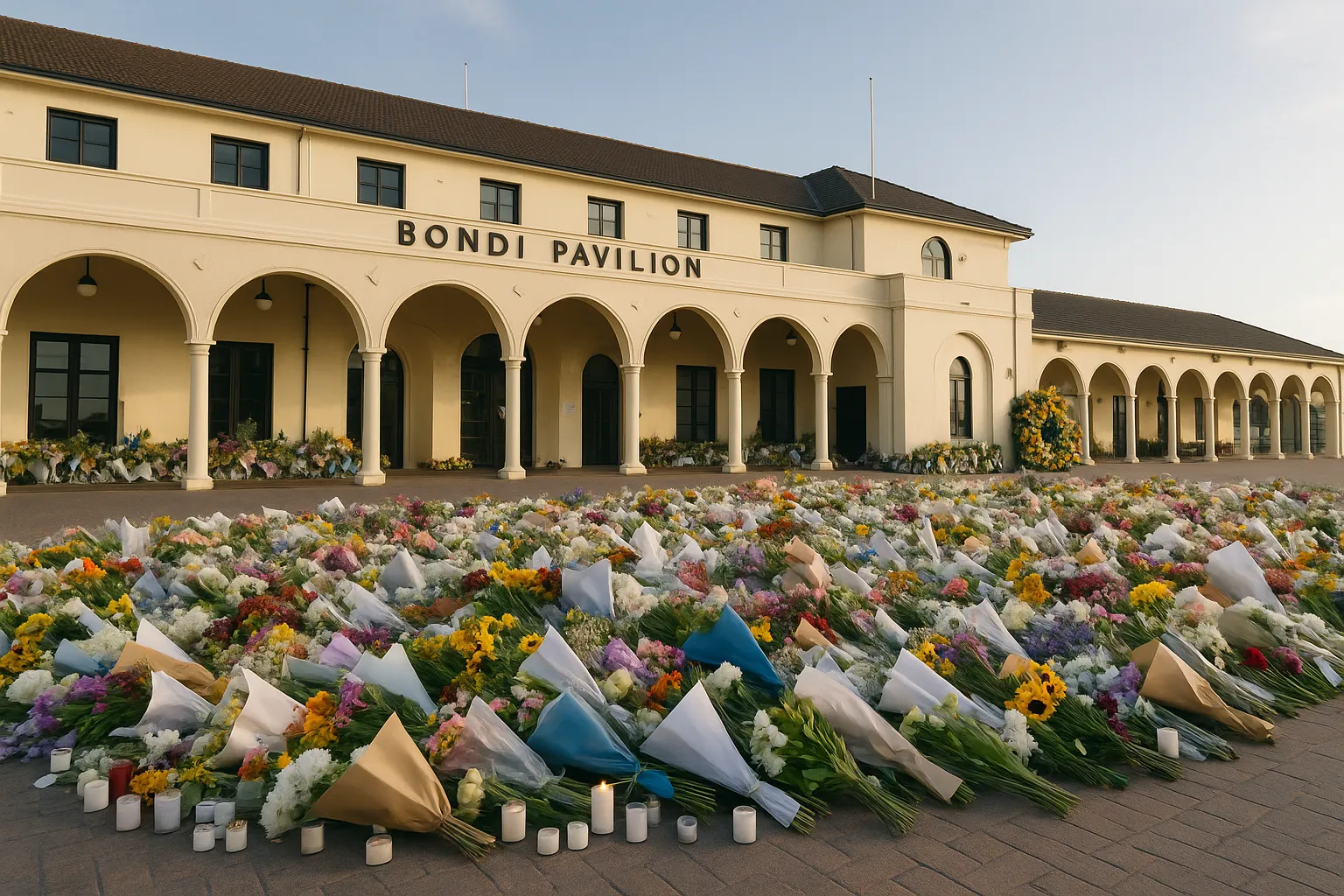
The 14 December shooting has overshadowed a community deeply committed to peace. Following the attack, a poignant memorial filled with flowers and tributes has stood as a stark reminder of grief, with Jewish Australians lighting candles for the final night of Hanukkah amidst an atmosphere of overwhelming sorrow.
The Bondi Beach precinct epitomises Australia’s cultural identity; it is not just a picturesque locale but a tightly-knit community where connections run deep. Mayor Will Nemesh conveyed the profound impact of the tragedy, noting that in a space where “everyone knows everyone,” the consequences of such violence ripple through the lives of many. Rabbi Eli Schlanger, a prominent community figure, was among those killed, further underscoring the attack’s intimate ties to the community.
First responders encountered harrowing scenes; they were reminded of the previous incident just a year earlier. Ryan Park, the New South Wales Health Minister, emphasised the impact on emergency personnel who faced “catastrophic injuries.” These men and women grappled with trauma that would echo long after the crisis.
Mayor Nemesh lamented the dark legacy that this event has imprinted on Bondi and voiced concerns over the broader implications for national safety. “If this can happen here at Bondi Beach, it really could happen anywhere,” he said, highlighting the shattering of a previously unwavering sense of security.
For the Jewish community, Bondi has been a haven, a place where many sought refuge from persecution over the years. Dr. Zac Seidler, a local psychologist and advocate for mental health, shared his own struggles with navigating a renewed sense of safety. Many victims, including Holocaust survivors like 87-year-old Alex Kleytman, now confront an unsettling reality, as their lives are, once again, marred by acts of deep-rooted antisemitism.
Dr. Seidler has endeavoured to reassure his grandparents, both Holocaust survivors, despite the rising tide of hatred. “I kept saying, ‘Not in Australia, not here. You’re safe,’ just trying to soothe her,” he recounted. However, this reassured stance has been significantly challenged by recent events.
In the months leading up to the attack, there had been rising concerns about antisemitism, with a series of vandalism and arson incidents targeting Jewish sites in the vicinity. This brutal attack serves as a stark reminder of the violence that can erupt if warnings are ignored.
Following the tragedy, Australian communities across the nation have rallied in solidarity. Lifeguards, both volunteer and professional, bravely risked their lives to assist, while local businesses extended shelter to those in need during the chaos. In the days that followed, an outpouring of support emerged, as countless Australians queued to donate blood for the injured victims.
At Bondi Pavilion, makeshift memorials sprang up, adorned with flowers, handwritten notes, and commemorative stones. On Friday, surfers gathered in the ocean, paddling out in tribute to the lives lost. The following day, lifeguards stood together, demonstrating unity and respect for the Jewish community following the heinous attack.
While the community’s initial response demonstrated resilience, lingering feelings of anger and resentment now permeate Bondi. Optimism unified the community after the stabbings in 2022; however, the latest event has reignited fears and raised uncomfortable questions regarding the failures of mental health services and the growing threat of antisemitism.
Grief has morphed into public outrage directed at government officials, particularly the Prime Minister, who faced widespread criticism. Calls for accountability echo through the community, as many believe that heightened antisemitism and aggressive rhetoric should have prompted a more robust response from authorities.
The broader societal implications of the attack have triggered conversations around solidarity amidst diversity. Dr. Seidler articulated the need for certain truths to coexist: “We can be afraid while also understanding that there is a right of people in this country – especially Muslim Australians – to be concerned about what is taking place in Gaza.”
The intricate layers of community anger also draw attention to fears surrounding retaliation against innocent Muslim Australians in light of the attack, underscoring the complexities of navigating these traumatic events.
As investigations continue into the alleged shooters, questions remain about past neglect in addressing appropriate warnings. Concerns about falling through the cracks of law enforcement and mental health oversight are paramount, suggesting a critical need for systemic change.
Despite the sense of despair, many in Bondi cling to a thread of hope. It is essential, they argue, to dismantle barriers between communities while also upholding values of unity and integrity. In an emotional memorial held precisely one week after the attacks, numerous local figures, including representatives from various communities, joined to honour the fallen. Rabbi Yehoram Ulman’s desire for compassion and understanding resonated deeply: “Returning to normal is not enough,” he said passionately.
The tragic events of 14 December will linger in the memories of those who call Bondi home, but the spirit of community and collective resilience shines brightly. As bonds deepen and connections strengthen, the steadfast commitment to strive for a future marked by warmth and understanding endures.
Our Thoughts
The tragic incidents at Bondi Beach highlight several critical areas for improvement regarding public safety and community vigilance. Key lessons include the importance of robust mental health support systems and proactive measures against rising antisemitism. The failure to act on warnings concerning increased antisemitic incidents before the attacks indicates potential breaches of the Health and Safety at Work Act 1974, which mandates employers to provide a safe environment.
Similar incidents could be mitigated by implementing stringent community surveillance measures, improving response strategies for potential hate crimes, and improving mental health intervention protocols. Enhanced collaboration between law enforcement and community leaders to address and pre-empt acts of violence and discrimination is essential.
The establishment of clear reporting and response mechanisms for hate crimes can serve as a deterrent. Furthermore, public events should have comprehensive safety protocols reflecting an understanding of possible threats, including active shooter scenarios. Training for first responders in managing large-scale trauma in community settings should also be prioritized, aligning with best practices in risk management and emergency planning.