













Story Highlight
– Survivors demand contract bans for Grenfell-related companies.
– Analysis shows 87 public contracts still involve implicated firms.
– Labour MP calls for urgent contract audits and guidance.
– Rydon and Saint-Gobain linked to multimillion-pound contracts.
– Procurement Act allows exclusion for companies’ past misconduct.
Full Story
Survivors of the Grenfell Tower fire have voiced their concerns over the ongoing financial engagement of companies implicated in the tragedy, urging the government to take action by halting public contracts awarded to these entities. Recent investigations have identified that at least 87 contracts within the public sector involve firms that were criticised in the phase two report of the Grenfell inquiry, released in September 2024. Although some contracts may no longer be valid, the report illuminates the continued presence of these companies in vital governmental contracts.
Labour MP Joe Powell, who conducted the analysis revealing these figures, stated, “Grenfell bereaved, survivors and our community are still fighting for justice eight and a half years after this entirely preventable tragedy, and it’s extraordinary that public money is continuing to be spent with companies who were cited in the public inquiry.” Powell is calling for an urgent reassessment of the public contracts involving these companies and has expressed the need for the Procurement Act 2023 to include clearer guidelines that would prevent the utilisation of these suppliers due to their documented misconduct.
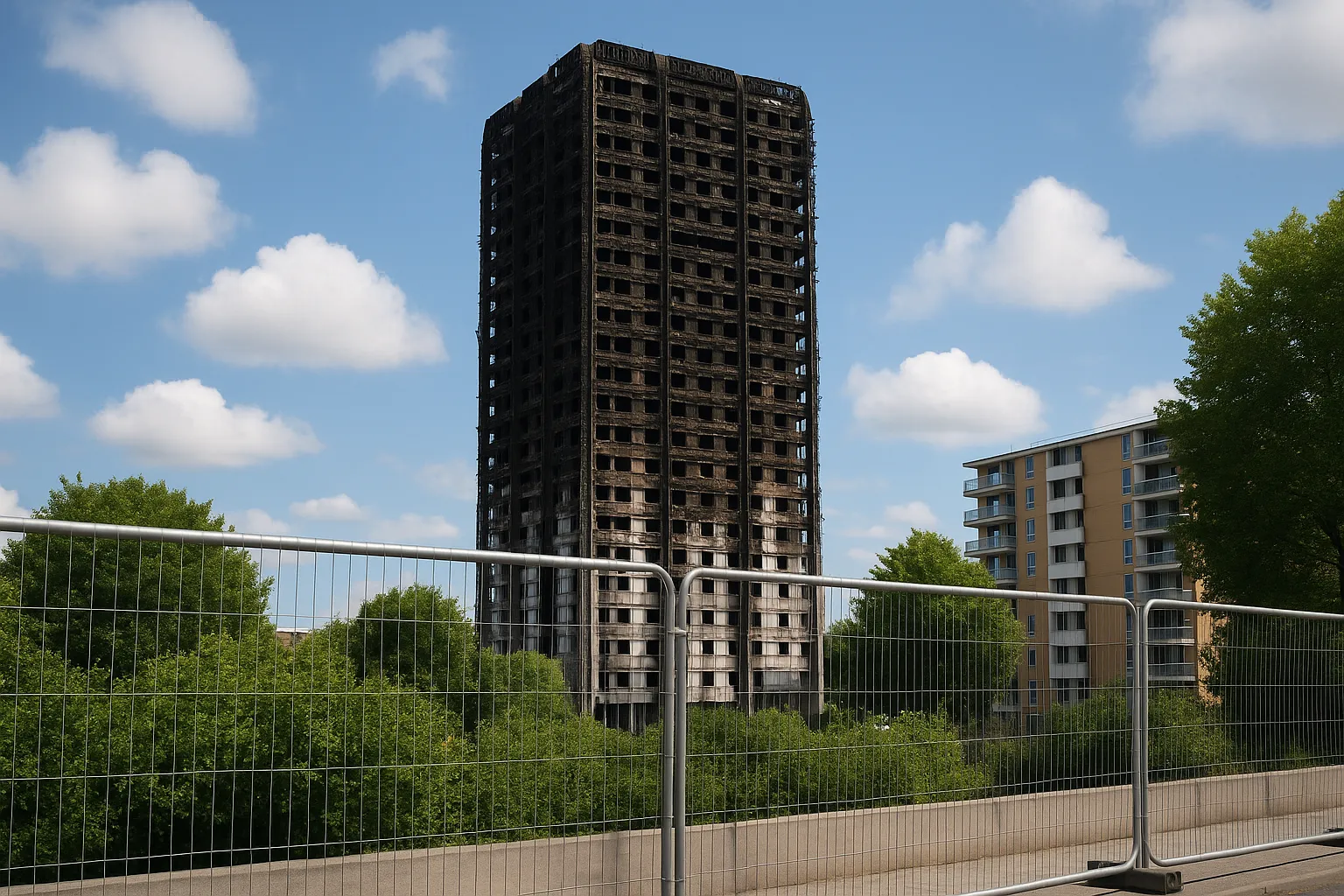
The catastrophic fire at Grenfell Tower occurred on 14 June 2017, claiming the lives of 72 individuals and injuring over 70 others, marking it as the UK’s deadliest residential fire since World War II’s Blitz. In response to the inquiry findings, Keir Starmer previously proposed a ban on contracts for these companies, yet the government later retracted its decision, citing concerns that such measures could jeopardise ongoing criminal investigations.
The principal survivors’ organisation, Grenfell United, articulated that allowing these companies to continue receiving public funds would represent a profound injustice. “While the criminal investigation limits formal sanctions, nothing stops the government taking a clear moral stance,” they remarked. The group further highlighted that the Procurement Act allows for considerations around integrity and risk, reinforcing that there should be no room for complacency regarding past infractions.
“Seeing the same companies continue as if nothing happened is a painful reminder of the lack of consequences. Justice has been delayed; it must not be denied. Public bodies must protect people and ensure Grenfell is never repeated,” stated Grenfell United in a recent communication.
Two companies associated with the disaster, Saint-Gobain and Rydon Maintenance, are still featured in the public contracts database, holding contracts worth millions in various public sector domains. Rydon, which oversaw the tower refurbishment, faced significant backlash following the inquiry’s findings that the firm “gave inadequate thought to fire safety.” It was revealed that Rydon’s team lacked experience and often relied too heavily on subcontractors for oversight, which contributed to the broader issues of neglecting safety standards.
Despite having been heavily scrutinised, Rydon continues to hold multiple public contracts valued at over £5.5 billion, with confirmed amounts including £6.6 million with Oxleas NHS Foundation Trust and £4.3 million with Avon and Wiltshire Mental Health Partnerships NHS Trust. Efforts to obtain comment from these trusts were unsuccessful. In light of this, Powell has reached out to relevant NHS trusts and Scottish Water, urging them to review their existing contracts with Rydon. In his correspondence to the chair of NHS North West London, he emphasized the need for accountability while awaiting the completion of the criminal investigations.
Celotex, which was under the ownership of Saint-Gobain at the time of the fire, was found to have misrepresented the safety of its RS5000 insulation, promoting it as suitable for high-rise constructions despite its combustibility. This material constituted 95% of the insulation used in Grenfell Tower. A former employee disclosed in the inquiry that they were compelled to “lie for commercial gain,” further exposing the ethical breaches within the company.
Currently, Saint-Gobain maintains a £17.6 million contract with Scottish Water that extends until 2029. Although Saint-Gobain no longer owns Celotex, it was in control during the events surrounding the fire. In response to inquiries, a spokesperson for Saint-Gobain Construction Products UK clarified that their broader business portfolio consists of various entities, including those unrelated to the Grenfell refurbishment. They asserted, “Those businesses had no connection with the refurbishment of Grenfell Tower, nor with Celotex Limited, which has not traded since December 2015.”
Legislation introduced under the Procurement Act 2023 empowers local authorities and NHS organisations to exclude suppliers based on poor past performance, including regulatory breaches. Powell stressed the importance of adopting these powers to safeguard both public welfare and financial resources, rather than depending solely on voluntary oversight from contract authorities.
However, the Cabinet Office has maintained that it lacks a legal basis to provide guidance using the Procurement Act with respect to suppliers linked to the Grenfell tragedy. A government spokesperson acknowledged the loss of life at Grenfell, reiterating that the wider public sector is responsible for its procurement choices. They indicated that while investigations related to the firms were paused to avoid complications with criminal processes, such investigations could resume or new inquiries could be initiated when appropriate.
The persistent engagement of these companies in public sector contracts raises crucial questions about accountability and ethical governance, stressing the need for a re-evaluation of how past transgressions are managed within public procurement frameworks. As survivors and their advocates continue their quest for justice, the government is under increasing pressure to reflect on its investment choices and moral obligations in ensuring safety and integrity in public dealings.
Our Thoughts
The Grenfell Tower fire highlighted significant failures in health and safety practices, particularly regarding fire safety standards and contractor oversight. To prevent such tragedies, companies should have adhered more strictly to the Regulatory Reform (Fire Safety) Order 2005, ensuring thorough assessments of fire risks and compliance with safety regulations throughout the refurbishment. A more robust oversight mechanism could have prevented inadequately trained contractors, such as Rydon, from managing the project without proper fire safety protocols.
Key lessons include the importance of ensuring that all contractors and subcontractors fully understand their responsibilities in fire safety and the need for regular audits of compliance with safety regulations. The presence of combustible materials, such as those produced by Celotex, underlines the critical need for manufacturers to ensure that products meet safety standards, under the Construction Products Regulation.
Furthermore, the Procurement Act 2023 empowers public bodies to exclude contractors with a history of safety violations, emphasizing the necessity for proactive auditing of contracts involving companies like Rydon and Celotex. This incident underlines the necessity for greater accountability and the use of available legislation to safeguard public welfare effectively.