











Story Highlight
– Injured tawny owl rescued on A517 in Derbyshire.
– Victoria Moore found the owl and sought help.
– Couple rehabilitated bird after vet surgery.
– Owl released back into the wild on Christmas Eve.
– Event was meaningful for rescuers and Victoria’s family.
Full Story
A tawny owl, discovered injured in Derbyshire, has successfully returned to the wild after a remarkable recovery. The juvenile bird was found last month by local resident Victoria Moore, who noticed it struggling on the A517 road between Ashbourne and Hulland Ward. Acting quickly, she moved the distressed owl to a safer area and sought assistance through social media.
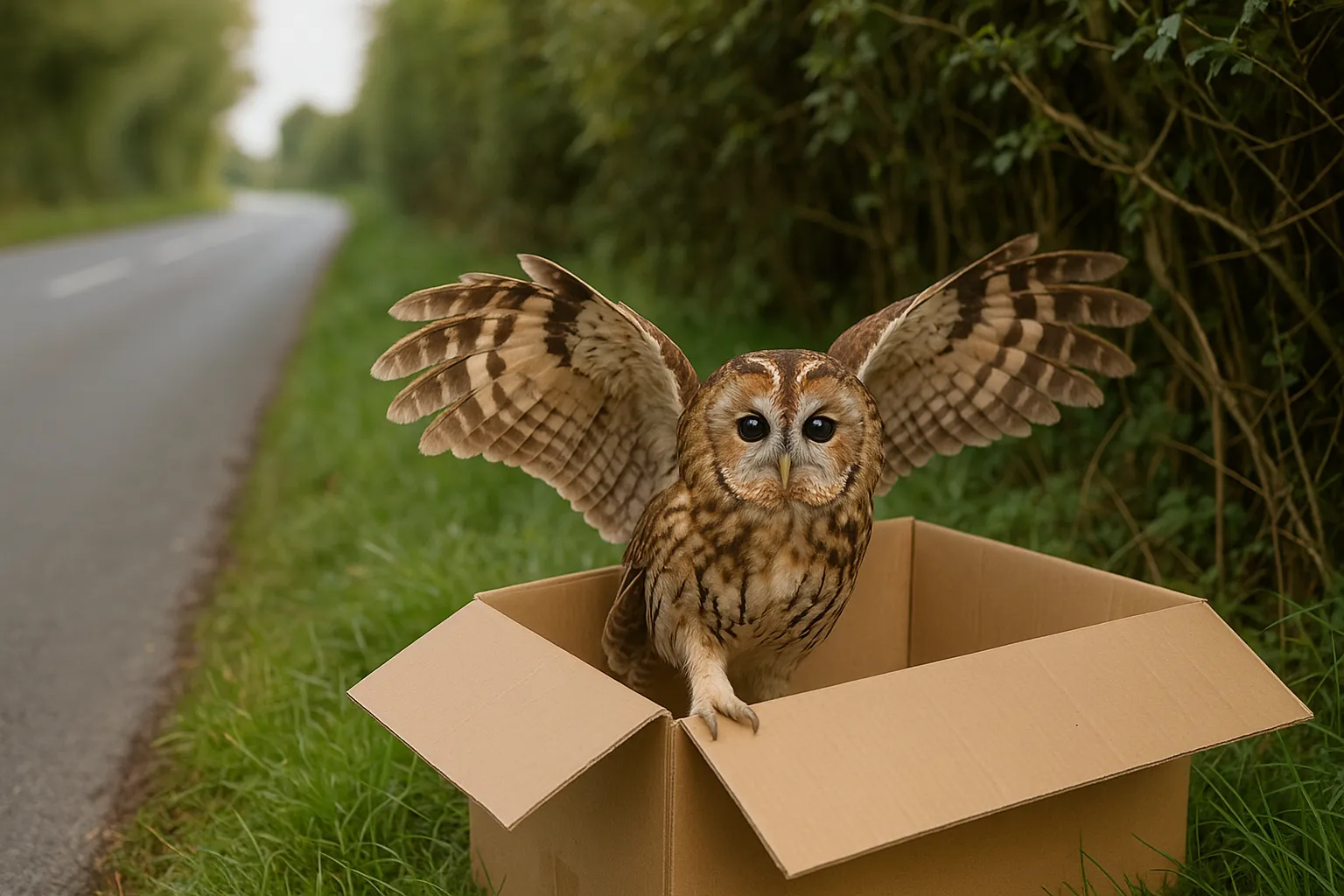
Moore’s appeal garnered a prompt response, reaching Caroline Beresford, a local volunteer for the charity Raptor Rescue. Equipped with a high-visibility jacket, headtorch, and a secure box, Beresford was able to locate the owl, which had taken refuge on a precarious grass verge adjacent to the busy road. “Victoria gave me some really helpful instructions on where to find it,” Beresford noted.
Upon examining the injured bird, Beresford and her husband, Mike, known in the Ashbourne community for his extensive experience in caring for birds, identified that the owl required veterinary care. It had sustained a broken lower mandible, leading them to consult Paul Revell, a local veterinarian. Revell confirmed that the beak could be stitched back together, allowing for the possibility of rehabilitation.
Mrs. Beresford expressed her gratitude towards Revell, stating, “I can’t thank Paul the vet for his fantastic work enough for his help, it was a great result all round.” The couple embarked on a dedicated feeding regimen, administering food to the owl using tweezers twice daily for three weeks. “This is a special case… the bird’s lower mandible was hanging loose, and it was more than likely hit by a vehicle, but luckily nothing else was wrong with its body,” Mike Beresford explained.
Despite initial doubts about the owl’s chance of survival, Mike observed its progress with growing hope. “I took the owl to the vets and I thought there was no way it was going to survive because it would not be able to eat in the wild. We took it back for assessment, and I was amazed at the result. To be able to release it back into the wild was really special,” he added.
On Christmas Eve, a heartwarming moment unfolded as the owl was released back into its natural habitat. Victoria Moore, who had played a pivotal role in the bird’s rescue, was present alongside her daughter for the joyous event. “Both Mike and Caroline have been fantastic with what they’ve done… she got in touch to say the owl was healthy, hooting away, and it was ready to be released,” Moore reflected.
The release of the owl not only highlighted the positive outcome of the rescue initiative but also underscored the importance of local community involvement in wildlife rehabilitation. The efforts of Victoria Moore and the Beresfords exemplify how individual actions can contribute significantly to animal welfare.
The couple’s dedication to wildlife has spanned decades; Mike Beresford has been involved in rescuing birds and mammals for nearly 60 years. Their commitment has made notable contributions to the well-being of various species in the area, demonstrating the impact of volunteers in conservation efforts.
With the tawny owl now free and healthy, it serves as a testament to the collaborative spirit between community members and wildlife professionals. The successful rehabilitation of the bird is a reminder of the resilience of nature and highlights the roles that individuals can play in safeguarding local wildlife.
As communities continue to navigate challenges posed by urbanisation and traffic, stories like that of the tawny owl inspire a reconsideration of the relationship between people and nature. Each act of kindness, no matter how small, contributes to the preservation of wildlife and the environment, encouraging others to act similarly in the face of injured or distressed animals.
The plight of injured animals often goes unnoticed, but the collaboration between the community and animal rescue organisations is crucial for their recovery. This narrative not only celebrates the successful release of one tawny owl but also calls attention to ongoing wildlife conservation efforts that rely on the dedication and compassion of local residents.
Local wildlife enthusiasts and rescue organisations continue to urge those who encounter injured animals to take appropriate measures, such as contacting professionals for assistance. The story of the tawny owl could inspire others to engage with local wildlife initiatives, further cultivating a culture of care and commitment towards the environment.
As 2023 progresses, stories like this one remind us of the local heroism that can emerge from everyday situations. The successful rehabilitation of the tawny owl showcases the profound effect that individuals can have on the natural world around them, reinforcing the message that every effort counts.
Our Thoughts
The incident involving the tawny owl highlights several key safety lessons and areas for improvement. Firstly, the UK Road Traffic Act requires adequate measures to ensure the safety of both wildlife and motorists. Installation of prominent warning signs for animal crossings on roads like the A517 could help prevent similar incidents. Additionally, local authorities should consider wildlife corridors or safe passage zones to minimise animal-vehicle collisions.
While this incident had a positive outcome, the actions taken during the rescue could have been enhanced by adhering to best practices in wildlife rescue. Individuals involved should be trained in animal handling and safety to avoid potential injuries to both the rescuer and the animal.
Furthermore, public awareness campaigns about the protection of wildlife under the Wildlife and Countryside Act 1981 could foster a culture of care and vigilance among drivers and local residents. Implementing these recommendations could significantly reduce the risk of similar incidents occurring in the future, ensuring the safety and preservation of wildlife.