











Story Highlight
– Hundreds participate in New Year’s Day swimming events.
– Icy water temperatures at Whitley Bay and Loch Ken.
– RNLI warns of dangerous sea conditions and rip currents.
– Health alerts issued due to severe cold weather risks.
– Amber warning for heavy snow and potential travel disruption.
Full Story
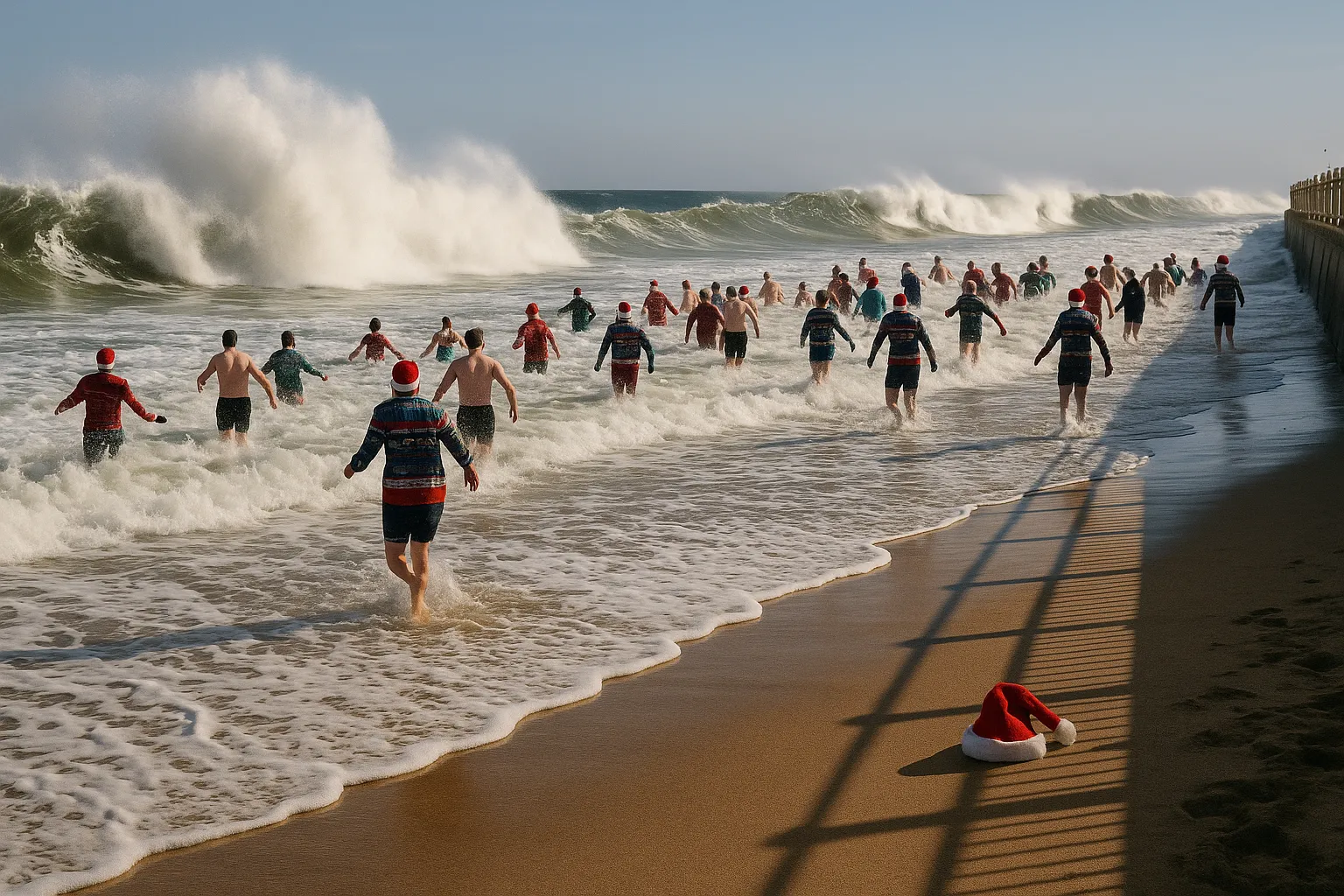
Hundreds of brave individuals took to the chilly waters this morning to participate in the annual New Year’s Day dips, a tradition that marks the start of the year with a splash. At Whitley Bay, North Tyneside, over 200 participants dressed in festive attire, including Christmas jumpers and hats, with many opting for just their swimwear, immersed themselves in the cold sea as a large crowd gathered along the promenade to cheer them on.
In a parallel event in Castle Douglas, Scotland, at least 100 people plunged into the freezing waters of Loch Ken for the 40th annual Crossmichael Dip. This long-standing event, which has successfully raised significant amounts for local charities, was organised by Jim McLellan, who is noted for his commitment to the event, having missed only one in its history. Jim, who took the plunge alongside fellow participants, remarked, “It’s a great local event and the crowds also turned out to watch.” He further noted the extreme conditions, stating, “The waters here are freezing and the temperature was just under 4C.”
As those braving the cold water celebrated, authorities issued warnings regarding the hazardous conditions present along the eastern coast. The Met Office cautioned swimmers about the potential for large waves, and the Royal National Lifeboat Institution (RNLI) reported that water conditions would pose a risk to life from the afternoon onward.
This news comes in the wake of a tragic incident on Christmas Day in Budleigh Salterton, Devon, where two men went missing after a swim. Antiques dealer Matthew Upham, 63, is believed to have drowned alongside another man in his 40s during the festive swim. James Waters, a volunteer with Tynemouth RNLI, described the situation in the waters, stating, “It will be getting dangerous out there from about midday. It’s fine for the moment, but it will build for the next couple of days, with 10ft to 11ft swells, and that would constitute a risk to life.” He urged caution, advising the public to avoid entering the sea during these conditions.
Ahead of these events, Tynemouth Volunteer Life Brigade issued a water safety alert, effective until January 3, outlining the risks associated with the strong rip currents prevalent in the area. Their warning highlighted the serious incidents that had occurred this year, where individuals almost drowned due to rip currents, including a tragic drowning at Longsands beach involving a non-swimmer being swept out to sea. The Brigade’s advice to those contemplating entering the water was clear: “Please be aware of the conditions, and if you’re not sure or you’re not comfortable, don’t go in the sea. If you do get caught in a rip, try to swim parallel to shore to escape and if you can’t do that, ‘float to live’ and shout for help.”
In addition to the dangers posed by the water, Health officials have also raised alarms about severe winter weather conditions across the UK, which could make temperatures feel even more frigid than a brisk New Year’s swim. The Met Office has today expanded its weather alerts to include warnings for snow and ice in various regions, anticipating temperatures will drop into the negatives by early Friday and Saturday.
This morning, yellow warnings were issued for snow and ice across several parts of the country, including the East Midlands, Yorkshire, and the North East. The Highlands, north of Inverness, Moray, and Aberdeenshire have been placed under an amber warning for heavy snow showers due to commence tomorrow and last through Saturday. Authorities are forecasting areas might receive between 10-20cm of snow at lower elevations and up to 40cm on higher ground. Drivers have been advised to prepare for potential travel disruptions by equipping their vehicles with essential winter supplies, such as clothing, food, water, a blanket, and a car charger.
The amber alert for heavy snow is significant, marking the first such warning since November and only the third issued in the past year. Meanwhile, the UK Health Security Agency has upgraded cold weather health alerts across England to amber status, as worries mount over the potential impact on the elderly and vulnerable populations during this severe weather period. Previous yellow alerts in the Midlands and South have been elevated, indicating the expected adverse effects of the cold on health services in the coming days, particularly in northern regions.
As communities across Britain navigate these challenges, the spirit of resilience persists, exemplified by the swimmers who courageously embraced the traditions of New Year’s Day while balancing it with caution in the face of nature’s unpredictability.
Our Thoughts
The article highlights the dangers of participating in cold-water swims during hazardous weather conditions. To avoid tragedies like the recent drowning incidents, organizers should ensure comprehensive risk assessments are conducted prior to events, especially during adverse weather. This aligns with the Health and Safety at Work Act 1974, which mandates that employers provide a safe environment.
Clear safety protocols should be communicated to all participants and spectators, including adherence to Met Office warnings and RNLI advisories to prevent individuals from entering dangerous waters. Mandatory safety briefings could have educated participants on the risks of cold water and rip currents, potentially preventing accidents.
Additionally, having trained lifeguards present and providing adequate safety equipment, such as flotation devices, would align with the Management of Health and Safety at Work Regulations 1999, which require effective emergency planning.
Overall, ensuring adequate communication, supervision, and preparation could significantly reduce the likelihood of similar incidents during such events in the future.