









Story Highlight
– Multiple food recalls due to safety concerns announced.
– Waitrose recalls bottled water for potential glass contamination.
– Disaronno Originale recalled over possible glass fragments.
– Calbee crisps recalled for undeclared allergens, posing health risks.
– Various retailers urge refunds and safe disposal of products.
Full Story
**Urgent Food Product Recalls Issued Across the UK Due to Safety Risks**
In recent weeks, several food items have been removed from supermarket shelves across the UK due to safety concerns related to contamination and mislabeling. A series of recalls have been initiated, advising consumers to be vigilant regarding their purchases to avoid potential health risks. This report outlines the key food items affected, the reasons for these recalls, and guidance for consumers on what actions to take.
**Waitrose’s Glass Contamination Warning**
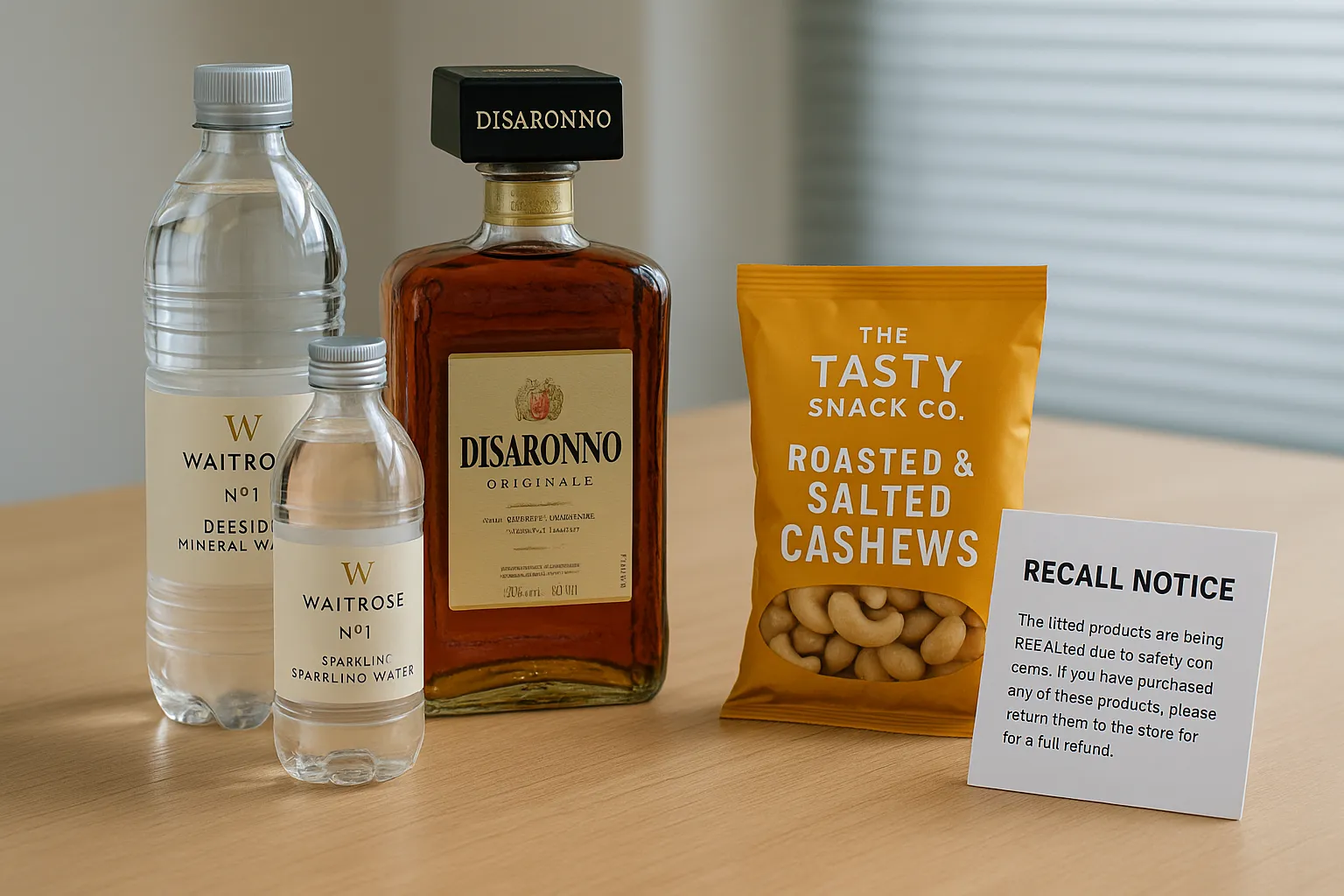
Waitrose has announced a recall of certain bottled water products due to the potential presence of glass fragments, posing a significant risk for consumers. Shoppers are specifically advised against consuming batches of both the Waitrose No1 Deeside Mineral Water and the Waitrose No1 Deeside Sparkling Water.
A representative from Waitrose stated, “We are recalling the above lines due to potential glass contamination. Return the product to your local Waitrose & Partners branch for a refund. We apologise that it has been necessary to recall this product and for the inconvenience caused.”
Affected batch codes for the mineral water include Nov2027 28 and several from December 2027, while the sparkling water recall encompasses batch codes from DEC2027 01 to DEC2027 25.
The Food Standards Agency (FSA) has echoed these concerns, advising customers, “If you have purchased any of the above products do not drink it. Instead, return it to the store from where it was bought for a full refund.”
**Disaronno Recall Ahead of Festive Season**
As the festive season approaches, Disaronno Originale has been pulled from shelves due to potential glass contamination in the product. The FSA has reported that 700ml bottles from certain batch codes might be unsafe for consumption.
Illva Saronno S.p.A, the manufacturer, is proactively recalling these bottles, urging consumers not to drink the product. A spokesman for Illva Saronno remarked, “We apologise for any inconvenience. Consumer safety is our priority.” The affected batch codes range from 25374 to 25444, emphasising an anomaly detected during the bottling process.
**Crisps Recall by Tesco and B&M Due to Undeclared Allergens**
In a separate incident, major retailers Tesco and B&M have issued recalls on specific Calbee crisps. The Hot & Spicy Chips and Pizza Chips have been highlighted for containing undeclared ingredients, specifically mustard and celery, which could provoke severe allergic reactions.
Customers are being urged not to consume these products and return them for a full refund. The recall affects various packet sizes of Hot & Spicy Chips, with all best-before dates up to and including June 5, 2026, as well as Pizza Chips with best-before dates up to April 28, 2026.
A spokesperson from the FSA commented on the situation: “Calbee Group UK Ltd is recalling these products due to undeclared allergens. If you’ve bought the above products and have an allergy to mustard or celery, do not eat them.”
**Poundland and Lidl Cashew Nut Recalls**
Poundland has also enacted a recall on The Tasty Snack Co. Roasted and Salted Cashews due to the potential presence of glass. The product does not require proof of purchase for a return, with a full refund offered to consumers. A company representative emphasised their commitment to consumer safety and satisfaction.
Similarly, Lidl has recalled its Simply Roasted and Salted Cashews under the same concerns of glass contamination. These items are also subjected to a full refund policy without the need for a receipt. A Lidl spokesperson affirmed their dedication to maintaining consumer safety and thanked customers for their understanding during this recall.
**Marks & Spencer’s Allergy Alert**
Marks & Spencer has issued a precautionary recall for their Milk Chocolate Honeycomb due to undisclosed peanuts in the product, creating a possible health risk for those with peanut allergies. The recall is focused on a specific pack size (120g) with a best before date of May 12, 2026. The company has proactively notified allergy support organisations and is encouraging those affected to return any purchased items for a full refund.
**Iceland Vegetable Lasagne Recall Due to Plastic Contamination**
Iceland has alerted customers to a significant safety risk involving their Vegetable Lasagne, which may potentially contain plastic pieces. The affected products have best before dates of July 23, 2026, and July 30, 2026. Consumers are advised against consuming this product and encouraged to return it for a refund.
A spokesperson from Iceland indicated, “We are taking this precautionary measure to ensure the safety of our customers.” They further emphasised that only the specified best before date codes are impacted by this recall.
**Understanding Product Recalls**
When safety issues arise with food products, they may be either withdrawn from sale or actively recalled, where consumers are instructed to return products. The Food Standards Agency provides ongoing updates through Product Withdrawal Information Notices to inform consumers and stakeholders about food safety concerns. In some cases, further actions may be detailed in a ‘Food Alert for Action,’ ensuring local authorities are equipped to respond effectively on behalf of consumers.
As recalls continue to unfold, consumers are encouraged to stay informed about potential health risks associated with food products and adhere strictly to product advisories.
Our Thoughts
The article discusses multiple product recalls due to potential contamination with glass, plastic, and undeclared allergens, which pose health risks to consumers. To avoid these incidents, stricter quality control measures should be implemented during the manufacturing and packaging processes, particularly on bottling lines, to prevent foreign objects from contaminating food products.
Key safety lessons include the importance of transparent labeling to prevent allergic reactions and regular monitoring of production equipment to minimize contamination risks. The recalls indicate potential breaches of the Food Safety Act 1990 and the General Food Regulations 2004, which require that food products must not be unsafe for consumption.
To prevent similar incidents, food businesses should enhance staff training on hazard analysis and critical control points (HACCP), conduct regular audits of their manufacturing processes, and ensure robust response protocols are in place for timely recalls when issues arise. Continuous consumer education on recognizing and responding to recalls also plays a crucial role in safeguarding public health.