












Story Highlight
– Several food products recalled for safety concerns nationwide.
– Lidl recalls cabbage for undeclared milk allergy risk.
– Waitrose warns of glass contamination in bottled water.
– Tesco and B&M recall crisps with undeclared allergens.
– Iceland recalls vegetable lasagne due to plastic risk.
Full Story
A range of food items has been recalled by various supermarkets due to potential health risks, such as contamination with foreign materials or incorrect labeling regarding use-by dates. Consumers across the country are urged to take caution regarding these products and adhere to the guidance provided by the retailers involved.
**Lidl’s Recall of Affected Product**
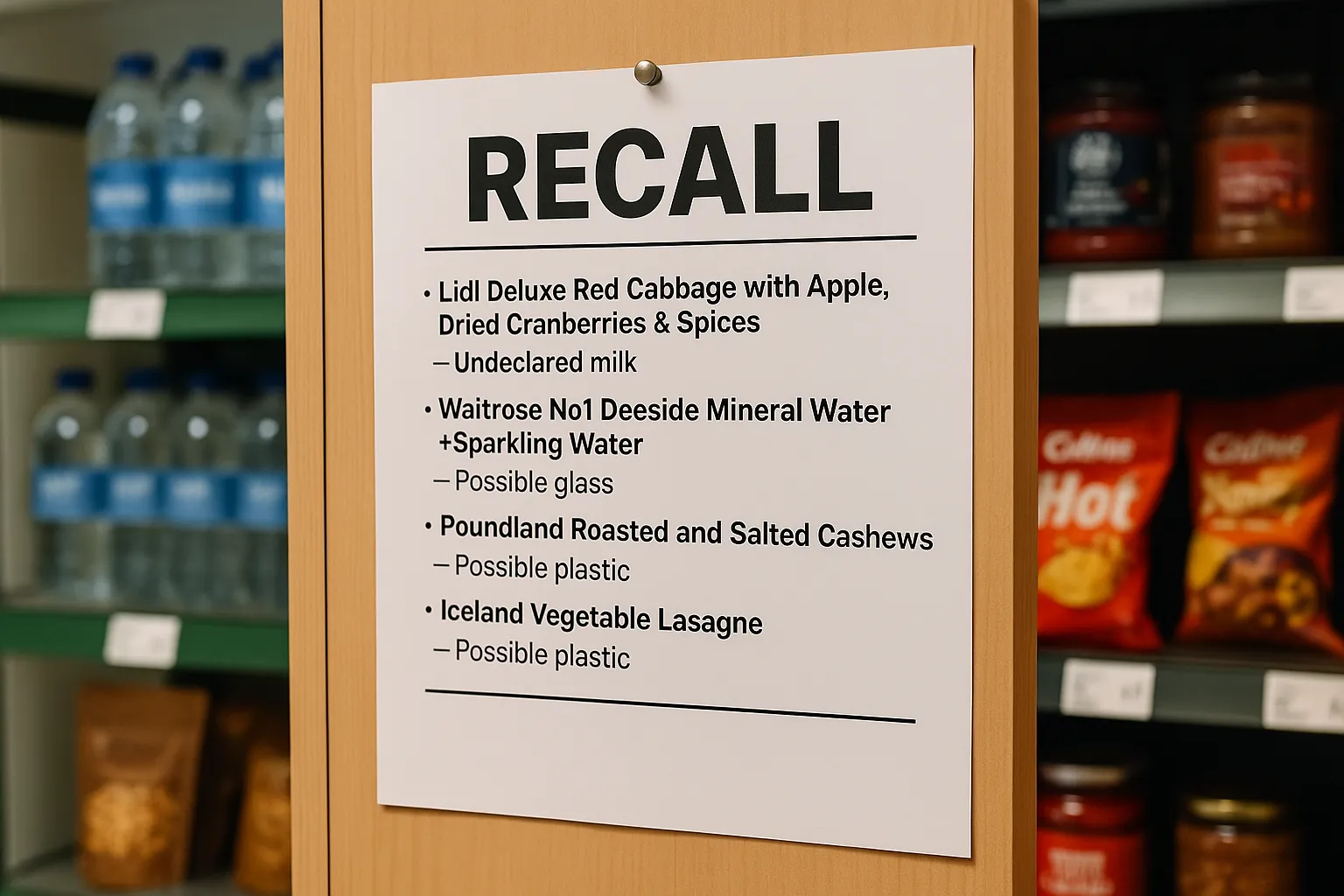
Lidl has issued a recall for its Deluxe Red Cabbage with Apple, Dried Cranberries & Spices, over concerns that the product may contain unidentified milk, which is not indicated on the packaging. This presents a significant health risk for anyone with a milk allergy. All 480g packs of this product, regardless of their date or batch codes, are included in the recall.
In a statement from the Food Standards Agency (FSA), a representative confirmed, “Lidl GB is recalling the above product from customers and has contacted the relevant allergy support organisations, which will inform their members about the recall.”
Customers are advised not to consume the recalled product. Instead, they should return it to the store of purchase for a full refund. Those seeking more information can reach out to Lidl’s Customer Care via email or by phone.
A Lidl spokesperson apologised for any inconvenience this situation may cause and expressed gratitude for the public’s cooperation during the recall process.
**Waitrose’s Safety Measures**
In another recall, Waitrose has taken the precaution of pulling certain bottled water products from its shelves due to potential glass contamination. The affected items include specific batches of Waitrose No1 Deeside Mineral Water and Waitrose No1 Deeside Sparkling Water.
A spokesperson for Waitrose stated, “We are recalling the above lines due to potential glass contamination.” Customers who have purchased these products are advised to return them to their local Waitrose store for a refund.
The recalled batch codes for the Mineral Water include Nov2027 28, DEC2027 01, DEC2027 02, and several others, while Sparkling Water batches also include December dates. Notices explaining the recall will be displayed in stores, providing customers with detailed instructions on how to proceed.
The FSA reiterated the importance of following the recall advice, urging anyone in possession of the affected products not to consume them and to return them for a full refund.
**Concerns Over Calbee Crisps**
Tesco and B&M have joined the list of retailers issuing recalls, this time for specific varieties of Calbee crisps. The products in question include Calbee Hot & Spicy Chips, which contain mustard not declared on the packaging, as well as Calbee Pizza Chips, which include celery, also absent from the label.
Given that both mustard and celery are common allergens, consumers should refrain from eating these crisps and return the products to the place of purchase for a full refund. The recall encompasses all packets with best-before dates listed up to June 5, 2026, for Hot & Spicy Chips, and up to April 28, 2026, for Pizza Chips.
A spokesperson from the FSA stated, “Calbee Group UK Ltd is recalling Calbee Hot & Spicy Chips because they contain mustard and Calbee Pizza Chips because they contain celery which are not mentioned on the label.”
**Poundland’s Warning**
Poundland & Dealz have also recalled a popular snack item due to safety concerns regarding possible glass contamination. The Tasty Snack Co. Roasted and Salted Cashews are affected, prompting the retailer to advise customers to cease consumption immediately and return the product for a full refund, with no receipt required.
The batch code implicated in the recall is 56T 25255, with a best-before date of July 19, 2026. An FSA representative noted that point-of-sale notices will be made available in stores to inform customers about this issue, ensuring individuals understand the necessity of returning the product.
“We sincerely apologise for any inconvenience caused,” said a Poundland spokesperson, reinforcing their commitment to consumer safety and product quality.
**Marks & Spencer Recall Announcement**
Furthermore, Marks & Spencer is recalling its Milk Chocolate Honeycomb product over the risk that it may contain peanuts not mentioned on the label, creating a potential hazard for those with peanut allergies. The recall pertains specifically to the 120g packs with lot number 5242, best before May 12, 2026, and does not affect any other products.
M&S has informed relevant allergy support organisations about the recall and has placed point-of-sale information in stores to help consumers navigate this situation. The FSA has advised customers that those with peanut allergies should avoid consuming this product and return it for a full refund.
**Iceland’s Product Recall**
Lastly, Iceland has issued a warning regarding its Vegetable Lasagne, which may contain pieces of plastic. This product recall affects items with best before dates of July 23, 2026, and July 30, 2026. Customers who have purchased this lasagne are advised not to consume the product and to return it for a full refund.
A spokesperson for Iceland stated, “We are taking the precautionary measure of recalling the dates codes of the above product because it may contain hard pieces of plastic making it unsafe to eat.”
**Understanding Product Recalls**
A product recall occurs when a food item is identified as potentially unsafe for consumption. In such instances, it may be withdrawn from sale or customers may be asked to return it. The FSA plays a critical role in communicating these recalls through Product Withdrawal Information Notices and Product Recall Information Notices, ensuring that consumers are informed of any safety issues.
Consumers are encouraged to stay alert to these recalls and to return any affected products as instructed.
Our Thoughts
Several significant issues surround the recent food recalls highlighted in the article, primarily concerning the failure to adequately manage allergens and physical contaminants. Key safety lessons include the necessity for robust labelling practices to ensure all ingredients are correctly declared, as seen in incidents involving undeclared milk, mustard, celery, and peanuts. Compliance with the Food Information Regulations 2014 is essential to prevent such oversights.
Additionally, manufacturers must enhance quality control measures to eliminate physical hazards, such as glass and plastic, which can result in serious injuries to consumers. Regulators also need to ensure adherence to the General Product Safety Regulations 2005, preventing unsafe products from reaching consumers.
To mitigate similar incidents in the future, thorough risk assessments and regular audits of food processing practices should become standard protocol. Education and training on allergen management and contamination prevention for all staff involved in food handling can significantly reduce risks. Furthermore, better communication channels with consumers and rapid reporting mechanisms can aid in effective recall responses, promoting consumer safety and trust.