















Story Highlight
– Mechanic sustained multiple fractures from falling JCB bucket.
– Salford Grab Hire Limited used inappropriate supporting equipment.
– HSE guidelines emphasize proper propping for elevated vehicles.
– Company fined £10,000 for health and safety breach.
– HSE warns against risks of poorly propped vehicle bodies.
Full Story
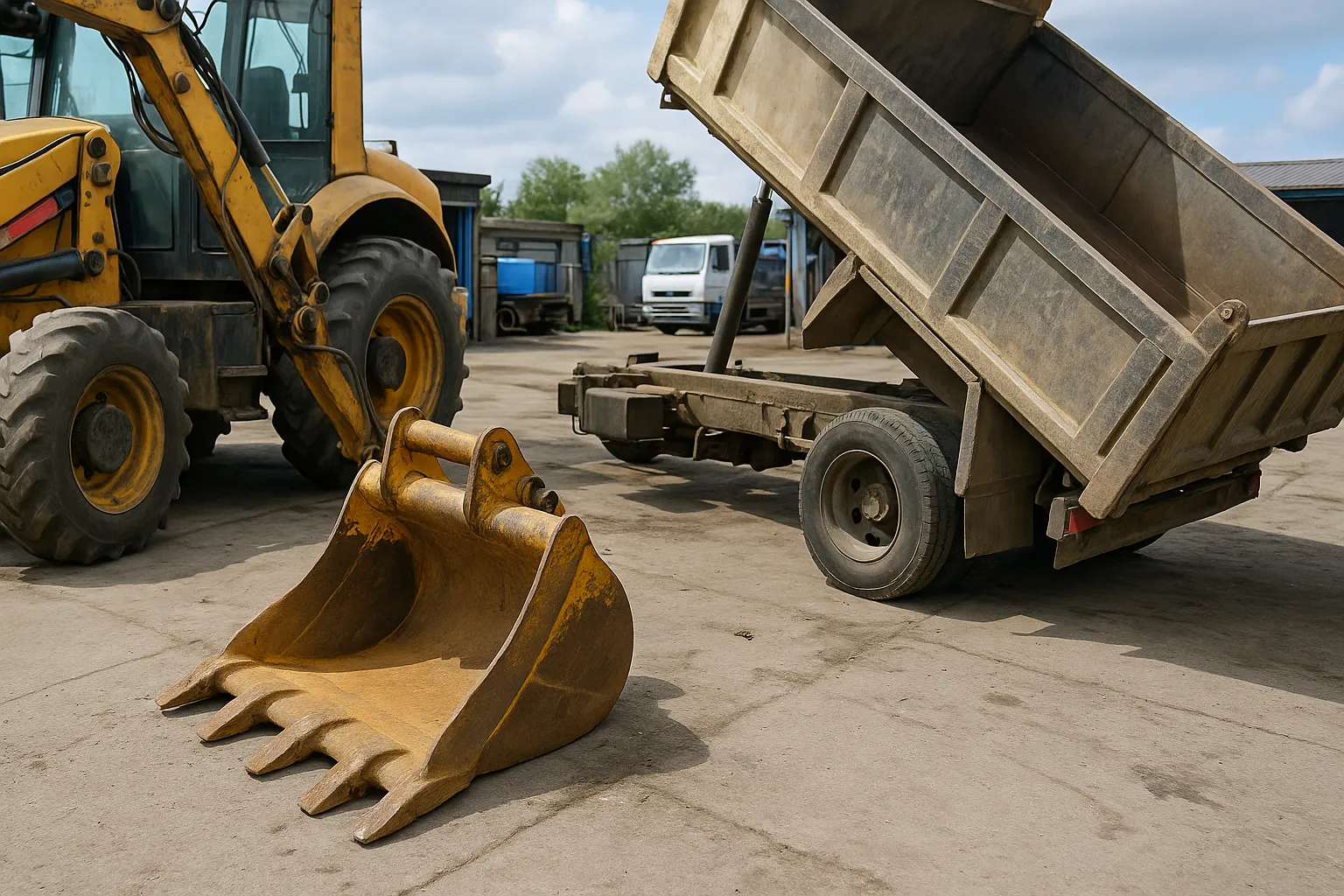
A significant incident has led to serious injuries for a mechanic following the collapse of a heavy JCB bucket, highlighting critical health and safety concerns within the construction and maintenance sectors. The incident occurred on 24 October 2023, at Salford Grab Hire Limited, located in Tyldesley, Manchester, during repair work on a tipper truck.
The employee, while assisting in repairing a malfunctioning lifting mechanism on the truck’s body, was exposed to a dangerous situation when the one-tonne bucket, employed to stabilize the vehicle, unexpectedly fell. The gravity of the situation escalated as the mechanic sustained extensive injuries, including multiple fractures to his hand and shoulder blade, as well as his ribs, shin, and thigh. Additionally, he endured a severely crushed foot and ankle, leading to further complications, such as a blood clot in his lungs.
Following an investigation spearheaded by the Health and Safety Executive (HSE), it was revealed that Salford Grab Hire Limited had failed to adhere to established safety protocols. The investigation uncovered that the company did not utilize appropriate equipment for stabilising the tipper truck during repairs. Specifically, the JCB’s bucket was missing critical safety features such as a quick hitch or retaining pin, which would have secured it in place and prevented it from dislodging.
HSE guidelines are explicit regarding safety measures that should be implemented in situations where maintenance crews require access beneath elevated vehicle bodies. Such vehicle load areas must be adequately supported, with props only used if placed on firm and level ground. Moreover, these props must be at the designed capability to handle the load they are supporting.
As a result of the HSE’s findings, Salford Grab Hire Limited faced legal repercussions for their negligence. The company pleaded guilty to breaking Section 2(1) of the Health and Safety at Work etc. Act 1974 during a court hearing at Warrington Magistrates’ Court on 27 January 2026. The repercussions included a fine amounting to £10,000 along with additional costs of £3,475.90, reflecting the serious nature of the violations concerning worker safety.
HSE Inspector Rose Leese-Weller commented on the case, emphasising the recurring theme of serious, often fatal injuries that occur when proper safety measures are neglected. “Every year we see serious and sometimes fatal injuries to people working under a poorly propped vehicle body. Employers must not underestimate the risks involved and must ensure that appropriate equipment and systems of work are used when undertaking such work,” she stated, underscoring the need for vigilance in workplace safety.
This incident brings to the forefront the ongoing challenges within the construction and automotive repair industries regarding worker safety. Despite existing regulations, the failure to implement effective safety measures can result in catastrophic outcomes, as highlighted by this unfortunate event.
Safety experts continue to call for enhanced training and awareness among employers and employees in such high-risk environments. It is imperative for companies to not only comply with health and safety regulations but to foster a culture of safety that prioritises worker well-being above all else. The costs associated with workplace injuries extend beyond financial penalties; they encompass human suffering and the irreparable impact on workers’ lives and their families.
In the wake of this incident, the HSE reiterates its commitment to enforcing workplace safety standards and holding employers accountable when safety protocols are disregarded. By imposing fines and pursuing legal action against negligent companies, the HSE seeks to deter similar incidents in the future and ensure a safer working environment for all.
The case serves as a stark reminder of the critical role that well-established safety measures play in preventing workplace accidents. As industries continue to grapple with the balance between efficiency and safety, the emphasis must be placed firmly on adhering to safety guidelines and ensuring that workers are equipped to perform their duties without fear of injury.
Salford Grab Hire Limited’s experience should act as a cautionary tale for others within the industry. Failing to adhere to safety protocols can lead not only to legal ramifications but also to life-altering injuries to valuable employees.
Experts insist that continued education and an unwavering commitment to health and safety regulations can mitigate risks. The integration of rigorous training programs, regular safety audits, and the implementation of fail-proof equipment is essential in preventing such incidents.
In conclusion, this incident highlights the critical necessity of prioritising safety within the workplace. The loss of productivity and the consequences of workplace injuries can have long-lasting effects, making it imperative for companies to adopt comprehensive safety measures and cultivate an environment where worker safety is of paramount importance.
Our Thoughts
The incident involving the mechanic highlights significant lapses in health and safety practices. Salford Grab Hire Limited neglected to use appropriate equipment for propping the tipper body, violating Section 2(1) of the Health and Safety at Work etc. Act 1974, which mandates employers to ensure the health and safety of their employees.
Key lessons include the critical need for using proper supports, such as props designed for the specific load and environment. The HSE’s guidance clearly states that elevated vehicle load areas must be effectively propped, emphasizing the necessity of stable, level ground and correctly designed supports.
To prevent similar incidents, companies must implement comprehensive safety training focusing on the correct use of lifting equipment and adherence to established safety protocols. Regular safety audits should be conducted to ensure compliance with regulations and guidance. Management should foster a culture of safety that encourages employees to report unsafe practices without fear of repercussion. Implementing these measures would significantly reduce risks associated with working under elevated vehicle loads.