
















Story Highlight
– Desk workers face legal and operational compliance responsibilities.
– Health and safety training is essential for all employees.
– Ergonomic practices prevent musculoskeletal issues in office workers.
– Cyber security training protects against data loss threats.
– EDI training fosters respect and reduces workplace discrimination.
Full Story
Desk-based roles within the UK workplace are often regarded as relatively low risk; however, they carry significant legal and operational responsibilities. Employers have an obligation to ensure their employees are well-versed in their duties concerning health and safety, data protection, and various compliance requirements. Consequently, training programmes for desk workers are tailored to address everyday tasks—ranging from screen usage and data management to general workplace conduct. These training initiatives are designed to mitigate risks, foster legal compliance, and encourage safe working practices throughout office environments.
This article will highlight essential compliance training courses specifically designed for desk workers. Each course addresses fundamental risk areas that are prevalent in office roles across the UK.
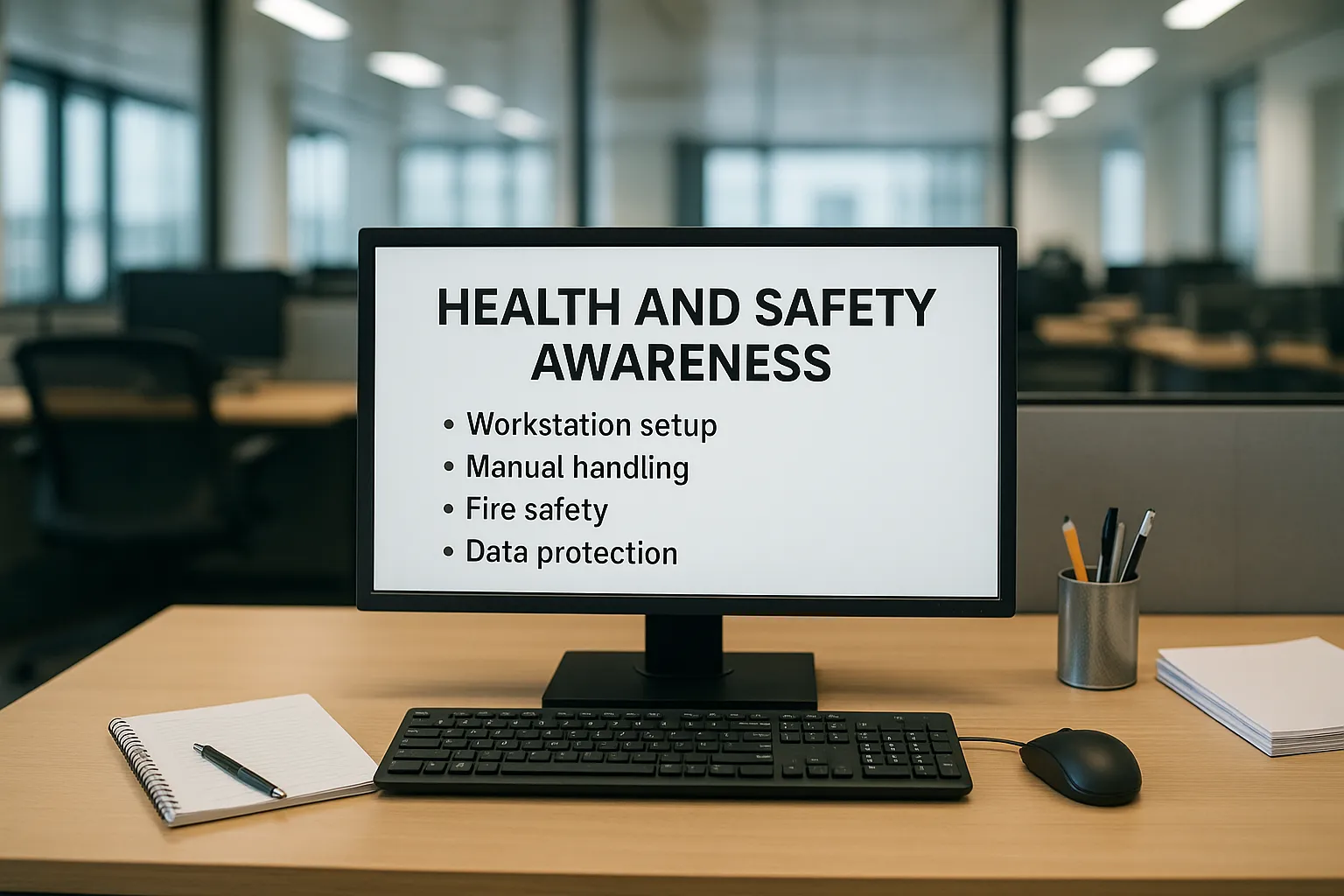
### Health and Safety Awareness
A crucial starting point for any compliance training, health and safety awareness training anchors all other learning modules. It delineates the responsibilities that both employers and employees share under UK health and safety legislation. For individuals in desk-based positions, this involves identifying potential workplace dangers, effectively reporting health and safety concerns, and adhering to established safe working practices.
Participants of this training will learn to identify risks such as slips, trips, and improperly arranged workstations. The course underscores the necessity of complying with internal policies and being pro-active about safety measures. These obligations are paramount, even within the confines of an office environment, reinforcing their everyday applicability.
### Display Screen Equipment (DSE) Awareness
Given that many desk employees spend prolonged hours in front of screens, DSE awareness training becomes increasingly relevant. This training unpacks the health implications associated with poor ergonomics and inappropriate workstation configurations, which may lead to musculoskeletal injuries, eye strain, and fatigue. UK regulations mandate that employers take appropriate steps to mitigate these risks.
Participants will be taught the significance of screen height, proper seating arrangements, optimal keyboard positioning, and the necessity of taking regular breaks. Furthermore, the course instructs staff on how to report discomfort and request ergonomic assessments, thereby promoting long-term health and wellbeing that can significantly reduce absenteeism linked to poor ergonomic practices.
### Manual Handling Awareness
While the majority of desk workers are not involved in heavy lifting, risks associated with manual handling still arise. For instance, lifting packages or moving equipment can lead to injuries if not performed correctly. Manual handling awareness training educates employees on how injuries can occur, alongside strategies to minimise these risks.
This training encompasses fundamental lifting techniques, assessing load weights, and understanding when to seek assistance, thus equipping desk-based employees to operate safely and efficiently.
### Fire Safety Awareness
Fire safety awareness training plays a pivotal role in preparing desk workers for potential fire emergencies. This course highlights prevalent fire hazards in an office setting, such as faulty electrical equipment and obstructed escape routes. Employees will learn about the mechanics of fire, preventive measures they can take, and proper responses if an incident occurs.
Topics cover alarm activation protocols, designated evacuation routes, and meeting points, ensuring that everyone understands their duties during an evacuation. A thorough grasp of these procedures can help alleviate panic and facilitate a safer evacuation.
### Data Protection and GDPR Awareness
Given that many desk workers routinely handle personal data, data protection and GDPR awareness training is vital. This course clarifies how personal information must be collected, processed, and stored in compliance with legal standards. Emphasis is placed on practical steps rather than legal jargon.
Participants will learn core principles such as confidentiality, data minimisation, and secure handling of sensitive information. They are also informed about common pitfalls, like accidentally sending documents to incorrect recipients or leaving confidential files unattended. This training is essential in minimising data breaches and safeguarding both individuals and businesses.
### Anti-Money Laundering (AML)
For desk workers involved in finance, customer onboarding, or regulatory administration, AML training is indispensable. The course covers the foundations of anti-money laundering legislation and elucidates how financial crimes can emerge through routine office practices.
It includes recognising indicators of suspicious behaviour, conducting customer satisfaction reviews, and understanding reporting obligations related to potential money laundering. This training reinforces the critical role desk workers play in preventing illicit activities, thereby protecting the organisation’s integrity.
### Cyber Security Awareness
Desk-based employees are often prime targets for cyber threats, which can infiltrate via emails, websites, and shared systems. Cyber security awareness training educates workers about various attack mechanisms and how to identify red flags.
The curriculum covers phishing attacks, the dangers of weak passwords, and the risks associated with unsafe downloads. By teaching responsible device usage and emphasising the importance of promptly reporting any suspicious incidents, this course serves as a frontline defence against data loss and operational disruptions.
### Equality, Diversity and Inclusion (EDI)
Training focused on equality, diversity, and inclusion sheds light on how UK equality laws are relevant in day-to-day interactions. For those working in desk roles, this training addresses aspects such as equitable treatment, respectful conduct, and avoidance of any form of workplace discrimination.
The course examines protected characteristics and the consequences of biased behaviours at work while promoting individual accountability in fostering inclusivity. This sort of training plays a crucial role in cultivating a respectful organisational culture while reducing the chances of formal complaints or legal repercussions.
### Anti-Harassment and Bullying
Anti-harassment and bullying training sets explicit behavioural expectations within professional environments. This course defines what constitutes harassment and bullying under UK legislation and company guidelines, making it clear that unacceptable behaviour extends beyond physical actions.
Training involves educating employees on verbal and written communication norms, including online conduct. Moreover, it outlines the steps for reporting issues and the processes for addressing concerns, thus enabling early detection of problems and contributing to a safer work atmosphere.
### Stress and Mental Health Awareness
Finally, stress and mental health awareness training is significant in recognising early indicators of deteriorating mental health in the workplace. Desk jobs often involve long hours, meet tight deadlines, and feature sedentary lifestyles—all of which can exacerbate stress.
This course discusses common triggers for job-related stress, their effects on productivity and overall wellbeing, and highlights the importance of accessing support services. It equips organisations to fulfil their duty of care towards employees, cultivating healthier work environments.
### The Importance of Compliance Training
The implementation of compliance training for desk workers goes beyond mere regulatory adherence. Each training module targets tangible risks associated with daily office tasks and behaviours. Collectively, they empower organisations to fulfil their legal obligations, diminish the likelihood of incidents, and maintain standard operating procedures.
For desk employees, these courses elucidate individual responsibilities and expectations in the workplace. For employers, they provide structured methodologies for managing risk, thereby fostering a safer, compliant workplace environment that benefits all stakeholders.
Our Thoughts
To mitigate risks associated with desk-based roles, employers should prioritize comprehensive health and safety training that encompasses not only general health and safety awareness but also specific training related to Display Screen Equipment (DSE), manual handling, fire safety, data protection, and mental health. The article emphasizes the importance of compliance training, which aligns with the Health and Safety at Work Act 1974, requiring employers to ensure the health, safety, and welfare of employees.
Key safety lessons include the necessity of proper workstation ergonomics and the potential risks associated with long periods of screen use, which the Display Screen Equipment Regulations 1992 address. Regular risk assessments should be conducted to ensure workplace setups minimize hazards.
Furthermore, fire safety training is crucial to comply with the Regulatory Reform (Fire Safety) Order 2005, ensuring that employees are aware of evacuation procedures.
Implementing comprehensive training programs and facilitating a culture of safety, including encouraging employees to report concerns, can prevent incidents and promote a safer work environment. This proactive approach supports compliance with UK health and safety legislation and mitigates potential legal breaches.