














Story Highlight
– Farm Safety Foundation launches ninth annual Mind Your Head week.
– UK farming suicides rose 7% from 2022 to 2024.
– Mental wellbeing among farmers hits lowest level in four years.
– New eLearning module to aid suicide awareness among farmers.
– Campaign encourages conversations and community support for mental health.
Full Story
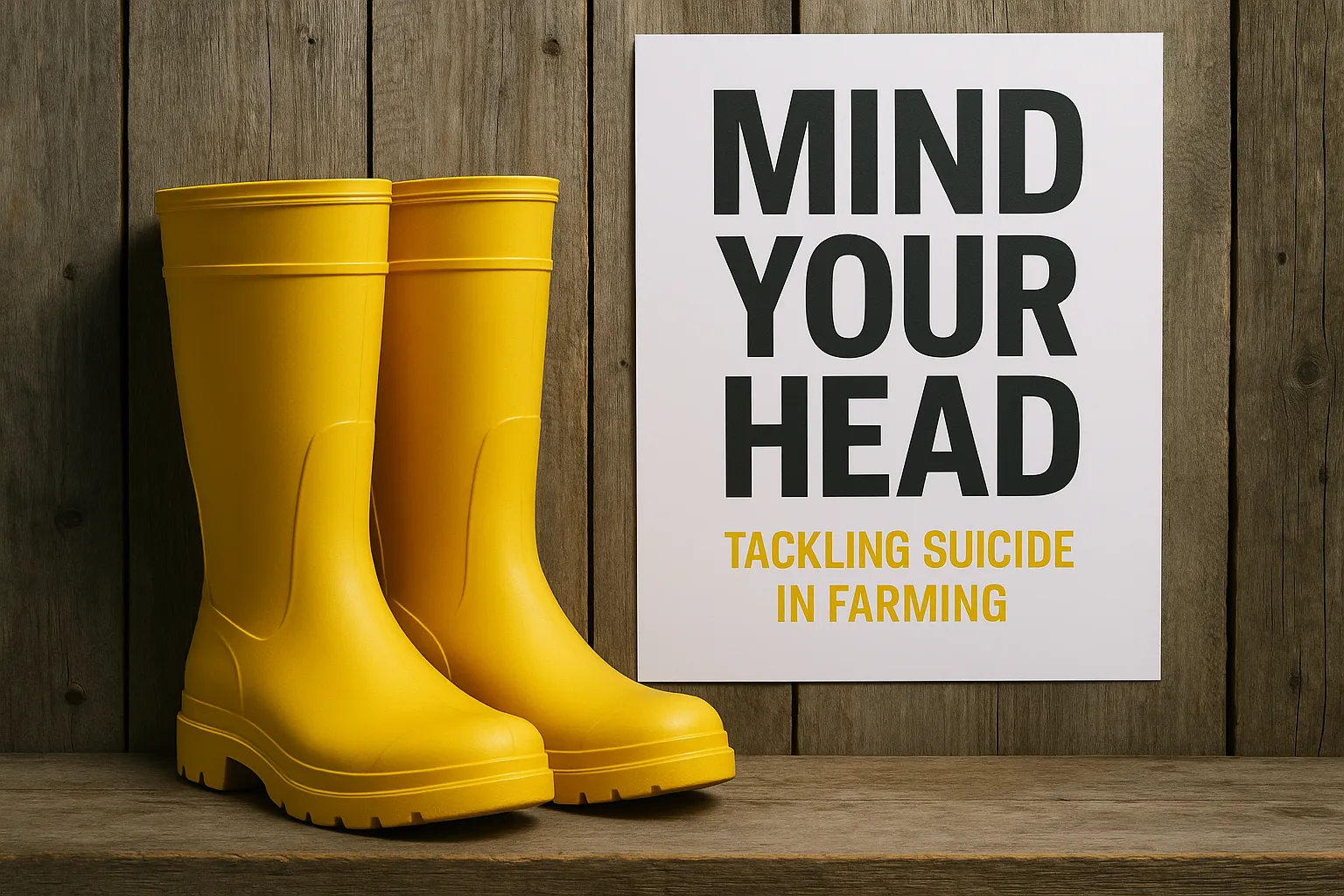
The Farm Safety Foundation, also known as Yellow Wellies, has initiated its ninth annual Mind Your Head Week, aimed at confronting the pressing issue of mental health within the UK farming community. The launch, which took place on Monday, February 9, draws attention to the concerning trend of declining wellbeing among farmers, described as the group’s lowest point in the last four years.
This year’s campaign encourages collaboration among farmers, rural organisations, educational institutions, and Young Farmers’ Clubs to foster essential discussions about mental health, learn practical skills, and connect communities for support. There is a growing consensus that mental health challenges in the farming sector represent a significant, albeit often overlooked, issue within the industry.
Recent figures from the Office for National Statistics confirmed a troubling rise in suicides within the farming and agricultural sector, with 47 incidences recorded in England and Wales in 2024—a 7% increase compared to the previous year.
Stephanie Berkeley, Manager of the Farm Safety Foundation, commented on the initiative: “Over the past nine years, we have made significant strides in raising awareness and improving education around mental health. However, when it comes to suicide prevention, progress has been far more limited.” She emphasised the unique stresses faced by farmers, noting the need for training in suicide prevention customised to the agricultural context.
Berkeley pointed out that while there are vital rural support groups and charities providing help, there is still a critical lack of training focused specifically on the nuances of agriculture. She elaborated, stating, “Farming brings a unique set of pressures—long hours, isolation, financial uncertainty, generational expectations, and physical risk. Conversations about suicide in rural communities require approaches that are real, relatable, and rooted in lived experience.”
The Farm Safety Foundation’s latest research indicates that the mental wellbeing of farmers falls significantly short compared to the general UK population and has recently reached its lowest levels in four years, as measured by the Warwick-Edinburgh Mental Wellbeing Scale (WEMWBS). Notably, older farmers, particularly those over 40, have experienced a sharp decline in their mental health, with the most severe decrease occurring among those aged 61, who have traditionally displayed a resilience that has set them apart.
Berkeley added, “Farming is tough. Long hours, hard graft, and a mindset that says ‘just get on with it’ contribute to an environment where seeking help is often delayed.” She expressed the urgency of addressing suicide awareness and prevention, remarking that many farming families silently bear the weight of crises and losses. “The message this year is simple: learn the steps, start conversations earlier, and look out for each other. When communities know what to say and what to do, lives can be saved.”
Aligned with The Royal Foundation’s National Suicide Prevention Network (NSPN), a four-nations initiative launched to coincide with World Mental Health Day, the Farm Safety Foundation’s campaign aims to enhance access and collaboration across all stages of suicide prevention and postvention services.
Berkeley underscored the importance of personal testimonies in fighting stigma around mental health. She indicated that during this week, the organisation would share narratives from those impacted by suicide, including family members who have lost loved ones and individuals who have navigated through profound personal challenges. These stories, she remarked, are “raw, real, and deeply human.”
Furthermore, a new ‘Suicide Awareness & Prevention’ eLearning module is set to debut this initiative, backed by funding from The Royal Foundation and developed in partnership with Baton of Hope. This course targets the farming community and incorporates best practices and practical scenarios to train participants in recognising warning signs, employing supportive communication, and formulating safety plans with clear referral options for specialised assistance available in the agricultural sector.
Karen Hodgson, associate director at The Royal Foundation, affirmed the significance of this project, remarking, “We are proud to support this initiative, which showcases collaboration among partners of the National Suicide Prevention Network. It exemplifies innovative approaches to suicide prevention and aims to reach communities nationwide that require support the most.”
David Exwood, deputy president of the National Farmers’ Union of England and Wales (NFU), spoke about the challenges faced by farmers. “Farming is undeniably a rewarding way of life but it’s also one of the most demanding, with long hours, financial uncertainty, and pressures that build quietly over time,” he pointed out. He highlighted that an overwhelming 94% of young farmers view poor mental health as a critical hidden issue. “By fostering a culture of open communication, we can encourage those in the sector to seek support without stigma.”
Local MP Joe Morris emphasised the importance of addressing mental health within the agricultural community. “It is absolutely right that more attention is being paid to the mental health of farmers, and I want to thank members of the local farming community for their engagement with me. The findings of The Farm Safety Foundation should be of concern for us all,” he said.
In conclusion, Mind Your Head Week serves as a reminder to the farming community about the importance of mental health advocacy and support. Morris pledged to continue highlighting mental health issues in Parliament, collaborating with both local and national organisations to enhance awareness and provide the necessary resources to assist farmers in crisis.
Our Thoughts
The Farm Safety Foundation’s report highlights a critical need for improved mental health support within the farming community, which is suffering from high suicide rates. To prevent future incidents, targeted training in suicide prevention tailored specifically for agricultural contexts is essential. Current regulations under the Health and Safety at Work Act 1974 require employers to ensure the wellbeing of their employees, which includes mental health. Failure to provide adequate support and training could be seen as a breach of these obligations.
Key lessons include the importance of regular mental health assessments and open dialogues about emotional wellbeing among farmers. Implementing community-driven programs that encourage conversations about mental health can create a supportive environment.
Furthermore, aligning more closely with industry bodies and mental health organizations will strengthen support networks, potentially decreasing isolation and addressing issues of financial stress and long hours that exacerbate mental health challenges. Regular workshops, mental health training sessions, and easily accessible resources should be made available within farming communities to ensure all individuals are equipped to handle mental health issues proactively.