











Story Highlight
– Sand art kit recalled due to possible asbestos contamination.
– OPSS advises parents to store it out of reach.
– Item aimed at children aged five to ten years.
– Follow safe disposal instructions to avoid health risks.
– Refund available by returning item to retailers.
Full Story
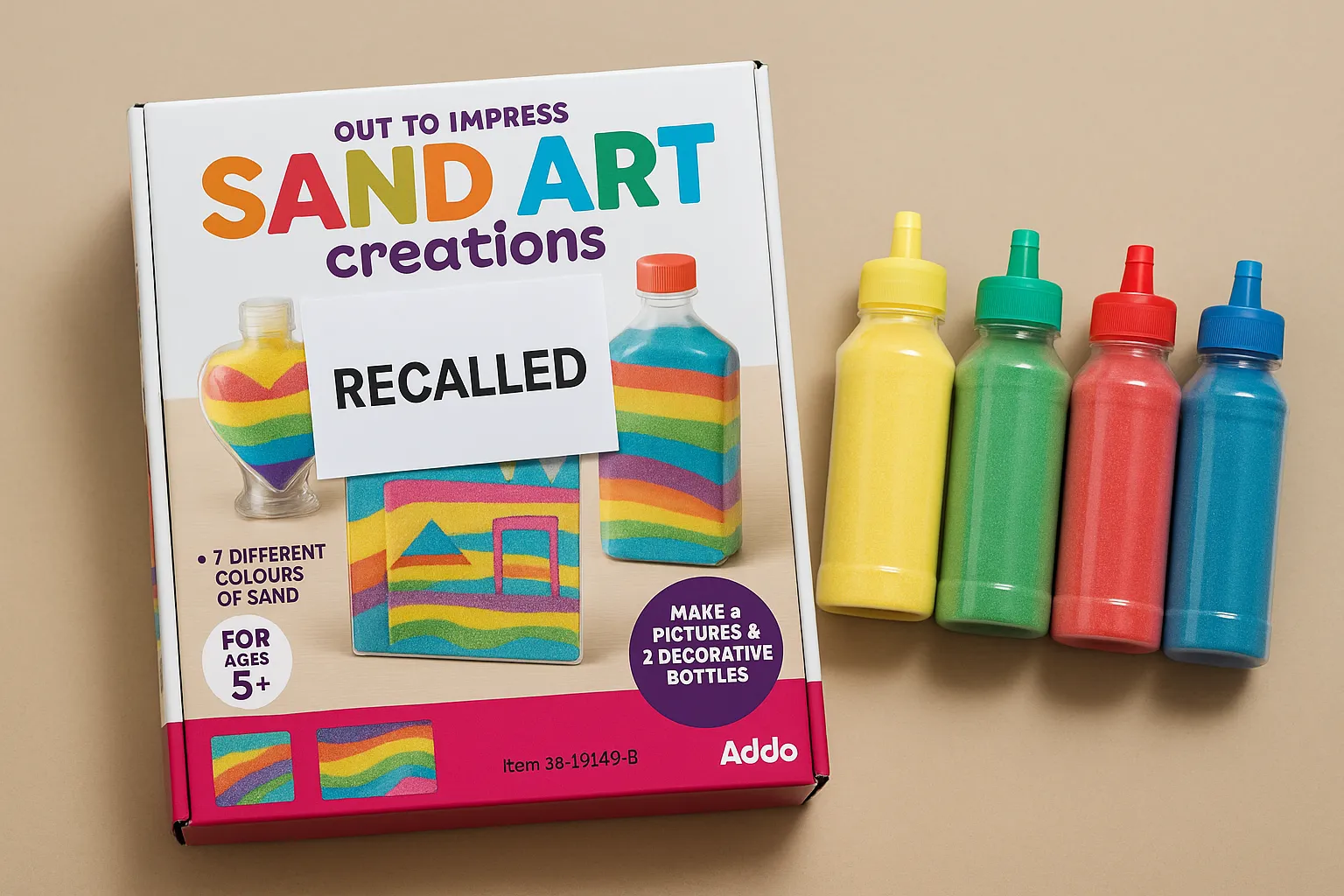
The Office for Product Safety and Standards (OPSS) has issued a significant alert regarding a popular children’s craft item, highlighting serious health concerns linked to potential asbestos contamination. The advisory, disseminated on February 23, 2026, specifically addresses the Addo Play Limited Out To Impress Sand Art Creations kit, urging parents and caregivers to keep the product away from children due to the associated risks.
The affected sand art kit, designed for children aged between five and ten, includes an assortment of seven different sand colours and multiple application bottles to create attractive layered designs. It was available in retail stores from August 2023 until February 2026, with distribution spanning major high street chains such as Matalan, Marks & Spencer, The Entertainer, and Tesco, as well as various online platforms.
Parents who have purchased this product are advised to check for the item code 318-19149-B. Given the alarming nature of the recall, the OPSS has emphasized that the kit fails to comply with the Toys (Safety) Regulations 2011, primarily due to the health risks posed by its potentially contaminated sand.
Asbestos is a naturally occurring group of minerals known for their fibrous structure and heat-resistant properties. Historically, they were widely used in numerous household products; however, due to severe health hazards associated with exposure, the UK has enacted bans on specific types of asbestos. Blue and brown asbestos were prohibited in 1985, while white asbestos was banned in 1999. The risks involved with asbestos are especially pronounced for young children and elderly individuals, as inhaling the fibrous particles can lead to grave respiratory diseases, including lung cancer and asbestosis.
In response to the discovery of possible asbestos in the sand art kit, Addo Play Limited has taken swift action by withdrawing the product from sale and launching a recall. The OPSS has strongly recommended that parents cease use of the kit immediately and safely dispose of it, emphasising that the sand can pose a health hazard.
For those in possession of the affected kit, the OPSS has laid out detailed disposal instructions. If the product is still unopened, users should place the sand in a durable plastic bag, affixing it securely with tape and clearly labelling it. This should then be stored out of reach of children. If the sand has already been used, parents are instructed to clean the area with damp cloths to minimise dust production, donning gloves and a mask during the process for added safety. Once cleaned, children should be kept away from the area until a thorough cleaning has been completed.
Refunds for the product can be obtained either by returning the kit to its point of purchase or by contacting the retailer from which it was acquired directly. It is important for parents to follow the provided disposal guidelines carefully, as any contaminated material can be disposed of in regular household waste, but with adherence to the safety measures outlined.
The OPSS recall notice states: “The product presents a risk to health as the sand may be contaminated with a small quantity of asbestos. Asbestos is a banned substance because it poses a risk to health even at low levels of exposure.” The notice further clarifies the product’s noncompliance with safety regulations, outlining the steps being taken by Addo Play Limited to mitigate risks for consumers.
Health experts have underscored the serious implications of asbestos exposure, particularly for younger populations. With exposure typically resulting from disturbed materials releasing fibres into the air, the potential consequences of contaminated products highlight a pressing public health issue. As such, this recall serves as a vital reminder for parents and guardians to exercise vigilance when purchasing play items for children, ensuring they adhere to safety standards.
The full details of the recall and safety guidelines can be found on the official OPSS website, providing parents and caregivers with the necessary information to navigate this situation effectively.
As consumers, staying informed and adaptable when it comes to product safety is essential. This recent alert regarding the Addo Play sand art kit demonstrates the importance of regulatory bodies like the OPSS in monitoring product safety and protecting public health, particularly for vulnerable communities including children. This case illustrates that while creative play is crucial for development, ensuring the safety of the materials used remains paramount.
Our Thoughts
The incident regarding the contaminated sand art kit underscores critical lapses in safety compliance. To avoid such situations, manufacturers should implement rigorous quality control measures to ensure products do not contain hazardous substances like asbestos, adhering to the Toys (Safety) Regulations 2011, which prohibits the presence of harmful materials in toys.
Key safety lessons include the necessity for thorough hazard assessments during product development and continuous monitoring of supply chains for compliance with health and safety standards. Regular testing of materials used in children’s products could prevent contamination before reaching the market.
The recall indicates a breach of safety regulations, specifically related to the presence of asbestos in a product aimed at children. Asbestos exposure can lead to severe health risks, including respiratory diseases.
To prevent similar incidents, it is imperative for manufacturers to conduct routine audits and engage in transparent communications with suppliers regarding material safety. Additionally, the implementation of a robust reporting mechanism for safety concerns by consumers can enhance proactive responses to potential hazards. Regular training for staff on safety regulations and product safety standards is also essential.