













Story Highlight
– Nearly 2,000 fake weight loss doses seized in UK.
– Raids conducted by MHRA and local law enforcement.
– Counterfeit drugs posed serious health risks to users.
– Warning issued for fake Mounjaro weight loss jabs.
– Consumers urged to report counterfeit medications immediately.
Full Story
**Counterfeit Weight Loss Medication Seized Amid Health Concerns**
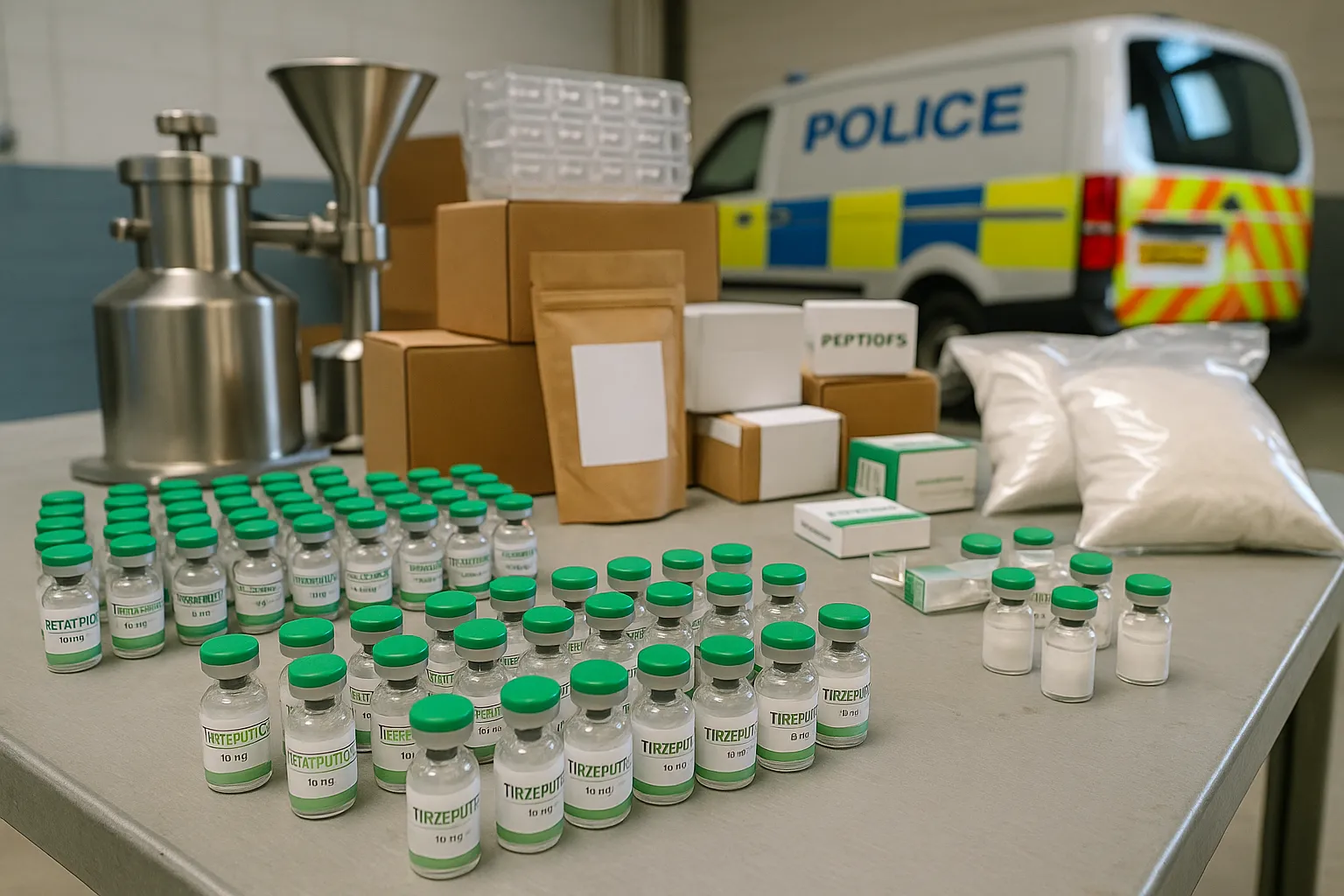
Authorities have intercepted nearly 2,000 doses of counterfeit weight loss medications during a significant enforcement operation conducted in Lincolnshire and Nottingham, just hours before they were scheduled for dispatch to unsuspecting customers. The Medicines and Healthcare products Regulatory Agency (MHRA), through its Criminal Enforcement Unit (CEU), collaborated with local police and other agencies to execute the raids as part of an investigation into the activities of an organised crime group involved in the illegal manufacture and distribution of these unlicensed medicines.
The operation, executed jointly by the CEU, Lincolnshire Police, Immigration Enforcement, and Lincolnshire Trading Standards, identified two sites with strong links to the illicit trade. A farm located near Sleaford, Lincolnshire, alongside a residential property in Grantham, Nottinghamshire, were reported as the hubs for producing and distributing unauthorised weight loss drugs, which included substances like retatrutide and tirzepatide as well as certain peptide products. Authorities also uncovered a range of manufacturing equipment, suspected active pharmaceutical ingredients, and packaging materials at the locations.
In comments following the raids, Dr Zubir Ahmed, the Health Innovation and Patient Safety Minister, emphasised the dangers posed by such unverified medications. He stated, “This week’s raids have taken dangerous, unregulated products off our streets. These medicines are made with no regard for safety and pose serious risks. We will not allow criminals to profit by exploiting people looking for help with their weight.” Dr Ahmed urged the public to avoid purchasing weight-loss medications from unregulated sources and highlighted that only safe, licensed treatments obtained through registered pharmacies and with valid prescriptions should be pursued.
Prompting further alarm, the MHRA recently issued a warning regarding fake Mounjaro weight loss injections that were made available through an online pharmacy. People who purchased 15mg KwikPens are specifically advised to verify if their product bears the batch number D873576 and to discontinue its use immediately if it does. This particular advisory is believed to affect consumers who obtained the product from The Private Pharmacy Clinic, based in Birmingham.
Dr Alison Cave, the Chief Safety Officer at MHRA, noted that while testing confirmed the pens do contain tirzepatide, the active ingredient, there are significant concerns regarding the sterility of these products due to discrepancies in the batch number relative to authentic manufacturer data. She remarked, “Testing has confirmed that the identified fake pens do contain tirzepatide, the active substance in Mounjaro, but because the manufacturing conditions are unknown, we cannot confirm that the contents are sterile. Check the batch number and strength of your KiwiPen. If you have one of the affected pens, stop using it straight away.”
While the health risks posed to those who may have used the affected medications are deemed low at present, health officials are wary of the potential for infection if the safety and storage of the products are compromised. Symptoms of infection to watch for include redness, swelling, discomfort at the injection site, fluid leakage, and systemic symptoms such as mild fever, fatigue, and a sore throat. Additionally, there is concern regarding the possibility of allergic reactions, which could escalate to severe cases such as anaphylaxis, potentially resulting in grave health outcomes.
Dr Cave further urged anyone experiencing adverse effects, whether suspected to be from counterfeit medications or concerns regarding defective products, to notify the agency via the MHRA Yellow Card scheme. She reiterated the importance of safety in medication use, advising against attempts to extract medicine from any defective device.
So far, the MHRA has not received reports of individuals requiring medical intervention after using the counterfeit pens. Issues with the devices came to light following user reports of mechanical problems, exemplified by components detaching during operation. The original manufacturers, Eli Lilly, alerted health officials about these counterfeits after receiving multiple reports of pen failures.
Individuals who suspect they may have procured counterfeit medications are encouraged to directly inform the MHRA through the Yellow Card Scheme, designed to protect drug quality and efficacy within the UK.
For patients owning a 15mg pen with a different batch number, or those with a 7.5mg pen from the same batch, compliance with prescribed guidance is advised. Meanwhile, The Private Pharmacy Clinic has received a ‘notice of conditions’ from the General Pharmaceutical Council, and their website is currently not operational. The MHRA, for its part, continues to monitor the evolving situation closely and has issued a Drug Safety Update for healthcare providers with tailored advice for identifying and managing potentially affected patients.
These incidents occur in the broader context of weight-loss medications classified as GLP-1 drugs, which function by mimicking hormones produced after eating. Current regulations imposed by the NHS stipulate that only individuals with a Body Mass Index (BMI) exceeding 35 with weight-related health issues, or those with a BMI between 30 and 34.9 referred to specialist services, qualify for these treatments. With an estimated 2.4 million individuals in the UK currently relying on weight-loss drugs, many face NHS-imposed restrictions and are compelled to seek private prescriptions, often resulting in exorbitant costs around £200 per month.
Our Thoughts
To prevent the distribution of counterfeit weight loss medications and mitigate associated health risks, several key actions and regulatory measures could have been enhanced.
Firstly, the implementation of stricter quality control and compliance checks on online pharmacies is crucial. The General Pharmaceutical Council (GPhC) and the Medicines and Healthcare Products Regulatory Agency (MHRA) should enforce more robust surveillance on pharmacy practices to ensure adherence to the Medicines Act 1968 and the Human Medicines Regulations 2012, which govern the sale and distribution of medicines.
Additionally, public awareness campaigns regarding the dangers of purchasing medications from unregulated sources should be amplified. The MHRA’s #FakeMeds initiative can be further supported by engaging healthcare professionals to educate patients about safe practices when acquiring medication.
Furthermore, cooperation between law enforcement and health authorities must be improved to proactively identify and disrupt such counterfeit operations before products reach consumers. Heightened inspection protocols at mail distribution centers could further prevent counterfeit medicines from being dispatched.
By addressing regulatory enforcement gaps and enhancing consumer education, similar incidents can be significantly reduced, safeguarding public health and safety.