















Story Highlight
– Babcock employee injured on HMS Audacious at Devonport dockyard.
– Incident occurred on April 2; worker hospitalized.
– Babcock confirmed investigation into the incident’s cause.
– HSE aware and making inquiries regarding the incident.
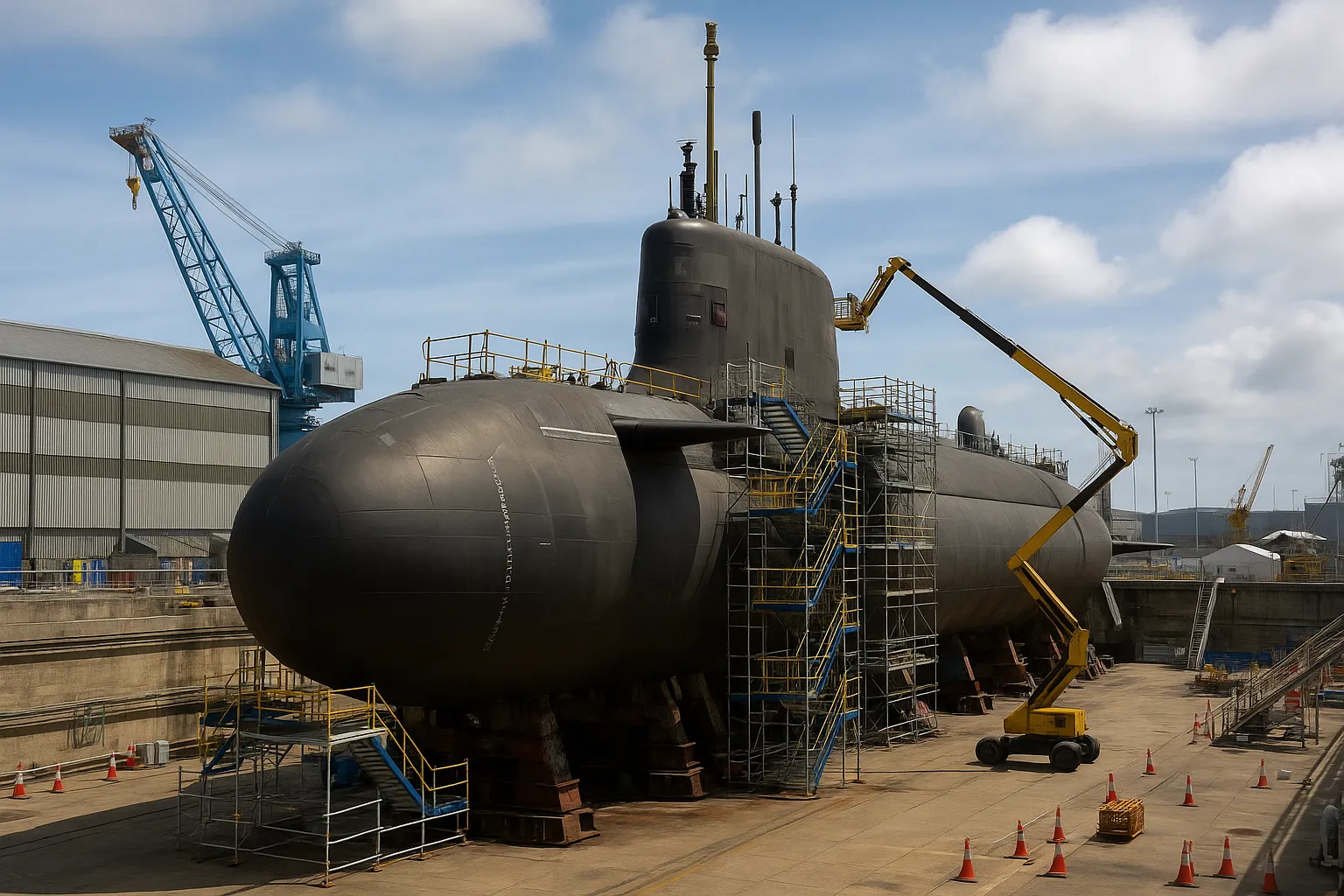
– HMS Audacious is an Astute-class nuclear submarine.
Full Story
A serious incident involving a Babcock employee occurred on a nuclear submarine during maintenance at the Devonport dockyard in the UK, leading to the individual being hospitalised. The event, which unfolded on April 2, has prompted an official investigation to determine its circumstances.
According to reports from PlymouthLive, the injured worker was engaged in operations on HMS Audacious at the time of the incident. Though Babcock has not officially confirmed specific details about the injured party or the nature of the injuries, they have acknowledged that a significant incident did take place and that their primary concern is the wellbeing of the affected employee.
A spokesperson for Babcock stated, “On April 2, a Babcock colleague was taken to hospital following an incident at our Devonport site and our focus is on their wellbeing. An investigation is underway to establish the cause of the incident.” The company emphasised that the health and safety of all personnel is paramount across their operations.
In light of the incident, the Health and Safety Executive (HSE), the independent body responsible for regulating work-related health and safety issues, has been notified and is conducting inquiries. A representative from the HSE commented, “We are aware of this incident and making enquiries.” The investigation aims to ensure that proper health and safety protocols were followed and to prevent future occurrences of similar situations.
HMS Audacious, one of the Royal Navy’s Astute-class submarines, plays a critical role in maritime operations. The submarine, which arrived in Plymouth in 2023, was positioned in a dry dock to facilitate maintenance after concluding its operational duties. Launched in April 2017, HMS Audacious is the fourth vessel in the Astute class, designed for various tasks including anti-submarine warfare and intelligence gathering.
The submarine has recently been involved in significant operations, such as an 11-month patrol in the Mediterranean where divers carried out intricate repairs on ballast tanks, essential for its buoyancy. Following this patrol, HMS Audacious returned to Devonport for maintenance that was necessary to prepare it for future missions.
As investigations continue, the dockyard remains under scrutiny to ensure adherence to safety regulations. This incident serves as a reminder of the inherent risks involved in the maintenance and operation of military vessels, particularly those that are nuclear-powered.
Local experts have expressed concerns regarding safety protocols within the naval dockyard environment. Maritime safety analyst Dr. Emily Thompson highlighted, “Incidents like these underscore the importance of rigorous training and adherence to safety measures in high-stakes environments. It’s vital for companies like Babcock to not only ensure employee safety but also to maintain public trust in their operations.”
Community sentiments have also arisen surrounding the safety of workers in such specialised fields. Local resident and former naval officer, John Roberts, stated, “The dockyard has always been a cornerstone of local employment, but incidents that jeopardise worker safety must be addressed thoroughly. It’s crucial that lessons are learned and regulations are enforced stringently to protect those who serve our country in these capacities.”
This incident at the Devonport dockyard marks another chapter in ongoing discussions about worker safety and the protocols surrounding the maintenance of submarines. As such cases draw public and governmental attention, the focus remains on how to enhance safety measures to prevent future injuries among workers in the industry.
The naval base itself has been a site of operation for various classes of submarines over the years, but this particular event highlights the pressing need for continued vigilance. The HSE and Babcock’s ongoing investigation will be critical in determining whether changes or enhancements to current safety practices are required.
The Ministry of Defence has been approached for further commentary on this matter, though responses are expected to be nuanced given the sensitive nature of incidents involving military assets.
As investigations proceed, it is essential to keep the affected employee’s wellbeing as the primary concern, with hopes for a swift recovery. The incident has sparked broader conversations regarding the health and safety responsibilities of companies engaged in high-risk industries, and the need for robust measures to safeguard employees as they navigate the complex demands of their roles.
In conclusion, the incident at Devonport serves as a stark reminder of the importance of safety in high-risk environments and the ongoing obligation to foster safe working conditions within the military maritime sector. As the enquiry unfolds, the findings will no doubt shape future practices and policies for the better.
Our Thoughts
The incident at Babcock’s Devonport site highlights potential breaches of the UK Health and Safety at Work Act 1974 and associated regulations, including the Management of Health and Safety at Work Regulations 1999, which mandates risk assessments and safe systems of work. To prevent such serious injuries, several improvements could be implemented.
Firstly, comprehensive risk assessments should be conducted specifically tailored to the tasks performed on dry docked submarines, particularly focusing on high-risk activities during maintenance and repairs. Additionally, ensuring that all personnel receive adequate training and are briefed on the specific hazards of working on nuclear submarines could mitigate risks.
Regular safety audits and equipment checks should also be standard practice to ensure all safety measures are adhered to, especially when dealing with complex machinery and underwater repair tasks. Clear communication protocols among workers regarding potential hazards could further enhance safety.
Furthermore, the importance of a culture of safety within the organization cannot be overstated, emphasizing reporting near-misses and safety concerns to prevent incidents before they occur. In conclusion, emphasizing proactive risk management and enhancing training and communication could help reduce the likelihood of similar incidents in the future.