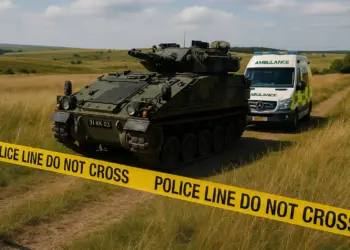
Military inquest opens into death of Captain Muldowney at training exercise
An inquest has commenced into the tragic death of Captain Philip Gilbert Muldowney, aged 25, following a gunshot wound sustained...
Read moreDetailsAn inquest has commenced into the tragic death of Captain Philip Gilbert Muldowney, aged 25, following a gunshot wound sustained...
Read moreDetails



Last updated: 8 October 2025
Author: Jade Anderson, Senior Reporter — UK-Safety.News
This guide covers the full reporting pathway—from immediate response and evidence capture to legal reporting (RIDDOR), internal investigations, and lessons learned. Use it as your standard operating playbook for any incident or near miss.
Preserve life, secure the area, and capture facts. Assign a scribe to timestamp events and collect details while memories are fresh.
✅ Call emergency services if required
✅ Make the area safe / isolate energy sources
✅ First aid and casualty support
✅ Record names, times, conditions, weather
✅ Preserve evidence (photos, samples, CCTV)
✅ Notify supervisors and H&S lead
Report fatalities, specified injuries, over-7-day absences, certain diseases, dangerous occurrences, and qualifying gas incidents within statutory timelines.
• Use 5 Whys to find root causes (not blame).
• Evidence pack: photos, permits, RA/MS, training records, maintenance logs, witness statements.
• Classify causes: human, equipment, environment, process, management.
Convert findings into actions with owners and deadlines. Share lessons in toolbox talks and refresh risk assessments where needed.
• Incident/near-miss report form (PDF/Doc)
• Witness statement template (Doc)
• 5 Whys worksheet (Doc)
• Corrective action log (Sheet)

Copyright © 2025 UK Safety News