












Story Highlight
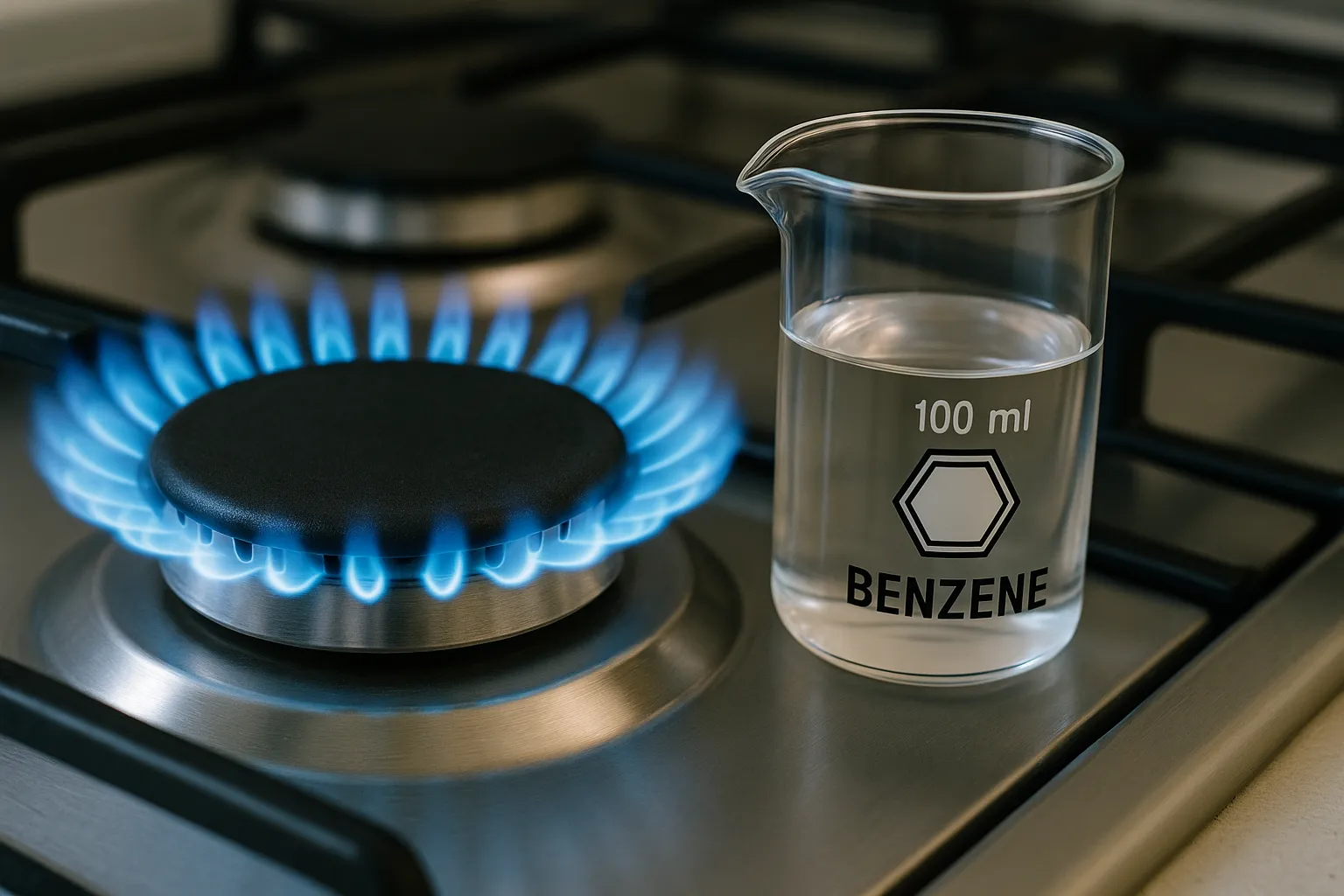
– Cancer-causing benzene found in household gas supplies.
– Study detected benzene in UK, Netherlands, and Italy.
– UK gas has 37 times more benzene than North America.
– 9% of homes exceed national exposure limits for benzene.
– Researchers call for reassessment of reliance on natural gas.
Full Story
New research has revealed the presence of a carcinogenic chemical in domestic gas supplies, raising concerns about public health. The investigation, conducted by scientists from PSE Healthy Energy and Stanford University, has discovered benzene—a known carcinogen—in household gas across several regions, including samples drawn from Edinburgh. This peer-reviewed study, published in the journal Environmental Research Letters, highlights that low-level gas leaks are prevalent, with hazardous emissions potentially being more common than previously reported, particularly in Europe.
In a comprehensive analysis, researchers collected 72 samples of gas from homes in the UK, the Netherlands, and Italy. Dr. Tamara Sparks, the leading author of the study and an air quality scientist at PSE Healthy Energy, expressed surprise at the high concentrations of benzene identified, which significantly exceeded levels reported in earlier studies. “We were surprised by how high the benzene levels were compared to what we’ve seen in previous studies. Given these concentrations, many people could be chronically exposed to benzene without realising it,” she stated.
Dr. Sparks emphasised the uncertainty surrounding the reasons some homes experience gas leaks while others do not, describing the hazard as akin to a “lottery.” She further noted that while this issue has not received substantial public attention, she hopes that increased awareness will prompt actions to mitigate the associated risks.
Benzene is a chemical that naturally occurs in oil and gas reserves and is categorised by the World Health Organization (WHO) as having no safe exposure threshold. The findings of the study indicated that the gas supplied in the UK held, on average, 37 times more benzene compared to standard North American gas. Regional evaluations also showcased significant disparities, with London presenting benzene levels 64 times higher than the North American baseline. Other areas experienced notable levels, including St Neots at 42 times, Manchester at 23 times, and Edinburgh at 16 times that baseline.
The research team investigated gas cookers that were turned off and revealed that close to 40% of kitchens surveyed in the three countries displayed signs of leaks. By correlating data on these leaks with the measured benzene concentrations, the researchers estimated that approximately 9% of the homes tested had leaks surpassing national safety exposure limits, while around 14% exceeded the more stringent WHO guidelines for lifetime exposure.
Moreover, the investigation included modelling for a significant UK pipeline leak that occurred in 2023, showing that benzene levels escalated to four times the EU’s eight-hour worker safety threshold within a 50-metre radius, with lower concentrations detectable as far as 10 kilometres away. This incident is predicted to have exposed tens of thousands of residents in Cheltenham and Bishop’s Cleeve to hazardous benzene levels.
The researchers concluded that effective measures to lessen public exposure to benzene must involve a comprehensive reassessment of Europe’s dependence on natural gas. A spokesperson for Future Energy Networks responded to the findings, stating, “Steps are continually taken to mitigate risks, including investment in mains replacement and leakage reduction, operating a gas emergency service for reports both inside and outside properties, and working to strict gas quality specifications set by the Health and Safety Executive under the Gas Safety (Management) Regulations 1996.”
They further noted, “We will take time to consider the findings of this report in further detail.” The organisation also highlighted their ongoing efforts, noting that sustained investments have successfully reduced gas leakage by approximately one-third across the UK’s gas distribution networks since 2013. This reduction has been achieved through updating aging pipelines, enhancing infrastructure, implementing intelligent pressure control systems, and employing advanced leak detection technologies, including the use of drones and specialised vehicles.
Despite claims that gas losses from leaks typically remain below 0.5%, the sector has outlined plans for the years 2026 to 2031 to continue its efforts in lowering leakage rates. As public awareness rises regarding the potential hazards associated with household gas, the implications of this study may spur further investigation and policy action aimed at improving gas safety and protecting public health in the long term.
It remains essential for communities and policymakers to consider these findings to ensure that domestic gas supplies do not pose hidden health risks to residents. The ramifications of these discoveries are far-reaching, necessitating a proactive approach to gas leak management and monitoring to safeguard public health in an increasingly hazard-aware society. Continued scrutiny and public dialogue may help illuminate the unseen dangers lurking within common utilities and encourage transparency in addressing environmental and health-related challenges tied to gas consumption.
Our Thoughts
The presence of benzene in domestic gas supplies highlights significant lapses in risk management and public health safety associated with gas leaks, indicating a need for improved vigilance and regulatory oversight under the Health and Safety at Work Act 1974 and the Gas Safety (Management) Regulations 1996. To prevent these issues, a more proactive approach in monitoring and mitigating gas leaks is essential.
Key strategies could include the implementation of enhanced regular inspections of gas lines and appliances, increased public awareness campaigns regarding potential gas leaks, and mandatory reporting systems for elevated benzene levels. The findings regarding the regional variation of benzene levels suggest that localized risk assessments could be beneficial, prioritizing monitoring in high-concentration areas.
Furthermore, the research indicates that exposure limits set by WHO were exceeded; this raises concerns about compliance with relevant legislation, including the Control of Substances Hazardous to Health (COSHH) Regulations. Increasing the frequency and scope of compliance checks could ensure adherence to exposure limits and enhance public health protection.
This incident underscores the necessity for ongoing investment in infrastructure and advanced technology for leak detection and risk mitigation to ensure compliance with safety regulations and protect public health.