

















Story Highlight
– Company fined £72,000 for health and safety breaches.
– Worker John Duncan crushed by 2.6-tonne stone saw.
– Incident occurred while he worked alone at Tradstocks.
– Saw was unstable and inadequately secured during disassembly.
– Company admitted breaches leading to Duncan’s traumatic asphyxia.
Full Story
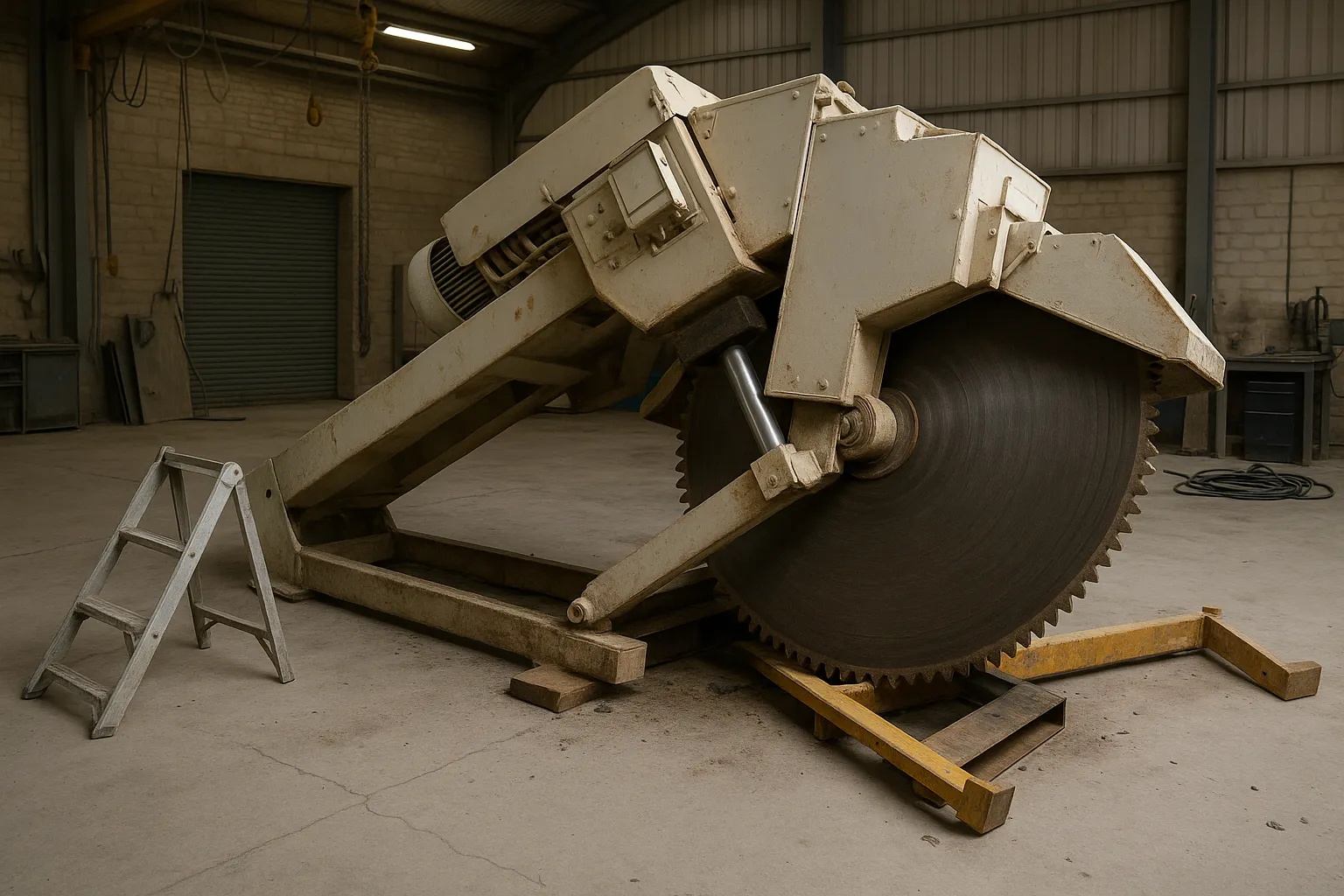
A substantial penalty of £72,000 has been imposed on Tradstocks, a prominent UK supplier of natural stone, following serious health and safety infractions that resulted in the tragic death of a maintenance engineer. The deceased, 39-year-old John Duncan, lost his life when a colossal 2.6-tonne stone cutting saw toppled over while he was dismantling it at the company’s facility in West Calder, West Lothian.
The incident occurred while Mr Duncan was working alone in a shed specifically designated for housing the large saw. The circumstances surrounding the accident have raised significant concerns regarding the company’s adherence to health and safety regulations. Tradstocks entered a guilty plea at Livingston Sheriff Court, acknowledging that they had placed their employees at risk of injury.
Depute Fiscal Gail Adair detailed the critical factors that contributed to the fatal occurrence. She noted that Mr Duncan and his father, also named John, had worked together to lower the enormous saw from its steel frame the day prior to the incident. On the day of the tragedy, Mr Duncan was completing the task by himself. “The machine was top-heavy and was not adequately propped up and secured,” Ms Adair stated, highlighting the saw’s precarious centre of gravity, which made it particularly unstable during the dismantling process.
In a bid to articulate the challenges faced by Mr Duncan and his father, Kevin Duguid, the legal representative for Tradstocks, told the court that discussions had occurred involving a company director regarding the saw disassembly procedure. However, despite their combined experience of 60 years in the industry, they were left to tackle the intricate job independently, without sufficient guidance or supervision.
Compounding the situation was the discovery of a broken ladder located near Mr Duncan at the scene. Mr Duguid suggested that the ladder’s purpose was uncertain. “It’s unclear as to the use or intended use of the ladder at the side of the body,” he explained, implying that it might have been used in an attempt to access an elevated area to loosen a shackle connected to the crane. However, he asserted that this potential use would not directly relate to the task for which Mr Duncan was responsible.
The court proceedings highlighted the tragic implications of failure to adhere to strict safety protocols in a workplace setting, particularly one that involves heavy machinery. Mr Duguid further commented on Tradstocks’ historical commitment to safety, noting that prior to this incident, the company had maintained a blameless record in matters concerning workplace health and safety. He also underscored the firm’s willingness to cooperate with the investigation following the tragic accident.
Commentary from industry experts emphasises the vital importance of stringent safety measures and proper training when operating heavy machinery, particularly in complex disassembly tasks. The tragic loss of Mr Duncan serves as a grave reminder of the potential consequences that can arise when safety protocols are not diligently followed.
Local responses to the incident have prompted discussions regarding workplace safety regulations across the region. Many community members expressed their shock and condolences, emphasising the human cost of such workplace tragedies. The loss of a life not only impacts the family involved but resonates throughout the broader community, affecting colleagues and friends who are left to grapple with the aftermath of the tragedy.
Health and safety experts from across various sectors are advocating for increased scrutiny and potential reforms in existing regulations to enhance protections for workers, particularly in industries involving heavy equipment. The necessity for comprehensive training programs and stringent oversight during safety-critical operations is underscored by advocates who highlight that even experienced workers like Mr Duncan can find themselves vulnerable without adequate safeguards.
As businesses navigate the complexities of safety fabrications, the importance of fostering a culture of diligence in health and safety cannot be overstated. Industry leaders are urged to examine their practices critically, implementing rigorous training sessions that underscore the significance of precautionary measures. They must also ensure that employees have access to the necessary resources and supervision when performing hazardous tasks.
Furthermore, the tragic nature of Mr Duncan’s passing has reignited conversations about mental health support for workers in high-risk industries. With professionals frequently exposed to both physical dangers and emotional stressors, the provision of adequate mental health resources is increasingly seen as a crucial component of workplace safety.
In summary, the fine imposed on Tradstocks serves not only as a consequence for its business practices but also as a pivotal moment prompting reflection on the broader implications for workplace safety standards. The tragic passing of John Duncan sheds light on the critical need for rigorous health and safety compliance to safeguard the welfare of workers in all industries, setting the stage for significant industry discussion and potential reform aimed at preventing future tragedies.
Our Thoughts
The tragic incident involving the worker’s death at Tradstocks highlights several critical failures in health and safety management, leading to severe violations of the Health and Safety at Work Act 1974 and the Management of Health and Safety at Work Regulations 1999.
To prevent such incidents, Tradstocks should have implemented a robust risk assessment specific to the dismantling of the stone saw, including the identification of high-risk tasks and the development of appropriate control measures. Ensuring that the saw was securely propped and stabilized while being dismantled would have been vital, given its top-heavy nature.
Moreover, the absence of adequate supervision and guidance speaks to a failure to comply with Regulation 13 of the Management Regulations, which mandates having sufficient, qualified personnel available during hazardous operations. The practice of allowing a worker to perform such a dangerous task alone, particularly without training on safe dismantling procedures, represented a significant breach of duty of care.
To prevent similar incidents, companies must prioritize comprehensive training for staff, employ a team approach for complex tasks, and enforce strict adherence to safety protocols. Regular equipment inspections and maintenance checks should also be conducted to ensure workplace safety standards are consistently met.