












Story Highlight
– Council advises elderly to ‘wiggle toes’ for warmth.
– Temperatures may plunge to -8C in Britain.
– UKHSA issues cold health alerts for all of England.
– Significant snow expected, especially in Scotland’s Highlands.
– Vulnerable populations urged to check on neighbors and friends.
Full Story
As Britain braces itself for a significant drop in temperatures accompanied by harsh winter weather, local authorities are taking proactive measures to safeguard the elderly and vulnerable members of the community. Ahead of what has been described as an “Arctic blast,” Durham County Council has issued guidance aimed at helping senior citizens stay warm during the impending cold snap.
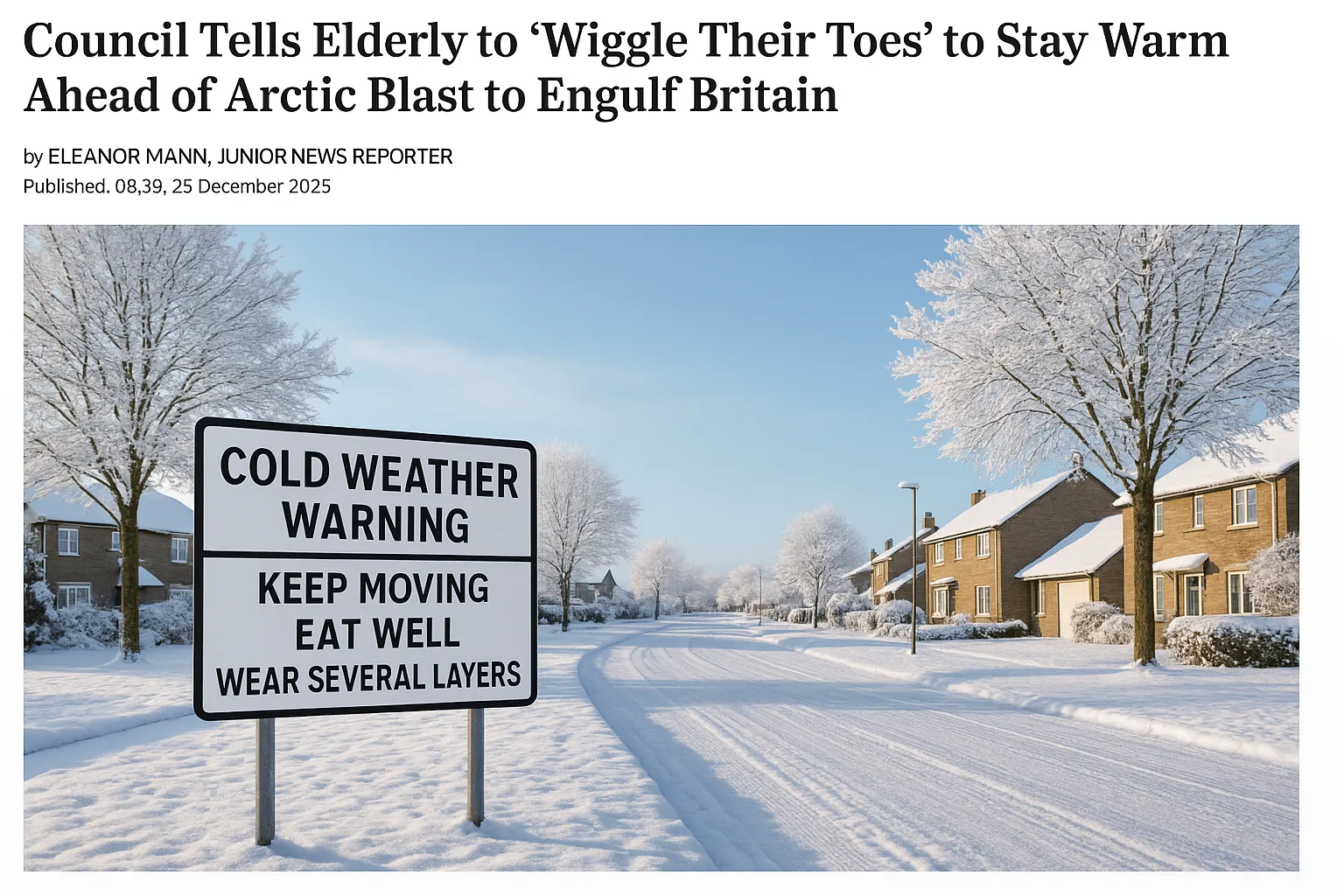
The advice, featured prominently on the council’s website, encourages older residents to adopt simple practices that can aid in maintaining their body heat. Residents are urged to “wiggle their toes” as a reminder to keep their circulation active, even if they are seated. The recommendations also advise against remaining inactive for prolonged periods, promoting light movement such as stretching the legs to bolster warmth.
In addition to these suggestions, the council emphasises the importance of a nutritious diet, recommending regular consumption of hot meals and drinks to ensure adequate warmth. The council’s announcement coincides with alerts from the UK Health Security Agency (UKHSA) that have been issued across England, signalling a significant risk to health due to the cold conditions. These alerts are set to remain in effect until at least January 5, with snow warnings currently active in Scotland, where accumulations could reach substantial amounts.
Forecasts indicate that certain regions in the UK could experience temperatures plummeting as low as -8C in the coming days. Council policy encourages residents to remain vigilant for signs of distress in elderly neighbours, particularly those who may not have ventured outside for a few days or whose curtains remain closed. “Check in on them and see if they are okay,” the guidance advises, highlighting the importance of community support.
A spokesperson for Durham County Council remarked that the winter wellness information provided has been carefully curated in collaboration with various partners, including social care teams and health services. The objective is to equip residents with practical advice to remain safe during extreme weather. “We also use our social media channels to share messages with the public and work collaboratively before and during the cold weather season,” the spokesperson noted.
This cold weather alert follows an unseasonably mild December, prompting a stark transition as the new year approaches. Met Office forecaster Dan Stroud described the shift in weather patterns, indicating a move away from settled conditions to a more unsettled and wintry forecast, particularly affecting northern regions. “We’re losing this sort of settled but chilly conditions, and bringing in something a little bit more showery,” he explained.
The UKHSA has highlighted that the anticipated cold weather could disproportionately affect the health of particularly vulnerable groups, including those over 65 and individuals with underlying health conditions. They noted that it is likely to increase fatalities among these populations and underscore the potential for heightened demand on health services. Indoor temperatures in settings such as hospitals and care homes are also a concern, with the risk of dropping below the recommended safety levels.
Dr Agostinho Sousa, who leads the extreme events and health protection division at UKHSA, stressed the necessity of checking in with vulnerable friends, family, and neighbours during this period. The drop in temperatures poses risks of adverse health effects, such as heart attacks, strokes, and respiratory infections, particularly among the elderly and those with pre-existing health issues.
In preparation for the harsh conditions, the UKHSA has issued a yellow cold health alert covering regions including the East Midlands, South East, and London. This alert warns of expected temperatures between 4-6C starting from New Year’s Day, accompanied by snow and ice that may hinder travel and daily activities.
Weather specialists predict travel disruptions as heavy snow showers lead to challenging conditions on the roads. By Friday, snowfall of 2-5cm is anticipated in many areas, with up to 10cm in localised regions and notably higher amounts at elevations above 200m. In the Highlands and other mountainous areas, forecasters warn that snow accumulation could exceed 30cm.
Additionally, the Alzheimer’s Society has raised concerns about how colder temperatures can particularly affect those living with dementia, who might not recognise or communicate their discomfort. The charity advocates for communities to actively check on loved ones affected by dementia, ensuring they are appropriately dressed, warm, and maintaining regular meals and hydration. They encourage caregivers and family members to promote movement and outdoor exposure to natural daylight while being cautious of slippery conditions.
As community-focused measures are underway, the importance of collective vigilance and support systems becomes increasingly apparent. Local councils, healthcare providers, and charities play a critical role in ensuring that those most vulnerable are not left isolated during the severe winter weather. The challenge ahead serves as a reminder of the impact weather extremes can exert on human health, particularly in the colder months.
Our Thoughts
The guidance issued by Durham County Council highlights important recommendations for vulnerable elderly individuals during cold weather. However, this approach could be supplemented with more proactive measures to prevent health risks associated with extreme cold. Key improvements include ensuring that care homes and hospitals maintain indoor temperatures at safe levels (ideally above 18°C), as stipulated by the Health and Safety at Work Act 1974, which mandates suitable working conditions.
Additionally, the council could have implemented a robust welfare check system, particularly in vulnerable communities, to actively monitor and assist those at risk. This aligns with the principles of the Care Act 2014, which emphasizes the duty to protect and support individuals in need.
Furthermore, the regulations concerning the management of risks to health and safety during severe weather events appear to have been inadequately prioritized, which may constitute a breach of the Management of Health and Safety at Work Regulations 1999.
To prevent similar incidents, councils and health agencies should enhance collaboration and communication strategies ahead of weather warnings, ensuring that comprehensive support systems are in place for high-risk populations.