














Story Highlight
– Elderly woman died alone in crowded A&E corridor.
– Witness described the scene as chaotic and overwhelming.
– Paramedic covered deceased woman’s face for dignity.
– Councillors criticized lack of adequate care in hospitals.
– Health board acknowledged need for significant improvements.
Full Story
A tragic incident has recently come to light involving the death of an elderly woman in the corridor of Ysbyty Glan Clwyd’s Accident and Emergency (A&E) department. This distressing event highlights ongoing concerns over overcrowding and the quality of care in Wales’ healthcare system.
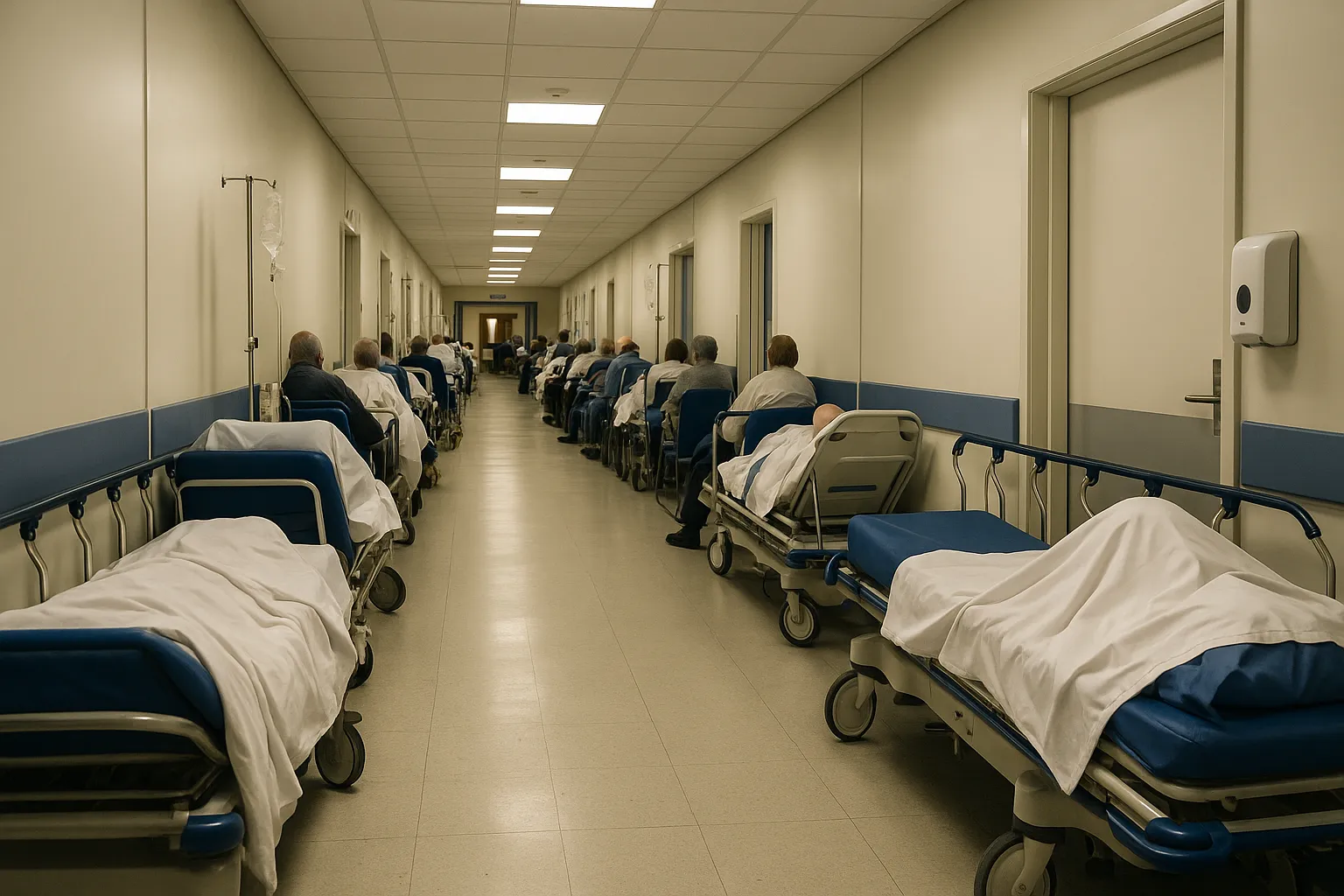
The narrative was shared by Nadia Wainwright, a resident of Henllan in North Wales, who found herself in the A&E as her partner was unwell. In a distressing account, she described witnessing the elderly woman’s final moments alone in the corridor, amidst what she characterised as an “extremely overcrowded” environment. Reports indicate that beds were literally lining the corridors, a troubling scenario that poses significant questions about patient care standards.
Wainwright stated, “My mother-in-law and I noticed that the patient did not seem to be moving.” It was under these harrowing circumstances that they noticed the lady appeared unresponsive, causing excessive concern as they awaited help for her partner. The condition of the emergency department was further compounded by countless patients seated in chairs, adding to the chaotic atmosphere that made it nearly impossible to discern who required immediate attention.
As the situation unfolded, Wainwright observed that although the elderly woman seemed to be in distress, with audible grunting sounds, medical personnel were not attending to her needs. “She had passed away alone in the corridor with no privacy and no one holding her hand,” Wainwright recalled, expressing her anger and frustration regarding the treatment of a vulnerable patient in such a vital service.
After witnessing the woman’s death, a paramedic finally intervened, calling for help and placing a blanket over the deceased’s face out of respect. “This was extremely upsetting for us to witness,” Wainwright reflected, adding that it was her first experience with a deceased person. “I know NHS staff are under huge pressure, but no patient, especially an elderly and vulnerable person, should be left alone in a corridor in such circumstances.”
Wainwright’s frustration was compounded by another experience while in the same department. She noted that her own mother had to assist an elderly lady who was in need of basic care, illustrating further the inadequacies within the department. Concern over the service has been echoed by local councillors, with Rhyl councillor Brian Jones calling attention to “the flaws in A&E in Betsi Cadwaladr University Health Board.” He urged the senior management to confront the realities of the crisis rather than remaining in denial.
Similarly, Tremeirchion councillor Chris Evans expressed outrage, stating, “There is no way that anybody should be dying in a corridor while staff are walking past.” He highlighted a severe discrepancy in resources, signalling that despite efforts to expand facilities, such as a new hospital in Rhyl that will provide a scant 14 beds, the current issue of inadequate capacity persists.
In light of these events, Angela Wood, the executive director of nursing and midwifery for the health board, acknowledged the distressing circumstances detailed in Wainwright’s account. While unable to comment on specific cases due to patient confidentiality, Wood affirmed the commitment to ensuring care is delivered with dignity and compassion. “Corridor care is not something we want for our patients,” she stated, recognising the overwhelming pressure facing Emergency Departments across the UK.
Wood highlighted that the current situation involves many patients waiting beyond acceptable periods, and this has a significant emotional toll on both family members and other patients. “We know that at times some patients are not receiving the standard of environment or experience we would want for them, and we are absolutely committed to addressing this,” she affirmed.
The health board is implementing measures intended to alleviate the issues, which include placing experienced clinicians at the front lines to expedite patient assessment, enhancing access to specialist teams, and increasing the overall capacity of care in the community. Collaborative efforts with local authorities are also underway to mitigate bottlenecks caused by patients awaiting discharge when they are medically fit to leave.
The Welsh Government has responded to the concerns raised by the incident, with a focus on ensuring that patient dignity and safety are priority objectives. A spokesperson stated, “We aim to end this practice with system-wide reform,” indicating that steps are being taken to enhance how care is organised and delivered within the NHS in Wales.
As this situation continues to unfold, it is clear that wider systemic improvements are needed to ensure that patients, particularly the elderly and most vulnerable, receive the dignified care they deserve. The emotional impact of witnessing such traumatic experiences cannot be understated, and they serve as a crucial call to action for health boards and local governments to reform healthcare delivery.
Our Thoughts
The incident described highlights significant breaches of UK health and safety legislation, particularly the Health and Safety at Work Act 1974, which mandates ensuring the safety and dignity of vulnerable patients. Key safety lessons include the necessity for adequate staffing levels, training, and effective crowd management in emergency departments to prevent such tragedies.
Had appropriate resources been allocated, the elderly woman would likely have received timely medical attention, avoiding her distressing death in a public corridor. The use of corridor care, as acknowledged by hospital management, is detrimental to patient dignity and violates principles of patient-centered care outlined in the National Health Service Constitution.
To prevent similar incidents, health boards must enhance patient flow management and ensure that all patients are treated in designated care areas, equipped with necessary medical oversight. Additionally, there is a clear need for continual assessment of patient care environments and protocols, ensuring they meet the standards required for safe and dignified treatment. Implementing these changes could mitigate the risk of overcrowding and potential fatalities in emergency settings.