

















Story Highlight
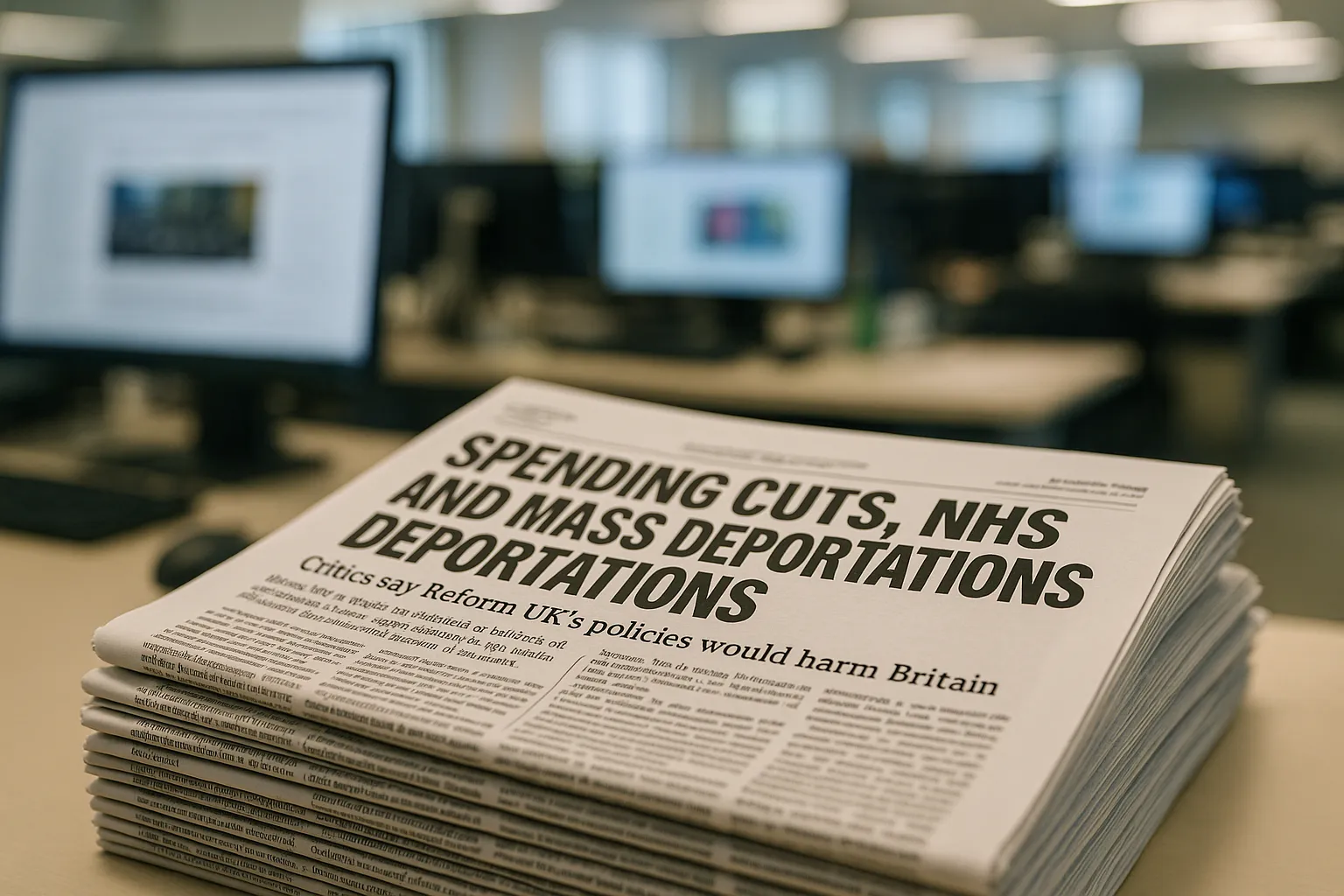
– Reform UK leads polls but faces criticism of policies.
– Proposed cuts include £300 billion in public spending.
– NHS budget could see a £26 billion reduction.
– Plans to deport hundreds of thousands of migrants.
– Reform UK aims to abolish Online Safety Act entirely.
Full Story
Nigel Farage, the leader of Reform UK, is making waves in British politics as his party emerges as a prominent contender in the run-up to the next General Election. A series of ambitious proposals have been revealed, showcasing a vision that has stirred both support and controversy within the electorate. Among the bold promises made by Farage’s party are significant cuts to public spending, an overhaul of the National Health Service (NHS), and a drastic approach to immigration.
Despite Reform UK currently leading in opinion polls, with a considerable increase in visibility and support, there remains a notable skepticism among voters regarding the feasibility and impact of their proposed policies. Recent polling by Mirror indicated that Farage’s approval rating sits at a challenging -4, reflecting doubts about the party’s capability to effectively manage key issues.
A central component of Reform UK’s platform is the intention to swiftly reduce public spending significantly. The party aims to restrict state expenditure to 35% of the nation’s GDP, which would necessitate a staggering reduction of approximately £300 billion. Richard Tice, the party’s deputy leader, outlined this goal during a recent podcast, stating the need for deep cuts to government budgets. Critics, including former Prime Minister Gordon Brown, have raised alarms that essential services such as education and healthcare could face severe ramifications.
In an added layer to their strategy, Reform UK has proposed a £26 billion cut to the NHS, contrasting this with tax incentives for those opting for private healthcare services. Tice reasoned earlier this year that state funding to the NHS should be reconsidered, suggesting that incentivising private care could alleviate some issues facing the beleaguered healthcare system. His remarks sparked significant debate, raising questions about the implications for vulnerable populations reliant on public healthcare.
Farage’s vision extends beyond fiscal policy and touches upon the very structure of healthcare in the UK. He has indicated openness to the idea of moving away from funding the NHS through general taxation, hinting at the possibility of adopting an insurance-based model. In discussions earlier this year, he expressed his desire for a more effective delivery of health services, although he stopped short of endorsing a specific alternative model.
The party’s proposals for taxation are equally controversial. Among its most contentious ideas is a so-called “Britannia Card,” which would permit foreign millionaires and billionaires residing in the UK to pay a one-time fee of £250,000 in exchange for significant tax advantages, including relief from inheritance tax and tax on foreign income. Critics have labelled this initiative as a “golden ticket” for the ultra-rich, arguing that it could potentially harm the nation’s tax revenue by an estimated £35 billion over five years, a figure put forth by tax expert Dan Neidle.
On the immigration front, Farage has articulated plans to abolish the status of indefinite leave to remain (ILR), potentially resulting in the deportation of hundreds of thousands of legal migrants from the UK. Zia Yusuf, Reform UK’s head of policy, elaborated on this proposal, which could lead to existing ILR holders losing their settled status, thus prompting widespread concern over the human rights implications. Prime Minister Sir Keir Starmer condemned this policy, labeling it as “racist” and damaging to the social fabric of the nation.
The party’s environmental policies have also attracted scrutiny. Reform UK has expressed intentions to scrap net-zero commitments, a move attacked by the Labour Party as a threat to over 950,000 jobs in sustainable sectors. Observers note that such a reversal could leave the UK vulnerable to international gas supply crises, as reliance on imported energy increases. Tice’s prior dismissals of climate change science as “garbage” further fuelled concern among environmentalists about the direction Reform UK intends to take.
Furthermore, the promotion of fracking for shale gas extraction has drawn fierce opposition. The party argues that it could unlock vast energy reserves, but critics point to the potential environmental harm and public safety issues posed by such operations. Former government officials have described fracking as “expensive” and “polluting,” complicating the conversation surrounding the party’s energy policy.
Reform UK is also poised to engage in a potential trade conflict with the European Union (EU) by proposing restrictions on benefits for EU citizens residing in the UK. The plan involves providing those on universal credit a brief notice period before their benefits are terminated, which could complicate negotiations post-Brexit and incite retaliatory measures from European leaders.
In a bid to eliminate online protections, the party has signalled its intent to dismantle the Online Safety Act, a move critics fear would expose the vulnerable to online harms. Yusuf has emphasised that repealing the act will be a top priority for a Reform government; however, there is no clarity on what protections would replace it.
Finally, the party is advocating for significant changes to workers’ rights, intending to abolish the recently introduced Employment Rights Act. This legislation had established protections like paternity leave from the first day of employment and protections against exploitative labor practices. Tice’s call to repeal such provisions raises alarm among trade unions and worker advocacy groups, who argue that the dismantling of these protections could lead to exploitation and insecurity in the workplace.
As Reform UK continues to campaign, the implications of these bold proposals will be scrutinised closely. With a shifting political landscape and growing voter engagement, the viewpoints shared by Farage and his team provide a critical lens through which the future of UK governance will be debated. The reactions from established political parties and the electorate will likely shape the discourse in the months leading up to the election, ensuring that the stakes remain high for all involved.
Our Thoughts
The article outlines several controversial policies proposed by Reform UK that could significantly impact public health and safety. To avoid potential negative consequences, a thorough risk assessment should be conducted in line with the Management of Health and Safety at Work Regulations 1999. This would identify areas where cuts and changes could lead to safety risks in public services, especially in the NHS.
Key lessons include the importance of maintaining adequate funding for health services to ensure safe practice standards, as mandated by the Health and Safety at Work Act 1974. Proposals such as massive cuts to NHS funding and the introduction of an insurance-based health model could breach regulations related to the provision of safe and effective healthcare.
Furthermore, proposals to abolish the Online Safety Act could expose individuals to increased risks online, contravening laws aimed at protecting users. Protecting workers’ rights is also essential for maintaining workplace safety; therefore, abolishing the Employment Rights Act could lead to exploitation and unsafe working conditions, violating several health and safety regulations.
Overall, policies should prioritize safety and welfare in line with UK legislation to prevent similar incidents in the future.