












Story Highlight
– Farmer Sam Stables highlights mental health crisis in agriculture.
– Nearly £50,000 raised for young farmers’ mental health support.
– Increasing suicide rates among farmers raise urgent concerns.
– Inheritance tax changes add financial pressure on farming families.
– Farming community faces severe uncertainty and mental health challenges.
Full Story
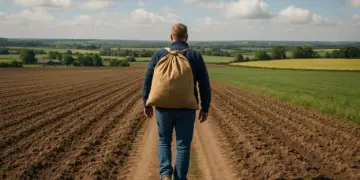
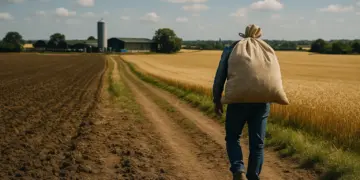
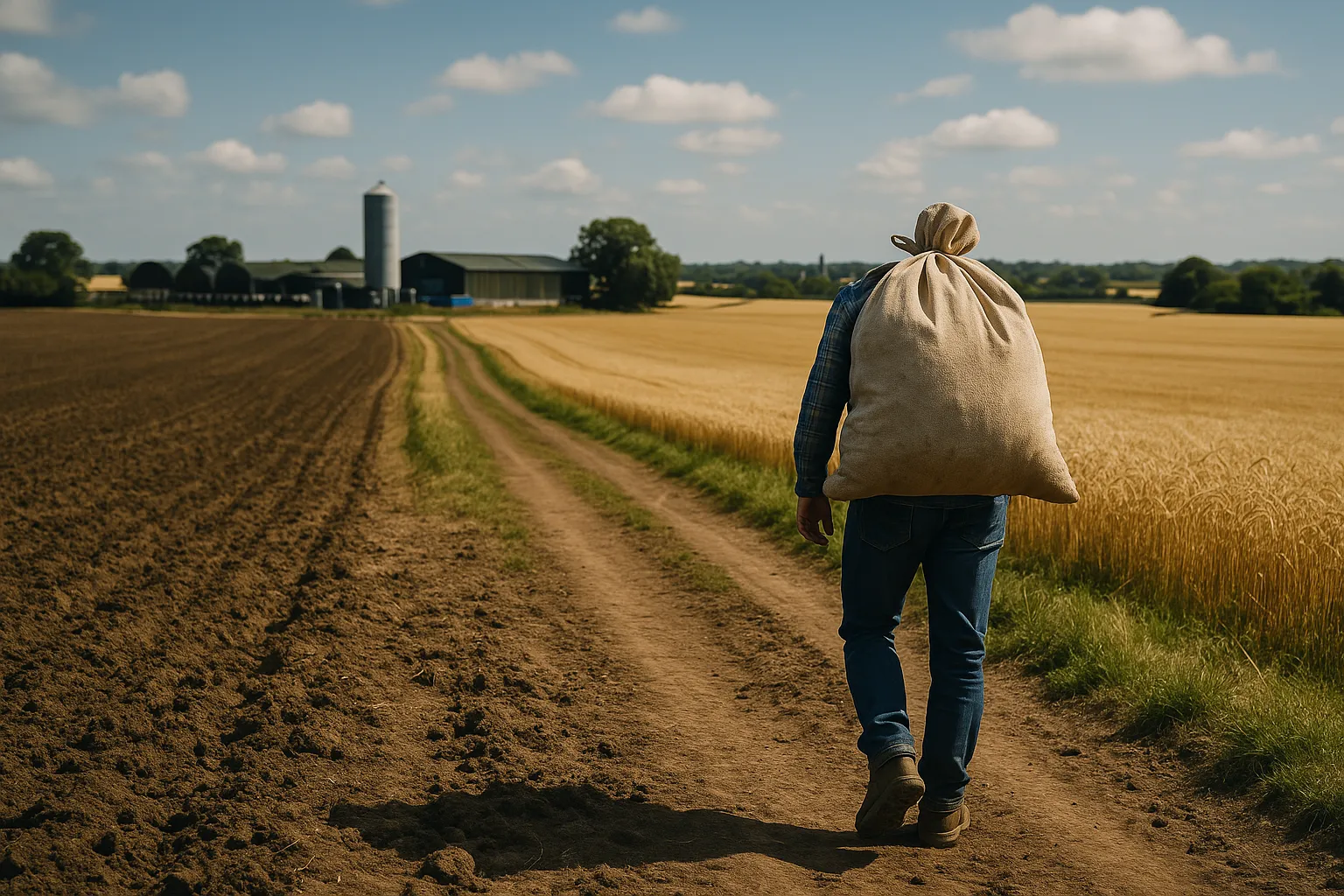
A notable journey of resilience and determination took shape recently as Sam Stables, a 46-year-old farmer from Herefordshire, embarked on a 142-mile trek to London, carrying a heavy sack on his back. His mission: to shine a light on the often-overlooked mental health challenges faced by those in the agricultural sector. Stables, who has first-hand experience with mental health struggles, has made a fervent plea for enhanced government support to help alleviate the pressures that he and many other farmers are experiencing.
Over the course of his walk, Stables managed to raise nearly £50,000, which he intends to direct towards helping young farmers cope with the mounting difficulties of the profession. He identifies a “perfect storm” of factors—economic pressures, unpredictable weather patterns, and emotional well-being issues—as driving the need for urgent change. Unless action is taken, he warns, more lives could be lost to suicide within the farming community.
Stables established the charity We Are Farming Minds after enduring severe mental health challenges himself, intensifying about 14 years ago. He has recently seen a concerning increase in calls to the charity’s helpline, which has more than doubled in the past year. A significant contributor to this distress is the introduction of the Family Farm Tax by the Labour Government as part of the 2024 Budget, imposing a 20% inheritance tax on agricultural assets valued over £1 million starting in April 2026. This unanticipated financial strain has generated not just personal worry for farmers, but a broader uncertainty that threatens the stability of food production in the UK.
In response to growing concerns over the potential impact of this policy, the Treasury raised the inheritance tax threshold to £2.5 million in December, following considerable pressure and warning signs that many farming families could be forced to sell their land. Campaigns such as the Daily Express’s Save Britain’s Family Farms have garnered attention, calling for the abolition of this tax.
Stables, who operates as a tenant farmer on Duchy land in Herefordshire, team up with the Farm Safety Foundation to jointly advocate for mental health awareness. Recent statistics from the Office for National Statistics have highlighted the severity of the issue, revealing that in 2024, 47 farmers across England and Wales ended their lives—a stark 7% rise from 2022.
“This trek is my way of letting the country know just how heavy a load farmers must carry daily,” he stated during a media interaction. He emphasised the essential service farmers provide, noting, “The work of the agricultural community is indispensable; once it’s lost, it is irretrievable.” Stables’ deep love for farming is countered by the toll exacted by enduring solitary hours and the emotional resilience often demanded of farmers. He recalls a particularly dark moment in his life where the burden felt insurmountable, leading him to contemplate suicide. “I just didn’t want to be here,” he remarked, adding that his recovery began after a fateful encounter with someone who helped him open up about his struggles—something he believes many farmers shy away from doing.
His current campaign aims to raise funds for the National Federation of Young Farmers’ Clubs. “I hope that the current difficulties do not deter young individuals from pursuing a career in farming,” he expressed. Stables finds farming to be a noble pursuit, articulating a sense of stewardship for the land that underpins its value.
Solidarity for Stables’ cause has emerged from various quarters, including notable figures such as the Prince of Wales, who serves as a patron of We Are Farming Minds and recently contributed £5,000 towards the walk. Prince William expressed his support on social media, commending Stables for his efforts.
Stables is not alone in his advocacy; Dean Arnold, a 54-year-old plant engineer and farmer from Wales, has also faced his own mental health hurdles. To support his family farm while managing the significant pressures of the industry, Arnold works full-time as a mechanic, having recognised the toll farming can take on mental health. Nearly three decades ago, he found himself grappling with feelings of despair, exacerbated by an inability to communicate his struggles. “A friend noticed something was wrong and simply took me out for a pint. It was opening up to someone that truly helped me,” he recounted.
Despite the recent adjustment to the inheritance tax threshold, Arnold notes that the overall profitability of farming remains exceedingly low. “We’re profit margins are currently at about 1%, which feels quite bleak in light of soaring operational costs and increasing competition from inexpensive imports,” he explained. He pointed out the constant anxiety farmers face regarding future market conditions, which adds to the mental load they carry.
Caitlin Riddell, a 35-year-old farmer from Northumberland, also highlights similar struggles. After getting involved in agriculture following university studies, Riddell reached a point where she felt overwhelmed by long hours and emotional strain, leading her to attempt suicide in 2019. “I was working relentlessly, and it simply took a toll,” she reflected. Her experience prompted her to engage with Yellow Wellies, a charity dedicated to promoting mental health in agriculture, as she sought to ensure that others didn’t face the same isolation she endured.
Stephanie Berkley, who oversees the Farm Safety Foundation, expressed concern about the mental health crisis within farming, citing the tragic loss of lives and public misconceptions about the agricultural community. “Fifty-four percent of farmers work over 81 hours a week, which is a staggering double the national average,” she noted. She argues that while farmers possess a strong, resilient mindset, this often stifles their willingness to speak up about their difficulties until it becomes critical.
The Department for Environment, Food and Rural Affairs (Defra) has responded to these growing concerns, affirming its commitment to supporting farmers’ mental health and well-being. A spokesperson stated: “Farmers are vital to our food security and environmental management. We recognise the importance of ensuring they have access to the necessary support when they need it.”
Our Thoughts
The article highlights a significant mental health crisis among farmers in the UK, exacerbated by economic pressures and isolation. To mitigate such crises, there are several key actions that could be taken. Firstly, implementing and promoting mental health training programs specifically tailored for those in the agricultural sector could foster a supportive environment where individuals feel safe to discuss their struggles.
Additionally, establishing a stronger support network within the farming community could be crucial, allowing individuals to connect regularly and share their experiences, thereby reducing isolation. This aligns with the Health and Safety at Work Act 1974, which mandates employers to ensure the health, safety, and welfare of employees, including mental health considerations.
Furthermore, the HSE’s guidelines on managing stress at work underscore the importance of recognition and proactive intervention regarding mental health risks. In this case, government policies affecting farmers’ financial stability—such as the inheritance tax changes—should include comprehensive impact assessments to prevent undue stress on farmers.
Overall, fostering a culture of openness and resilience through targeted training and support could prevent similar incidents and safeguard the mental well-being of agricultural workers.