














Story Highlight
– DHSC retracted misleading sunbed and smoking comparison.
– Incorrect claim sparked stricter sunbed regulations in January.
– Cancer risks from smoking significantly higher than from sunbeds.
– OSR intervened to ensure DHSC corrected the information.
– DHSC stated smoking uniquely harmful, leading preventable cause.
Full Story
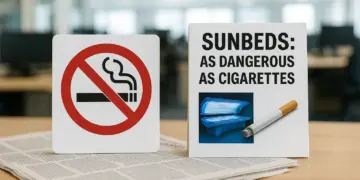
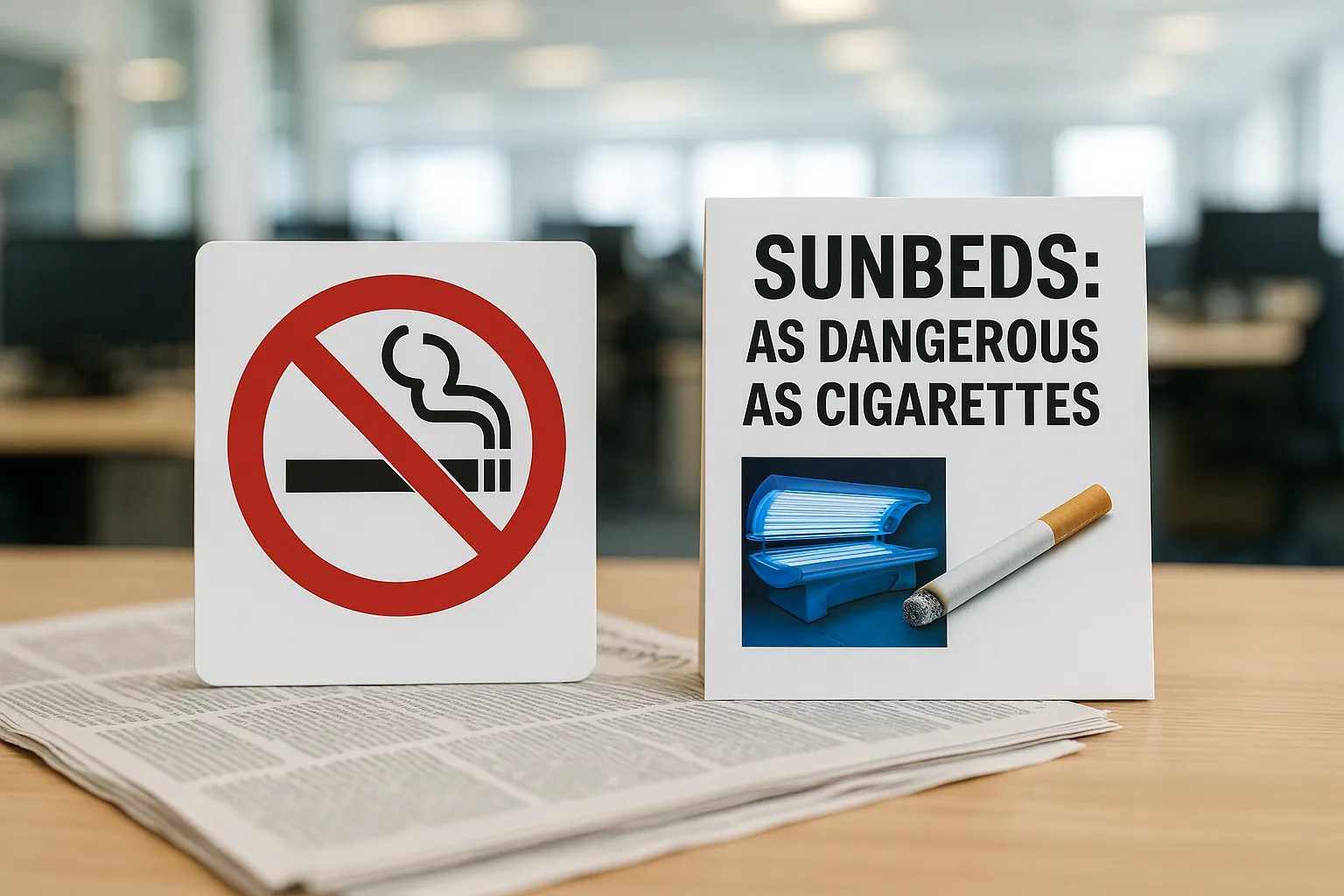
The UK Department of Health and Social Care (DHSC) has recently been compelled to amend a statement that suggested sunbeds pose a cancer risk on par with that of smoking. In a prior announcement made in January, health officials implied that the use of sunbeds was “as dangerous as smoking,” a claim that gained traction through social media interactions featuring the health secretary and other official channels, as well as widespread coverage by various news agencies.
However, the assertion drew scrutiny from Full Fact, a prominent fact-checking organisation, which firmly rebutted the equivalence made between the two cancer risks. The organisation concluded that circulating misleading information regarding cancer risks could inadvertently minimise the dangers associated with smoking. While it is well-established that both smoking and sunbeds can lead to cancer, experts warn that the levels of risk involved are not comparable.
Cancer Research UK’s calculations illustrate a significant disparity: smoking is responsible for approximately 80 times as many cancer cases as sunbed usage in the UK. Dr Claire Knight, Senior Health Information Manager at Cancer Research UK, explained: “The International Agency for Research on Cancer has classified both UV radiation from sunbeds and tobacco in ‘group 1’, meaning there is strong evidence both cause cancer. But that doesn’t mean they cause the same number of cases of cancer. Tobacco has a much bigger impact on cancer cases.”
This episode could pose a reputational challenge for the DHSC, which often underscores the importance of providing accurate public health information. The discrepancy was not rectified until March, following intervention from the Office for Statistics Regulation (OSR). After their involvement, the DHSC removed the misleading content from its social media platforms, including significant posts on Instagram, Facebook, and X, previously known as Twitter.
Leo Benedictus, a senior journalist at Full Fact with expertise in science and data-driven reporting, highlighted the importance of the correction: “The DHSC initially chose not to amend its claims when we first alerted them to the inaccuracies. Therefore, it’s commendable that the OSR intervened to encourage them to rethink their position. This situation goes beyond mere principle; misleading health information can have dangerous consequences if it persists online. AI chatbots may use such inaccuracies to provide supposedly reliable answers to users seeking information.”
In an official statement, the OSR affirmed the responsibility held by public bodies to communicate statistical information with clarity and accuracy, warning against any potential misuse that might mislead the public. Following the OSR’s engagement, the DHSC promptly corrected its initial assertions regarding sunbeds and smoking, pledging not to make similar comparisons in the future.
A spokesperson for the DHSC acknowledged the health risks associated with sunbed usage but reinforced that smoking remains uniquely detrimental. They stated: “Sunbed use is dangerous but smoking is uniquely harmful and is the leading preventable cause of death, disability and ill health.” The World Health Organization indeed categorises UV-emitting devices, including sunbeds, as group 1 carcinogens, aligning them with other serious cancer risks like tobacco. The DHSC subsequently revised its earlier statement to provide further context on the issue.
This situation has prompted discussions in public health circles about the implications of miscommunication regarding cancer risks. Experts are advocating for greater diligence in how health messages are developed and disseminated, particularly in an age where misinformation can spread rapidly across digital platforms.
The DHSC’s miscalculation serves as a reminder of the critical importance of accuracy in health communication, as even seemingly minor errors can have significant consequences for public perception and behaviour. Misinformation can diminish the perceived severity of established health threats, such as smoking, and may lead individuals to underestimate the risks associated with sunbed usage.
As these events unfold, health organisations and regulatory bodies are under increasing pressure to not only provide clear and reliable information but also to ensure that any public communications are carefully vetted. This incident may lead to further calls for rigorous standards in the dissemination of health information, with entities like the OSR playing an essential role in maintaining accountability among public health bodies.
In conclusion, the recent correction issued by the DHSC highlights the ongoing challenge of effectively communicating health risks within a rapidly evolving digital landscape. The ability to engage the public with accurate, responsible messaging is paramount, as the consequences of misinformation can resonate far beyond initial publications, affecting public health perceptions and behaviours in the long term. The issues raised in this incident will likely influence future strategies regarding health communications and the establishment of clearer guidelines for public health messaging.
Our Thoughts
The incident involving the DHSC’s misleading claim regarding sunbeds and smoking highlights several key safety lessons and breaches of UK health and safety regulations. Firstly, the principles outlined in the Health and Safety at Work Act 1974 mandate that employers, including public health bodies, are responsible for ensuring the accuracy of information disseminated to the public to prevent harm. Miscommunication can lead to public misunderstanding of risks, which can impair safety measures and health decision-making.
The lack of prompt correction of the misleading information indicates a failure in the duty of care expected under the Management of Health and Safety at Work Regulations 1999. A risk assessment of how such statements could be misinterpreted should have been conducted, along with a clearer protocol for swiftly addressing inaccuracies.
Furthermore, the incident emphasizes the need for effective communication strategies that comply with the Code of Practice on Public Health Information, which calls for accurate and clear messaging. To prevent similar occurrences in the future, training for staff on health communication and the importance of contextual accuracy in statistics is essential. Regular audits of information before publication could help mitigate risks of misinformation.