















Story Highlight
– Former police chief calls for under-16 social media ban.
– Current safeguards deemed ineffective for child protection.
– Labour MPs push for Australia-style social media restrictions.
– Social media linked to increased child exploitation and harm.
– Consultation on online safety measures set to conclude soon.
Full Story
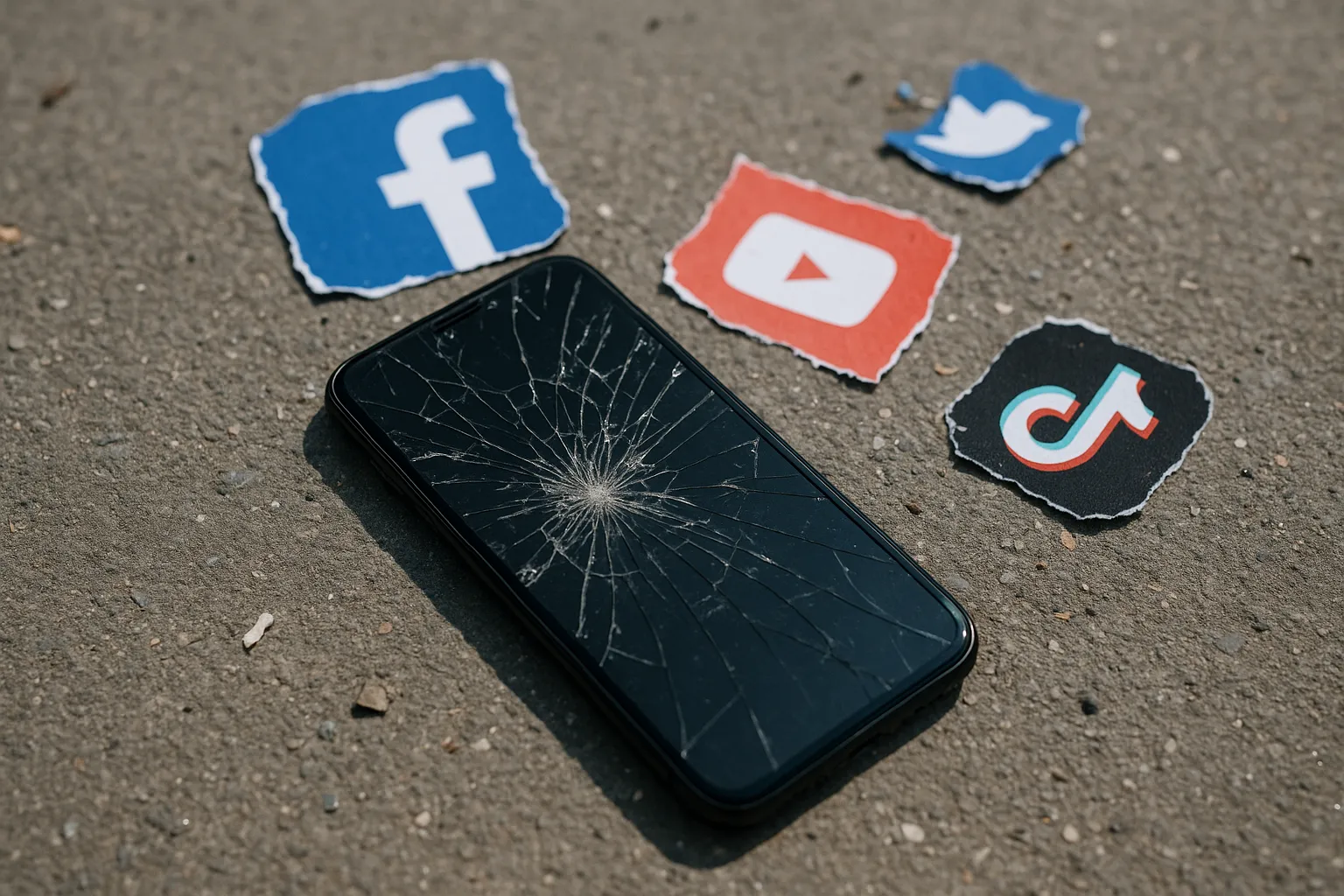
Former child protection chief Simon Bailey has called for urgent action from the Labour party to implement a ban on social media access for children under the age of 16, mirroring recent legislation introduced in Australia. Bailey, who previously served as the head of child protection for the National Police Chiefs’ Council (NPCC) and was Chief Constable of Norfolk Police from 2013 to 2021, emphasised that the existing measures to safeguard children online are inadequate.
Bailey’s warning comes as pressure mounts for Labour leader Sir Keir Starmer to take decisive steps following the party’s earlier consultation on online harms aimed at preventing dissent from within its ranks. He has released a report highlighting the alarming risks posed by social media, asserting that children’s safety, mental health, and social development are under significant threat.
In his report, which has been reviewed by several Members of Parliament, Bailey declares that the ‘wait and see’ approach has led to a public health crisis affecting children in the UK. “Social media has created the most significant child protection crisis of our time,” he stated, noting an increase in cases of sexual abuse among young users. He drew attention to what he describes as an ecosystem that allows predators to groom, exploit, and radicalise young people, utilizing technology including artificial intelligence and virtual reality. According to Bailey, because voluntary safety measures have not been effective, it is now imperative for the government to legislate a higher age threshold for accessing harmful social media platforms.
The backdrop to Bailey’s remarks involves a recent vote in the House of Lords where an amendment proposed by Lord Nash to prohibit under-16s from using social media was supported by a significant majority. However, this amendment was subsequently removed by MPs when the Children’s Wellbeing and Schools Bill was returned to the Commons. This occurred after the government instigated a consultation regarding child safety online to stave off a potential uprising from its MPs.
The amendment’s proponents are keen to see further action, particularly following the decision by Australia to prohibit access to social media for minors, a regulation that has garnered support from over 60 Labour MPs in the UK. The Bill is set to return to the House of Lords for further deliberation, with the possibility of renewed conflict between the two houses as peers consider how to proceed.
Lord Nash has signalled his intention to reintroduce the amendment, asserting that “there can be no half measures and no wasted opportunities.” He emphasised the urgent need to act on the findings highlighted in Bailey’s report, which outlines the extent of harm experienced by children on social media. “Children as young as four are being targeted by predators, and grooming crimes have doubled,” he remarked, adding that platforms are aware of these detrimental actions yet continue to neglect proper oversight.
In parallel, over 60 Labour MPs have reached out to Melanie Dawes, the chief executive of Ofcom, urging the regulatory body to extend its protective measures against misleading and harmful content aimed at men and boys. These MPs propose that the discussions surrounding the Online Safety Act have so far been disproportionately focused on issues affecting women and girls, while men and boys are also vulnerable to specific online harm, including violent pornography and radicalisation.
The government is in the midst of its consultation process aimed at defining the appropriate age restrictions for social media use among children. This discussion is expected to conclude on the 26th of May.
Critics of a blanket ban on social media, including various children’s charities, are voicing their concerns. Organisations such as the NSPCC and Childnet caution that imposing an outright prohibition could produce unintended consequences, ultimately pushing children and potential threats into less regulated online environments. Such voices highlight that while intentions may be good, indiscriminate bans may not substantively improve child safety or well-being.
Should the proposed ban be approved and implemented, the government indicates that it intends to respond to the feedback accumulated through the consultation by summer. In addition to considering a social media ban for younger users, officials are also looking into alternatives. These may include regulating the timing of social media usage through imposed curfews, limiting the total hours spent on specific applications, and addressing algorithmic designs that contribute to addictive behaviours among young users.
The discussion around social media use among minors is not just a technical policy issue; it encapsulates larger societal concerns about protecting children while balancing the fine line of freedom of expression and digital safety. As stakeholders await further developments, the call for action from figures like Simon Bailey underscores the urgency with which many view the current online landscape and its implications for the youngest members of society.
Our Thoughts
The report highlights critical failures in protecting children from online harms, suggesting that existing voluntary safeguards by social media platforms are inadequate. To avoid the escalating child protection crisis, key steps could have included more stringent regulations and proactive measures by the government and social media companies.
Under UK health and safety legislation, especially the Health and Safety at Work Act 1974, employers have a duty to ensure the safety of workers and by extension, users of their platforms. This extends to protecting children from harm related to online abuse. The lack of enforceable measures leaves children vulnerable, and regulations like the Online Safety Act must be robustly implemented and monitored.
Key lessons learned include the necessity for immediate legislative action to set firm age limits and enforce penalties for violations. A comprehensive approach prioritising child safety in digital settings and fostering collaboration between the government and tech companies is essential. Ultimately, addressing online harms effectively would require a shift from voluntary to mandatory regulations to ensure all necessary protections are enforced consistently, minimizing the risk of exploitation and abuse within digital environments.