
















Story Highlight
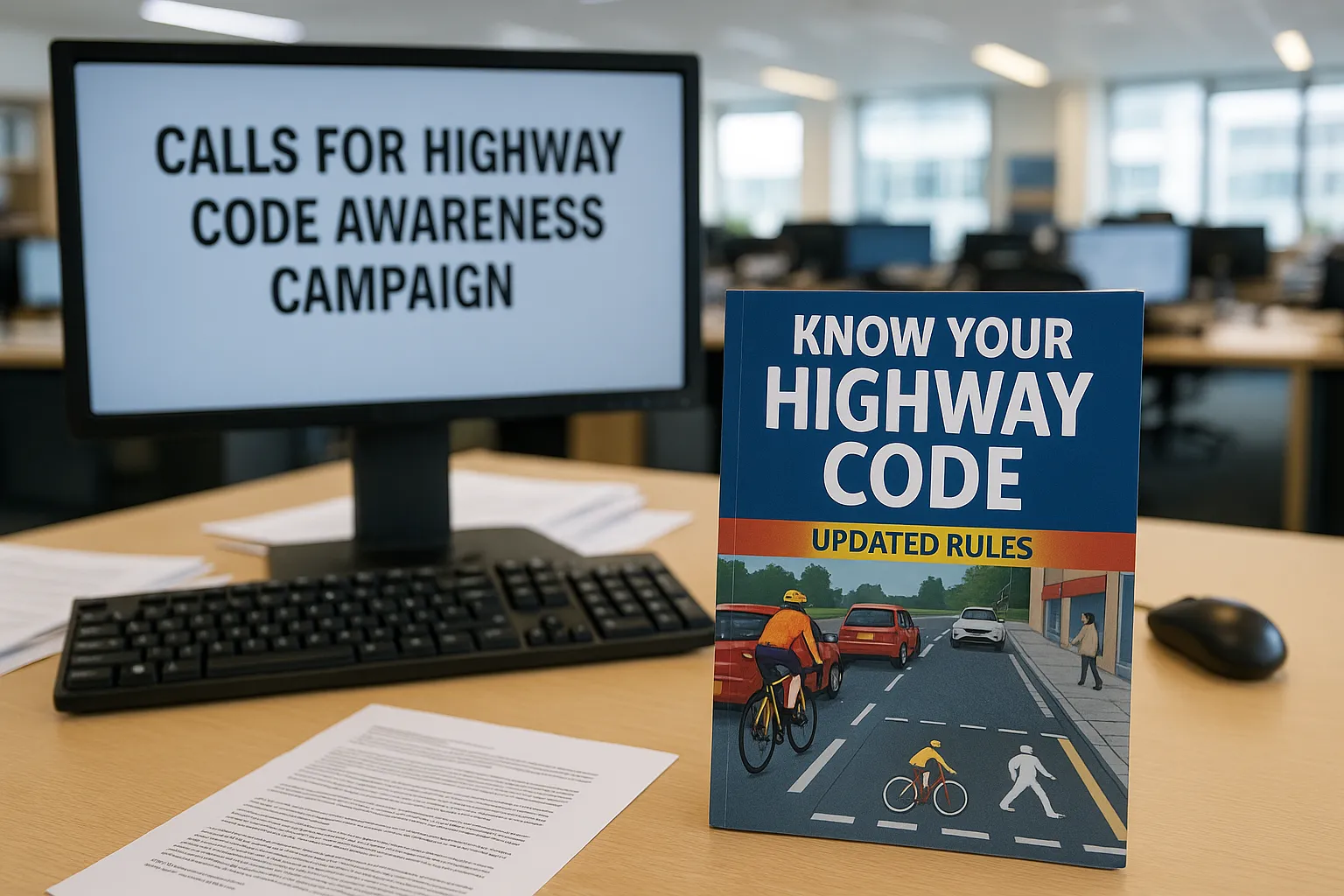
– Labour urged to launch Highway Code awareness campaign.
– Cycling UK highlights public confusion over code changes.
– Road safety spending declined two-thirds since 2019.
– Cyclist fatalities and injuries remain a serious concern.
– Education needed to improve understanding of road safety rules.
Full Story
Concerns regarding road safety have prompted Cycling UK to call for a renewed national awareness campaign, aiming to better educate drivers on the updated Highway Code rules. This initiative comes four years after comprehensive reforms intended to enhance safety measures on UK roads, yet many remain unfamiliar with the changes introduced.
The revised Highway Code, which underwent significant alterations in 2022, was designed to enforce stricter regulations to protect the most vulnerable road users. Among the key changes was the establishment of a “hierarchy of road users,” which assigns greater responsibility to those in larger vehicles, thereby requiring them to take extra care to minimise risks to pedestrians and cyclists. Other notable updates included enhanced advice on overtaking cyclists safely, the promotion of the “Dutch Reach” to prevent accidents involving car doors, and clearer prioritisation rules at junctions.
Despite these crucial updates, Cycling UK has observed a concerning lack of awareness regarding the revised guidance. During a recent parliamentary debate that focused on women’s safety while walking and cycling, MPs acknowledged the necessity of improving public understanding of the changes. Greg Smith, MP for Mid Buckinghamshire, highlighted the recommendations from Cycling UK and other road safety organisations, emphasising the importance of bridging the knowledge gap that persists concerning the revised Highway Code.
Historically, funding allocated to the Government’s road safety campaign has witnessed a significant decline, with Cycling UK estimating a reduction of approximately two-thirds since 2019. This drop comes at a time when there is a stated commitment by ministers to a “safe systems approach” as outlined in the newly released Road Safety Strategy. The strategy itself recognises the need for continuous public education in road safety, a concept that advocates argue indicates a prior failure to inform the public adequately.
Statistics from the Department for Transport indicate that although cycling activity has increased by over a third since 2004, safety records have remained stagnant. Last year alone, 82 cyclists lost their lives on UK roads, with more than 3,800 suffering serious injuries. Sarah McMonagle, Cycling UK’s Director of External Affairs, stated, “We can’t expect people to follow rules they don’t know about. What we need is a balanced approach to improving road safety that combines education, prevention and enforcement of the rules.” She stressed the importance of clarifying the rationale behind the changes and how they serve to protect individuals who walk or cycle.
The perspective of ordinary cyclists further elucidates the need for a renewed focus on safety awareness. Steve Cox, a 70-year-old retiree from Bristol, shared his own experiences, noting that he had recorded nearly 60 instances last year where drivers overtook him too closely. “I think the updates to the Highway Code are great because they’ve given people more confidence to cycle because of things like the hierarchy of road users, but not enough people know about it,” he remarked. Although Cox has transitioned from using his bike for commuting to enjoying leisurely rides, he remains concerned about ensuring that cycling becomes safer for everyone.
Cycling UK argues that while reporting systems for dangerous driving have improved over recent years, a sole focus on enforcing laws will not be sufficient to change driver behaviour. Campaigners are advocating for a multifaceted approach, combining education initiatives with prevention strategies and law enforcement to effect meaningful change on the roads.
The perception that many drivers remain inadequately informed poses a barrier to the intent of the Highway Code reforms. A comprehensive national campaign could reaffirm the essential responsibilities of all road users and reinforce the rights of pedestrians and cyclists. Such an initiative, akin to the enduring THINK! advertisements, would serve to raise awareness of the revised rules and encourage safer behaviours amongst drivers.
Experts in road safety underscore the necessity of such educational campaigns, highlighting that knowledge and understanding are critical components in reducing accidents and enhancing overall safety on the roads. Testimonials from various individuals reinforce the pressing need for greater awareness, revealing that a significant portion of the public remains oblivious to fundamental road safety changes that could save lives.
The call for action from Cycling UK falls in line with broader discussions around road safety, including how different user groups interact and the responsibilities they hold towards one another. As road usage patterns evolve and more people turn to cycling as a viable transport option, it becomes increasingly important to ensure that safety measures keep pace with these changes.
In light of the concerning statistics surrounding cycling safety and the evident lack of public awareness regarding updated rules, the case for a structured and well-resourced road safety campaign has never been clearer. It is essential that all road users – whether they drive, cycle, or walk – are adequately informed of their rights and responsibilities to foster a safer environment for all.
Our Thoughts
The article highlights significant gaps in public awareness regarding the updated Highway Code, which introduced crucial safety measures aimed at protecting vulnerable road users. To prevent the confusion and unsafe behaviours observed, a comprehensive national road safety awareness campaign, funded by the government, should have been implemented concurrently with the changes in 2022. This aligns with the Health and Safety at Work Act 1974, which mandates effective communication of safety protocols to ensure safe practices.
Moreover, the reductions in funding for road safety campaigns contravene the expectations set out in the “Safe Systems Approach”. Education is a key element in occupational health and safety regulations, making clear the need for ongoing training and information dissemination to all road users.
Inadequate public understanding of the “hierarchy of road users” and the new overtaking guidelines has led to increased risks for cyclists and pedestrians. To mitigate future incidents, regular refresher campaigns, possibly using established platforms like THINK!, and enforcement of knowledge testing could ensure that all road users are well-informed about their responsibilities, thereby enhancing overall safety on the roads.