















Story Highlight
– Paul Coulson died in conveyor accident on May 22, 2024.
– Colleague unknowingly activated conveyor, causing fatal crush injuries.
– HSE investigation found inadequate safety measures at Huws Gray.
– Company fined £2.2 million for breaching safety regulations.
– New safety measures implemented to prevent future incidents.
Full Story
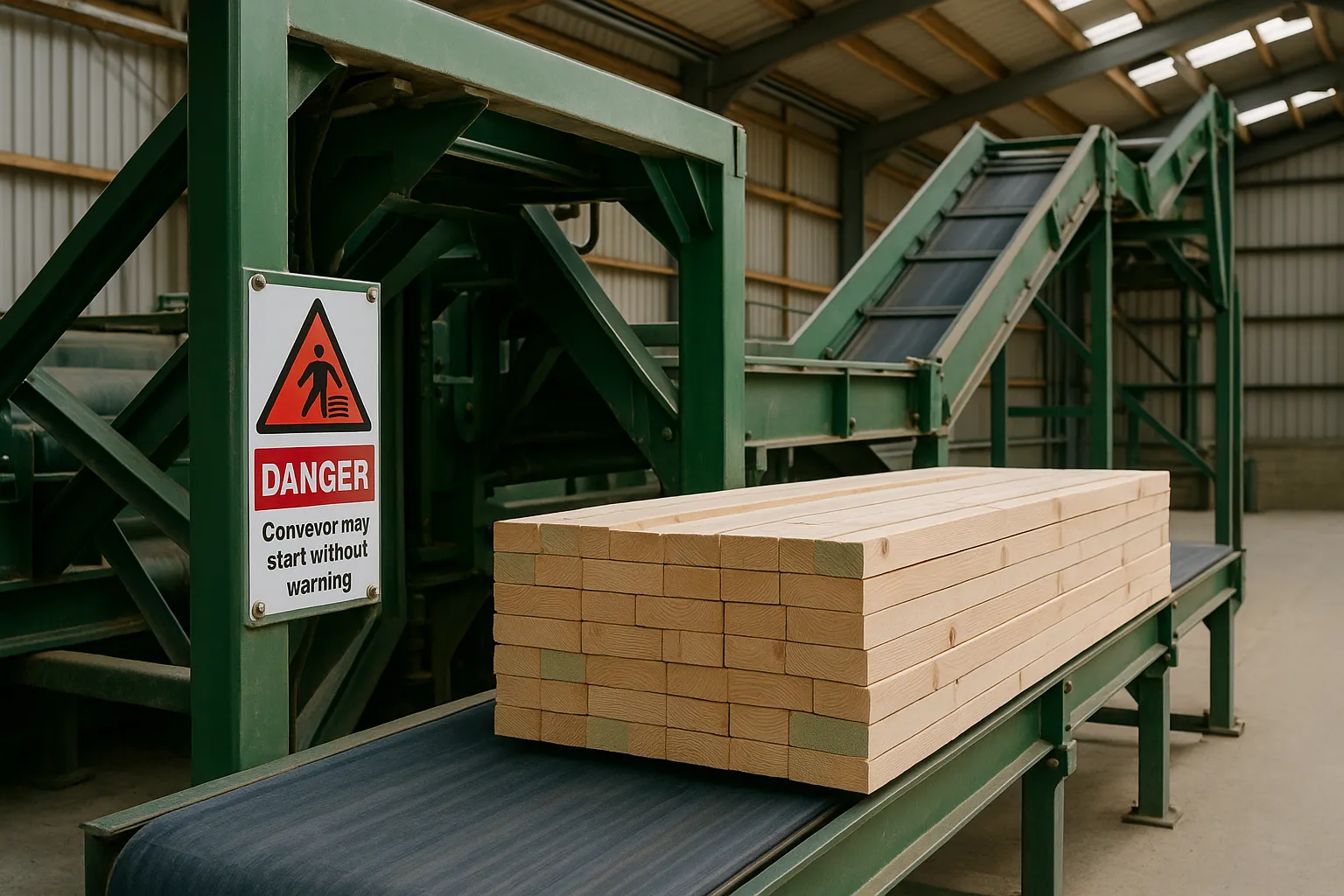
A tragic workplace incident in Bury St Edmunds has led to the death of a 56-year-old worker, Paul Coulson, after an avoidable accident involving machinery. The accident occurred at Herringswell Sawmills, a facility managed by Huws Gray Limited, on May 22, 2024. Mr Coulson, a labourer, was undertaking the task of removing plastic packaging from pallets of timber destined for processing within the sawmill.
In a critical moment, Mr Coulson climbed into the structure of a conveyor belt to reach some packaging. Unbeknownst to him, a colleague operating the machinery initiated its function. This caused a packed load of timber to move forward unexpectedly, leading to a fatal collision with Mr Coulson. A subsequent revised movement of the conveyor, implemented by the colleague noticing an irregularity, resulted in the timber load striking Mr Coulson once again, inflicting severe injuries that led to his death at the site.
An investigation conducted by the Health and Safety Executive (HSE) revealed that Huws Gray Limited had already been informed about the risks associated with workers accessing the conveyor’s danger zone. Despite identifying this serious safety issue and placing signage to discourage entry, CCTV footage indicated that from April 14 to May 23, 2024, there were 19 separate incidents of employees entering the hazardous area.
Prior to the incident, Huws Gray did make attempts to address the risky behaviour by affixing warning stickers on the conveyor. However, the company did not take additional necessary steps to enforce safety until after the tragic event occurred. Following the incident, several measures were implemented to enhance safety protocols, including the installation of guarding around the conveyor to restrict access, redesigning workflow procedures so that pallets could be unwrapped prior to being placed on the conveyor, and increasing the number of CCTV cameras to ensure comprehensive monitoring of the area.
During the court proceedings at Chelmsford Magistrates Court on March 26, Huws Gray Limited, which operates more than 250 branches and employs upwards of 5,500 staff members across the UK, pleaded guilty to violating Section 2(1) of the Health and Safety at Work etc Act 1974. The court imposed a substantial financial penalty of £2.2 million on the company along with costs of £9,929, reflecting the serious nature of the failure that led to Mr Coulson’s death.
Joanne Williams, an inspector at the HSE, expressed deep concern over the circumstances leading to the tragedy. She stated that this was an “astounding failure” that resulted in the loss of a life and devastated Mr Coulson’s family. Williams further emphasised the responsibility all companies have to ensure the protection of their employees, noting that safety measures should be well beyond merely instructing workers to avoid dangerous areas.
“The investigation disclosed that Huws Gray Ltd opted to address a significant risk through instruction alone, neglecting the implementation of adequate safeguards,” said Williams. She underscored that such decisions let employees access perilous areas, which ultimately had catastrophic outcomes. “Had Huws Gray Ltd taken decisive actions upon recognising the risk, Paul Coulson could still be with us today,” she added, extending condolences to Mr Coulson’s mourning family and friends.
Industry experts have pointed to the necessity of rigorous safety protocols in workplaces handling machinery. The tragic incident serves as a poignant reminder of the importance of proactive risk management and the need for companies to implement effective safety measures rather than relying on warnings alone. Experts suggest that risk assessments should be followed by timely action to mitigate dangers.
As the dust settles on this devastating event, there is an expectation for increased scrutiny on safety practices across industries that utilise machinery and conveyor systems. Workers deserve to feel secure in their environments, and employers must be held accountable for ensuring safety measures are not just superficial but deeply ingrained within operational practices.
In light of this incident, various safety consultants are likely to advocate for industry-wide discussions regarding enhanced training for machinery operators, regular audits of safety protocols, and the importance of a culture that encourages reporting hazardous practices without fear of repercussion.
The events leading to Paul Coulson’s untimely passing highlight a critical junction in workplace safety, serving both as a cautionary tale and a call to action for organisations to prioritise their workers’ safety above all else. The hope is that lessons learned from this incident will foster a safer environment for all employees working in similar facilities across the country.
Our Thoughts
The tragedy at Herringswell Sawmills could have been prevented through more effective risk management and adherence to health and safety regulations. Key lessons include the importance of implementing physical safeguards rather than relying solely on signage and verbal instructions. Huws Gray Limited breached the Health and Safety at Work etc Act 1974, specifically Section 2(1), by failing to ensure a safe work environment.
After recognizing that employees were accessing the conveyor’s danger zone, the company should have swiftly introduced guarding measures and alternative work practices instead of merely placing stickers. The subsequent introduction of guarding and a change in processes demonstrates a reactive rather than proactive approach to safety.
To prevent similar incidents in the future, companies must prioritize the hierarchy of control, ensuring that engineering controls, such as guarding, are in place to eliminate access to hazardous areas. Regular safety audits, employee training, and a robust reporting system for unsafe practices could further mitigate risks. Comprehensive risk assessments should be conducted routinely to identify and address potential hazards before they lead to tragedy.