

















Story Highlight
– Flowchem UK fined after worker suffered severe chemical burns.
– Incident occurred during decanting of corrosive cleaning liquid.
– Inadequate safety measures and training identified by HSE.
– Company pleaded guilty to multiple health and safety breaches.
– Worker has recovered and returned to work post-incident.
Full Story
A Nottingham-based manufacturer of household cleaning supplies has been penalised following a workplace incident that resulted in serious injuries to an agency worker. On 2 November 2023, Marzanna Sokolowska sustained significant burns to her face, neck, eye, and arm after inadvertently activating the wrong valve on a large container filled with a corrosive un-blocker solution.
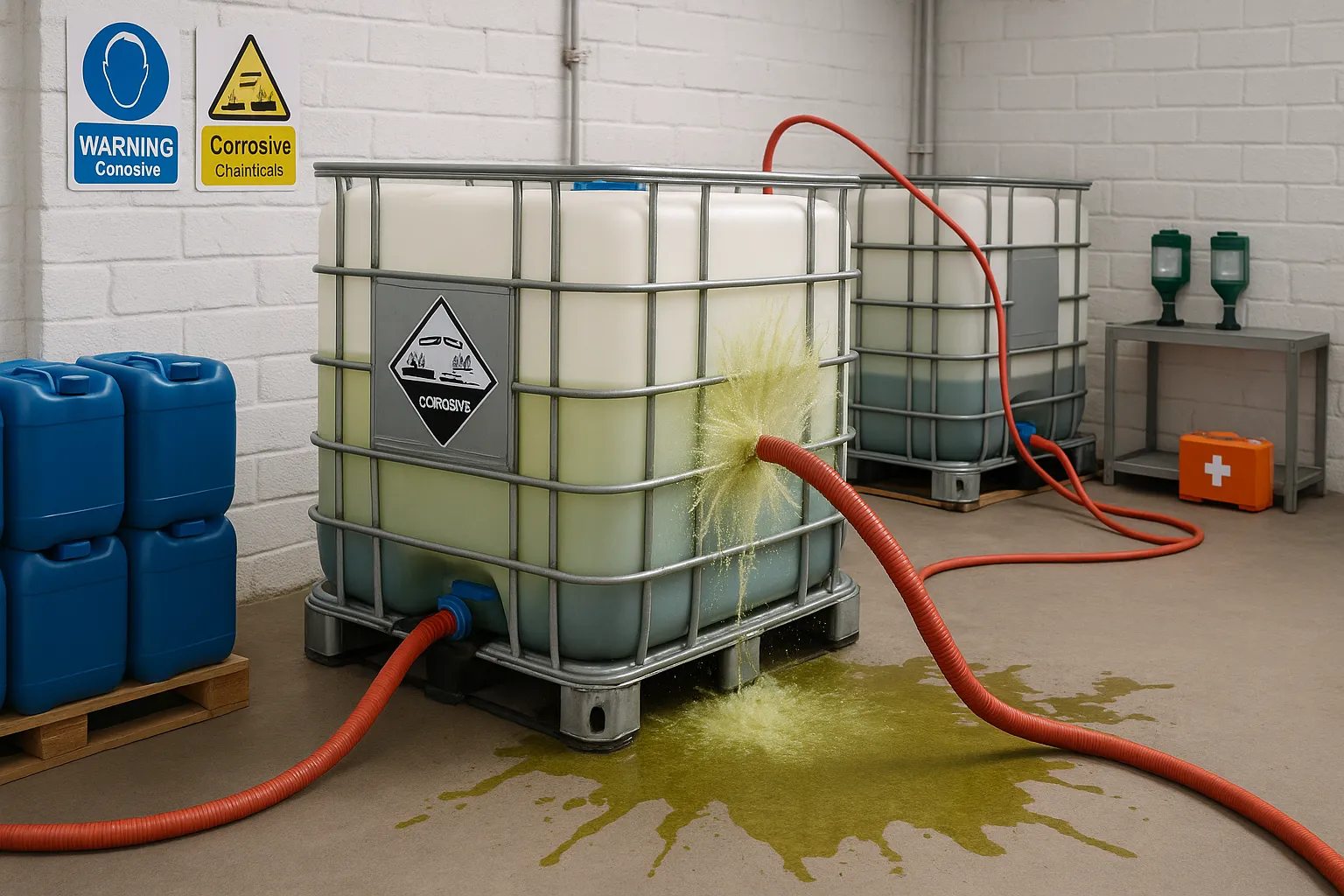
Ms Sokolowska was engaged in a task requiring her to transfer the un-blocker liquid from bulk containers into smaller packages suitable for retail. The procedure involved decanting the chemical from a 1,000-litre container positioned at shoulder height. During this operation, she mistakenly opened the outlet valve of an adjacent container, which lacked a protective end cap. This error resulted in a forceful spray of the hazardous substance that struck her upper body and face.
An inquiry conducted by the Health and Safety Executive (HSE) revealed several safety shortcomings at Flowchem UK Ltd, the company employing Ms Sokolowska. The investigation highlighted that the work practices implemented put both employees and agency workers at risk, particularly in scenarios involving spills or loss of containment.
The HSE noted a concerning lack of adequate training for staff, especially for those with limited English proficiency, which may have contributed to the incident. The company had provided some personal protective equipment (PPE); however, compliance in wearing it was insufficiently enforced, and there was a worrying absence of proper supervision or monitoring.
In addition, while eye-wash stations were available on site, the first aid provisions did not align with the potential severity of exposure to corrosive substances. Specifically, the absence of a safety shower made it difficult to manage significant chemical exposure effectively.
Under the Control of Substances Hazardous to Health Regulations (COSHH), employers are mandated to assess risks associated with hazardous materials and implement robust measures to avert exposure or lessen its consequences. This encompasses developing safe operational procedures for handling dangerous substances, ensuring staff are adequately trained, monitored, and equipped with suitable PPE, as well as establishing comprehensive first aid arrangements.
Flowchem UK Ltd, located on Mark Street, Sandiacre in Nottingham, faced serious repercussions for its negligence, admitting guilt to breaching both Section 2(1) and Section 3(1) of the Health and Safety at Work etc. Act 1974. As a result, the firm was hit with a £50,000 fine and required to cover costs amounting to £7,247.40. Additionally, a victim surcharge of £2,000 was imposed during proceedings at Nottingham Magistrates Court held on 12 February 2026.
HSE Inspector Angus Robbins remarked on the case, stating, “The systems of work employed by Flowchem unnecessarily exposed workers to risks of injury from exposure to corrosive chemicals. More suitable working methods, including avoidance of decanting large volumes stored at or above head height could have been employed. Following the incident, Flowchem changed their working methods to eliminate these risks.”
The injuries suffered by Ms Sokolowska were significant, causing her considerable pain and impacting her ability to work for an extended period. Notably, the burns she incurred around her eye and eyelid raised particular concerns. Fortunately, she has since made a commendable recovery and is back at her job.
This enforcement case was propelled by HSE’s legal enforcement team, with contributions from enforcement lawyer Andrew Siddall and paralegal officer Farhat Basir. Their work underscores the critical importance of workplace safety and the strict adherence to regulatory standards designed to protect employees from preventable harm.
Reflecting on the broader implications of this incident, local health and safety experts emphasised that incidents of this nature highlight the imperative for all manufacturing facilities to rigorously assess their safety protocols. Increased attention to the training of all employees, particularly agency workers who may not be thoroughly familiarised with hazardous materials, is essential.
Moreover, the emphasis on real-time monitoring and supervision of safety practices was reiterated as a necessary measure to foster a culture of safety within the workplace. Many companies are being urged to review their operational frameworks, placing greater emphasis on not just compliance with safety legislation but also the cultivation of an environment where safety is everyone’s priority.
In light of these developments, Flowchem’s swift adjustments to its operational procedures following the incident serve as a critical reminder of the importance of vigilance in maintaining a safe working environment. Continuous improvement in safety training and equipment provision is vital in preventing future occurrences, ensuring that the health and well-being of all workers remain paramount.
Our Thoughts
The incident at Flowchem UK Ltd highlights significant failings in health and safety practices, specifically under the Health and Safety at Work etc. Act 1974. To prevent similar occurrences, the company should have implemented a robust system of work to manage the handling of hazardous substances that minimized the risk of misuse, such as placing decanting hoses at lower heights and ensuring proper valve identification.
Training must be comprehensive, particularly for workers with language barriers, ensuring all employees understand the correct procedures and risks associated with chemical handling. Increased supervision and monitoring of PPE usage are essential, as inadequate adherence to safety equipment can lead to severe injuries, as experienced by Ms. Sokolowska.
The lack of adequate first aid arrangements, like an emergency shower, is a critical oversight. Compliance with the Control of Substances Hazardous to Health Regulations (COSHH) mandates that effective measures to mitigate hazardous exposure be in place. The findings from this incident emphasize the necessity for ongoing risk assessments and improvements in safety culture to prioritize employee welfare and prevent future incidents.