

















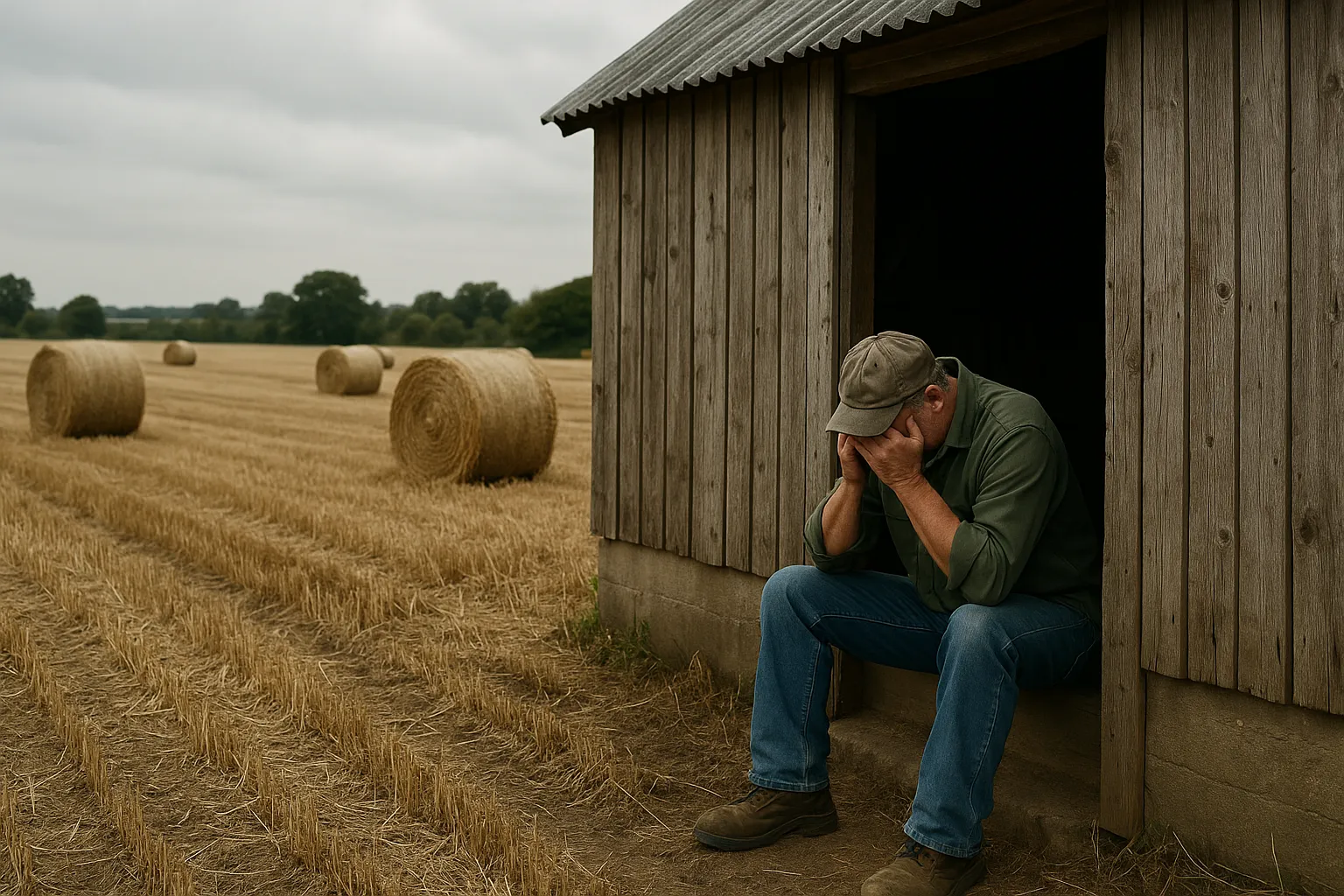
Story Highlight
– Farmers’ mental health at four-year low; 47 suicides reported.
– 7% increase in suicides from 2022 statistics noted.
– Charity initiates urgent suicide prevention campaign for farmers.
– Farming pressures contribute to mental health challenges faced.
– Government funding allocated to support farmer mental wellbeing initiatives.
Full Story
Farmers in the UK are experiencing a significant decline in mental health, with a recent report indicating that the suicide rate among agricultural workers has risen sharply. In the past year, 47 individuals employed in the farming sector took their own lives, marking a troubling 7% increase compared to 2022. This worrying trend has sparked a new campaign aimed at preventing suicide within rural communities, highlighting the urgent need for support in an industry facing considerable challenges.
As investigations reveal, the mental well-being of farmers has fallen behind that of other professions across the UK, particularly among those aged over 40. The most alarming decline has been noted among farmers aged 61 and up, raising concerns about the unique pressures faced by this demographic.
Victoria Atkins, the Conservative Shadow Environment Secretary, has voiced her concerns regarding the mental health crisis in farming. In an interview with the Express, she described farming not merely as a profession but as a way of life, reiterating the absence of standard benefits such as sick leave or a traditional workweek. “Farmers have been put under enormous pressure by the bad decisions of this Labour Government—from the vindictive family farm tax to the overnight closure of farming payments, to mindless and costly red tape,” she expressed. Furthermore, she lamented that the government has not heeded warnings or acknowledged its errors. Ms. Atkins stressed that every story from rural communities, especially those involving tragic losses due to suicide, is a stark reminder that support is crucial. “These are heartbreaking stories, and we must spread the message that people are not alone and there is help available,” she added. She also highlighted her support for the Yellow Wellies Mind Your Head campaign, which aims to raise awareness of mental health issues in agriculture.
Stephanie Berkeley, the Manager of the Farm Safety Foundation, pointed out that while several organisations provide essential support to farmers, a notable gap persists in tailored suicide prevention training for the agricultural sector. “Farming brings a unique set of pressures—long hours, isolation, financial uncertainty, generational expectations, and physical risk,” she noted, emphasising that conversations about mental health in rural locations require a relatable approach.
The charity’s Mind Your Head initiative, running from February 9 to February 13, is designed to address what many now consider a critical issue within the industry. Ms. Berkeley commented, “Farming is tough. Long hours, hard graft and a mindset that says ‘just get on with it.’ That grit is admirable, but it is also why some farmers leave it too late to ask for help.” The campaign aims to encourage earlier conversations about mental health, with the key message being to look after each other within communities. “When communities know what to say and what to do, lives can be saved,” she concluded.
The broader context of this mental health crisis has been exacerbated by recent policy changes. Labour’s autumn budget introduced the Family Farm Tax, which is anticipated to impose a 20% inheritance tax on farms valued over £1 million starting in April 2026. Farmers fear that this tax will force many families to sell off their land to meet tax obligations, potentially dismantling farms that have been cherished through generations.
The government’s taxation decisions have provoked significant backlash, with tens of thousands rallying at Westminster late last year to voice their opposition to the Family Farm Tax. Many protesters argued that the policy could drive farmers, who are already struggling, to the brink of a crisis. In response, the Daily Express has initiated a campaign to halt the Family Farm Tax, advocating for its repeal.
In conjunction with the campaign, a new eLearning module focusing on suicide awareness and prevention specifically for farmers will be launched during the awareness week. This initiative has been funded by The Royal Foundation and is tailored to address the needs of agricultural workers. The training aims to equip participants with the ability to recognise warning signs, use supportive language, and create safety plans while directing individuals to specialist support available in the sector.
Karen Hodgson, Associate Director at The Royal Foundation, expressed pride in their collaboration with various organisations to tackle this pressing issue. “We are proud to support this project,” she said, noting the significance of reaching out to communities that warrant urgent attention and innovative suicide prevention approaches.
A spokesperson for the Department for Environment, Food and Rural Affairs (Defra) emphasised the importance of farmers in ensuring food security and environmental stewardship in the UK. They reaffirmed a commitment to supporting farmers’ mental health and well-being, announcing the provision of £500,000 through the Farmer Welfare Grant to enhance projects dedicated to this cause.
If you or someone you know is struggling with mental health issues, support services are available. The Samaritans can be reached at 116 123 or via email at jo@samaritans.org, providing confidential assistance around the clock.
Our Thoughts
The alarming rise in suicide rates among farmers in the UK highlights a significant failure to address mental health concerns in this sector. To mitigate these tragic outcomes, proactive measures should be enacted per the Health and Safety at Work Act 1974, which mandates employers to ensure the health and safety of workers, including mental wellbeing.
Key safety lessons include the necessity for comprehensive mental health training tailored specifically to agricultural workers. Implementing awareness programs and resources can create supportive environments that encourage farmers to seek help. The lack of suicide prevention training in rural communities represents a breach of the general duty of care required under the Management of Health and Safety at Work Regulations 1999, which necessitates risk assessments that include mental health issues.
To prevent similar incidents, it is vital to enhance communication about mental health, foster a culture where asking for help is normalized, and ensure that welfare initiatives, such as the Farmer Welfare Grant, are properly utilized. Collaborative efforts between government and farming communities need to be amplified to equip farmers with the necessary tools and support, promoting an environment where their psychological safety is prioritized.