















Story Highlight
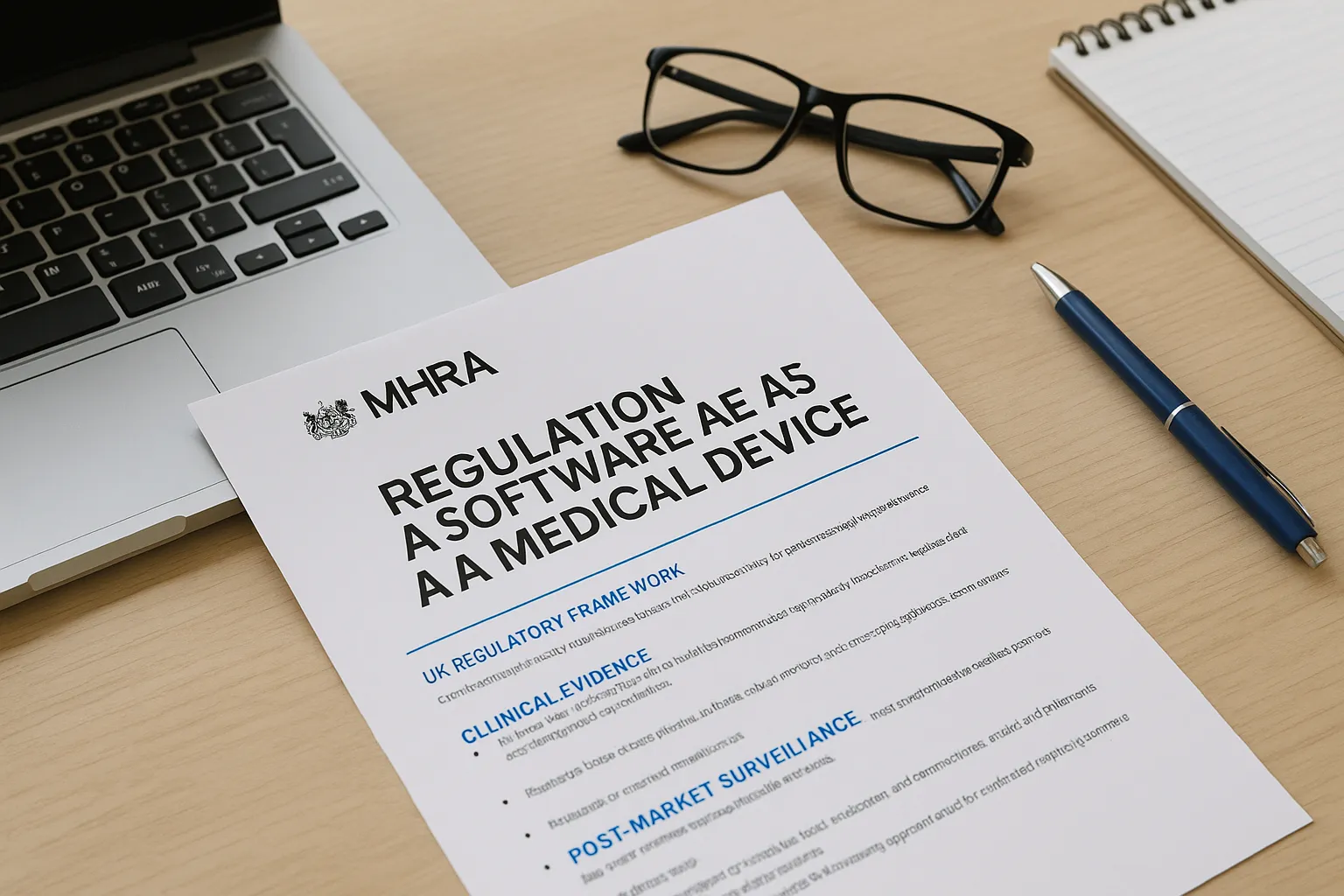
– MHRA introduced UK regulatory framework for SaMD developers.
– Software classification depends on intended purpose and use.
– Clinical investigations required if evidence is insufficient.
– New post-market surveillance rules effective June 2025.
– NHS must assess local safety alongside regulatory compliance.
Full Story
In a recent webinar organised by techUK, experts from the Medicines and Healthcare products Regulatory Agency (MHRA) delivered an extensive overview of the regulatory landscape concerning Software as a Medical Device (SaMD) in the UK. This informative session was specifically designed to clarify essential regulatory aspects for developers, manufacturers, and NHS adopters, particularly in light of the rapid evolution of software and AI technologies that raise compliance concerns, clinical evidence requirements, and expectations for post-market monitoring.
The presenters provided a thorough examination of the regulatory process, beginning with how to ascertain if a piece of software should be classified as a medical device. They discussed the complete regulatory pathway—from clinical investigations to the enhanced post-market surveillance measures set to commence in 2025. Throughout the discussion, the MHRA representatives reiterated their dedication to aiding innovators in meeting regulatory demands within a complicated and swiftly changing environment.
Understanding the regulatory framework was a paramount focus of the session. The MHRA commenced with an explanation of the legislative setting surrounding medical devices in the UK, underlining the differences between Great Britain—where UKCA and CE marking is permissible—and Northern Ireland, which adheres to EU Medical Device Regulations. Developers were urged to clearly define their target markets, particularly as consultations are ongoing regarding the future recognition of CE markings in Great Britain.
A key takeaway was the significance of the intended purpose of the software, which acts as the fundamental statement determining its classification as a medical device, as well as the type of evidence necessary to substantiate its safety and efficacy. The MHRA highlighted that having precise, well-defined intended use statements is essential, as these directly influence all subsequent regulatory activities, including software design, risk management, clinical assessment, and responsibilities post-market.
To facilitate the industry, the MHRA has released comprehensive guidance alongside a software flowchart that assists manufacturers in establishing whether their product qualifies as a medical device while also clarifying how various applications—such as calculators, decision-support tools, and AI-driven systems—should be classified.
Regarding clinical evidence, the MHRA’s team underscored the requirements for generating sufficient clinical data. All medical devices, irrespective of their classification, must prove both safety and performance. In cases where adequate clinical evidence cannot be derived from existing research or by demonstrating equivalence to similar devices, manufacturers are obliged to conduct a regulated clinical investigation.
Several critical points were shared:
– Regulatory approval for a clinical investigation must be obtained from the MHRA within a 60-day statutory framework prior to commencing the study.
– Submissions should be made through the IRAS system and must include essential documentation consistent with ISO/IEC 62304 standards, recognised as best practices for software development in the medical device sector.
– A Letter of No Objection is required from the study sites before any research can begin.
– Ethical approval from a Research Ethics Committee is also necessary for studies.
The MHRA further clarified the differences between pre-market clinical studies—which are regulated—and post-market studies, which do not fall under MHRA regulation but do require ethical clearance. Participants at the webinar were particularly appreciative of the guidance on ambiguous topics such as digitised clinical calculators and the burgeoning field of AI tools, along with the role equivalence plays in easing the regulatory burden.
Looking ahead to June 2025, the MHRA’s lead on market surveillance discussed crucial revisions that will affect both CE and UKCA-marked devices entering the market after this date. These updates aim to enhance traceability, promote consistent reporting and expedite regulatory responses to emerging safety issues.
Noteworthy changes that will take effect include:
– Shortened reporting timelines for serious incidents, which now must be communicated within 15 working days, with an even more urgent deadline for instances concerning deaths or public health risks.
– Mandatory notification of a wider range of incidents, including specific side effects.
– Heightened supervision of field safety corrective actions, which need to be submitted within three working days upon request.
– Prior review of Field Safety Notices by the MHRA before they are published.
– An obligation to gather real-world data to support ongoing monitoring, particularly relevant for evolving software and AI tools.
All incident reports are to be submitted through the MORE online portal, which ensures systematic tracking and risk evaluation.
The implications for developers and NHS organisations are significant. The MHRA urged manufacturers to:
– Define a clear intended purpose from the outset, supported by MHRA guidelines.
– Comprehend when clinical investigations are required and strategise evidence generation accordingly.
– Ensure compliance with the new post-market surveillance regulations.
– Utilise the MHRA’s resources, including flowcharts, standards, and guidance, to minimise any uncertainties.
For NHS entities procuring or implementing SaMD, the MHRA emphasised that having medical device status does not eliminate the necessity for local clinical safety evaluations, which include adherence to DCB 0129/0160. It is critical for organisations to ensure that products listed on the MHRA register comply with regulatory standards; however, local assessments are imperative for evaluating workflow compatibility, risk management, and integration challenges. While the MHRA is available to provide clarifications, it does not offer consultancy on specific implementation matters.
The session reaffirmed the MHRA’s commitment to fostering ongoing dialogue with innovators and the wider health and care ecosystem. As software and AI-driven solutions are increasingly integrated into clinical workflows, the regulator is committed to extending guidance, enhancing clarity, and addressing new areas where industry support is needed.
To aid in this process, techUK plans to collaborate closely with the MHRA to produce a practical resource pack that summarises key guidelines, addresses common queries, and offers real-world examples contributed by its members.
Our Thoughts
The article discusses the regulatory framework for software as a medical device (SaMD) in the UK, underscoring key compliance areas. To avoid potential compliance issues, developers and manufacturers should establish a clear intended purpose for their products early in the design process, in line with the MHRA guidelines. This practice would ensure products meet the criteria set forth under the Medical Devices Regulations 2002 and associated amendments.
Furthermore, there is a notable emphasis on the necessity of conducting clinical investigations when sufficient evidence cannot be established through existing literature, adhering to the requirements of the Medicines and Medical Devices Act 2021. Ensuring timely post-market surveillance in compliance with the upcoming regulations set to take effect in June 2025 will also be critical in mitigating risks and responding to safety concerns.
Key lessons include the need for robust internal processes for local clinical safety assessments as specified under DCB 0129/0160 and diligent adherence to reporting obligations to enhance patient safety. Continuous engagement with the MHRA for regulatory support and remaining updated on legislative changes will further prevent similar incidents in the future.