

















Story Highlight
– Mother fears winter worsening mould issues in home.
– Son suffered serious chest infection from mould exposure.
– Tracy Manley has battled mould for three years.
– Over eight million UK homes have similar issues.
– Council pledges to improve housing conditions, addressing mould.
Full Story
A Bristol resident is expressing deep concern as winter approaches, haunted by the effects of a mould outbreak that has severely impacted her son’s health. Tracy Manley, a 59-year-old mother, has lived in her semi-detached home for 27 years. However, over the past three years, she has grappled with increasing dampness and mould issues within her property.
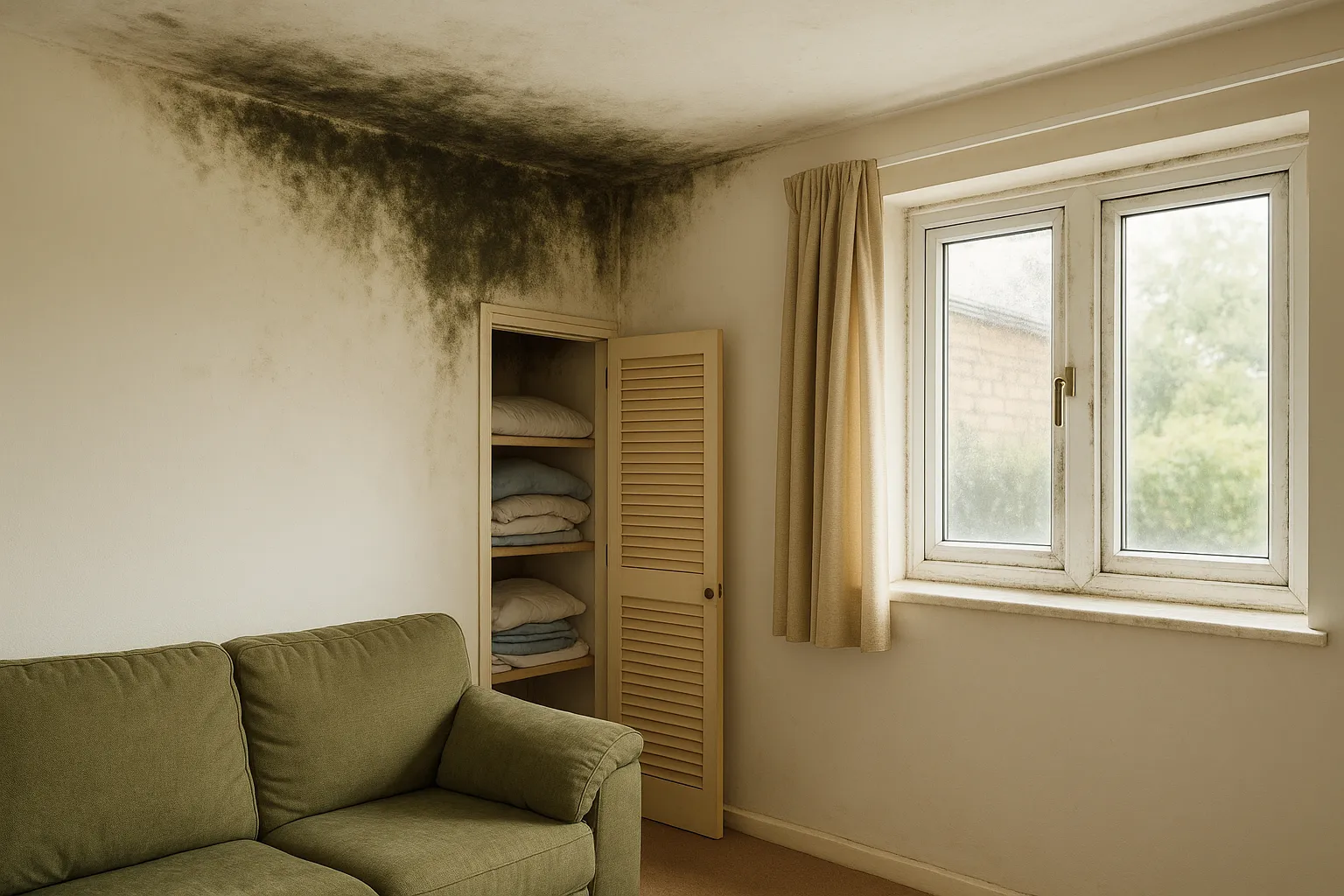
Ms Manley first noted the dampness around the windows, but her worries escalated when she discovered that items stored in the airing cupboard in her son’s bedroom began to deteriorate due to moisture. Living on personal independence payments and reliant on her rented accommodation, which is managed by Bristol City Council, she has taken steps to address the mould problem, but with limited success.
The situation reached a critical point last winter when her 31-year-old son, who wishes to remain anonymous, experienced serious health issues attributed to the mould. “When we stripped the bedding last winter, he became ill and had to go on antibiotics,” Ms Manley recounted. The severity of his condition was alarming; he found it difficult to traverse even short distances within the living room without stopping to catch his breath. “There was a rattling on his chest. We went to the doctors, and first of all, they said it was clear, but then he had trouble with his breathing,” she explained.
The health decline was unsettling for Ms Manley, who noted that disturbing the mould exacerbated the situation. “It was a case of when it (the mould) was disturbed that was the problem. You were disturbing the mould and then breathing in that disturbance. It was a bit scary – we hadn’t considered that possibility.”
Images from last winter displayed alarming patches of mould not just near the windows, but also on ceilings and in the airing cupboard. Despite her attempts to combat the issue with anti-mould chemicals, the solution proved only temporary. “You’re always told to open the windows and to ventilate – we tried that, we tried the diffusers, the dehumidifiers,” she shared. “We left vents open, but it was a case of tackling it, clearing it away, but it was still coming back. That’s the problem; it seems to be an ongoing thing in the older houses.”
Ms Manley’s own health concerns add to her stress, particularly since she was diagnosed with throat cancer last year. While undergoing chemotherapy, the mould issue became a source of worry. “I was worried about my own health and it took a mental toll,” she said. “I’ve got a low immune system myself and I’m on a course of chemotherapy. After my cancer diagnosis last year, I was on a much stronger course of chemotherapy.”
The mental strain of her situation has been significant. “It was difficult to stay positive – it was draining on my mental health,” she admitted.
Tracy Manley’s experience is not an isolated case. In the UK, more than eight million people are reportedly living in homes affected by dampness and cold conditions, according to campaign group Health Equals. Their research indicates that 28% of UK residents encounter serious problems related to damp, mould, or cold, which can lead to various health complications. Furthermore, the same research highlights that a quarter of individuals living in cold homes experienced respiratory symptoms, including coughing, wheezing, and flu-like symptoms, while over one-third reported negative impacts on their mental health, such as anxiety and depression.
As the colder months draw near, Ms Manley is anxious about what lies ahead, especially with her son’s health and her own precarious situation. While the council has acknowledged her concerns in the past and conducted repairs to the mould, she feels the underlying causes of dampness in her home have not been sufficiently addressed.
“There’s still damp in my kitchen as well and I’m worried about my son’s chest problem coming back this winter, as well as my own health,” she expressed. Despite checks conducted by the council on the loft and guttering, which yielded no findings of issues, Ms Manley feels a sense of helplessness regarding the ongoing mould problem. “It’s keeping an eye on it over the winter and seeing how it’s going to progress, but you’re worried you’re going to disturb it again,” she said. “You’ve got to clean it, but you’re worried about making it worse for yourself. Then it gets airborne.”
In response to Ms Manley’s plight, Councillor Barry Parsons, who chairs Bristol City Council’s homes and housing delivery committee, outlined the council’s commitment to ensuring the safety and comfort of its housing stock. “Our priority is to ensure all council homes are safe, warm, well-maintained, and meet the standards required of us as a social landlord,” he affirmed. “Since our self-referral to the regulator of social housing, we have been working hard to improve the way we manage and maintain our housing stock. Significant progress has already been made; since August, the number of open damp and mould cases has fallen significantly. However, we recognise there is still more work needed to ensure our homes meet the standards tenants deserve.”
He reassured residents, stating that every report of damp or mould is taken seriously and responded to within ten working days. He encouraged tenants facing challenges with these issues to contact the council promptly for assistance.
Following an inspection last week, council officers visited Ms Manley’s property to further examine the problems and provide necessary treatment. Yet, as winter approaches, the anxieties surrounding health and living conditions within damp housing remain palpable for her and countless others facing similar struggles across the nation.
Our Thoughts
The situation described in the article highlights several breaches of health and safety regulations under UK law, specifically the Housing Health and Safety Rating System (HHSRS) under the Housing Act 2004. This framework mandates that landlords ensure their properties are free from hazards that could adversely affect tenants’ health. The council’s insufficient response to the ongoing mould problem reflects non-compliance with their obligations, as tenants have a right to live in safe, well-maintained housing.
To prevent such incidents, landlords should conduct regular inspections and implement comprehensive mould management strategies, including improving ventilation and addressing underlying dampness issues directly. The use of appropriate materials and treatments to eliminate mould should be prioritized. Additionally, educational resources should inform tenants about the health risks associated with mould exposure and effective ways to manage dampness in their homes.
The emphasis on a pro-active rather than reactive approach is crucial in safeguarding tenant health, especially for vulnerable individuals with pre-existing health conditions. Enhanced communication and prompt action from the council could mitigate health risks and provide better living conditions for tenants like Ms. Manley.