

















Story Highlight
– One in four women face maternal mental health issues.
– Many mothers hide their struggles due to stigma.
– Workplace policies often overlook new mothers’ needs.
– Legal protections for breastfeeding mothers are insufficient.
– Innovative products like wearable pumps support working mothers.
Full Story
A significant proportion of women confront mental health challenges during pregnancy and the initial stages of motherhood, according to findings from the Maternal Mental Health Alliance. Their research indicates that as many as one in four women may experience such issues; however, an alarming 70% tend to obscure or diminish their problems due to societal pressures. This statistic highlights not only the widespread nature of mental health difficulties among mothers but also points to an entrenched culture of silence surrounding these matters.
Marie Louise, a prominent NHS midwife, bestselling author, and a brand ambassador for Momcozy during their International Women’s Day initiative, recently addressed the escalating pressures on mothers at the AllBright Step Forward 2026 summit. In her remarks, she noted that modern women often feel compelled to excel in both professional and domestic roles, stating, “More women than ever before have so much pressure on them, to do it all, to be it all, to perform at work and be this kind of perfect mother at home. It’s so unachievable and unrealistic.” Marie Louise’s insights provided a stark perspective on the intersection between maternal healthcare and workplace culture in the UK, arguing that societal expectations are mounting while support systems remain inadequate.
Amid these pressures, there is often a lack of awareness regarding the physiological changes that accompany new motherhood. Recent research published in Nature Neuroscience in 2024 details significant alterations to the maternal brain during pregnancy, which are further revised with each subsequent birth. This phenomenon, named “matrescence,” is rapidly gaining traction in discussions around maternal health and signifies a profound transformation, as Marie Louise explains: “A new mother’s brain has actually changed. She’s a completely new person with a whole new perspective on life who’s gone through a whole body transformation.” Such insights into the biological realities of motherhood raise crucial questions regarding workplace policies and the often unrealistic expectations placed on new mothers returning to their roles.
One particularly pressing issue for working mothers is the need for proper support for breastfeeding in the workplace. Under the Management of Health and Safety at Work Regulations 1999, employers are mandated to offer a private, healthy space for breastfeeding mothers to pump and rest, rather than relegating them to unsuitable areas such as toilets. While specific legislation regarding breastfeeding facilities is not established, the Equality Act 2010 provides protection against discrimination, which some organisations may fail to uphold. Data from a 2025 study by the University of Reading revealed that numerous women still contend with inadequate private areas and insufficient time for expressing milk, with some resorting to using restrooms or cramped spaces.
For an increasing number of mothers balancing breastfeeding with demanding jobs, these challenges are significant. The biological rhythm of milk production requires a consistent schedule that cannot be interrupted for convenience. Consequently, if a mother misses an opportunity to breastfeed or express milk, it can lead to heightened anxiety and distraction from her professional duties.
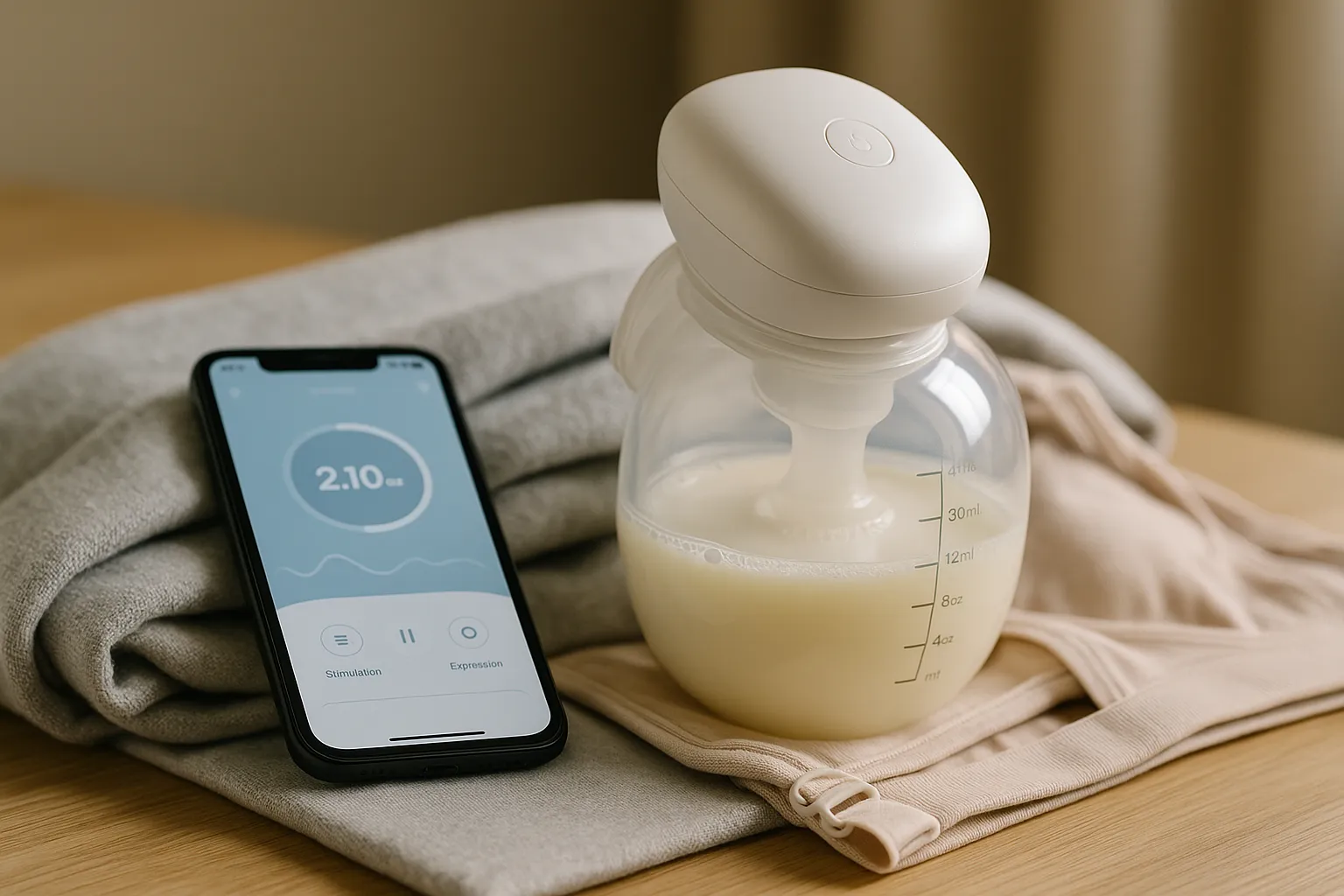
Fortunately, advancements in technology are now offering innovative solutions for working mothers. An example of this is the Momcozy Air 1 Ultra-slim Breast Pump, which boasts a sleek design at just 2.4 inches thick, making it the thinnest wearable breast pump available. This device can be discreetly worn inside a typical nursing bra, allowing mothers to express milk seamlessly during meetings or while engaged in phone calls, thereby reducing the visibility of this essential task.
The breast pump features near-silent operation and integrates with a smart application to monitor milk volume in real time, providing notifications when containers are full. With a wireless charging case that supports up to 15 pumping sessions on a single charge, it’s optimally designed for the working week. Marie Louise emphasises the critical nature of such devices: “Expressing breast milk can be near impossible when you’re at work without a wearable breast pump. For mothers to have that flexibility is absolutely crucial.”
The conversation around motherhood is also influenced by the narratives constructed by brands in today’s digital landscape. With the pervasive presence of unrealistic portrayals of motherhood across social media, Marie Louise advocates for a responsibility among brands to represent authentic experiences. Momcozy, for instance, has carved a niche by developing products that authentically reflect the realities of contemporary motherhood. Their offerings, such as the Postpartum Recovery Essentials Kit, are designed to provide tangible support during the challenging early weeks of motherhood, alongside a diverse array of tools that facilitate recovery and daily functioning for mothers.
Transforming the current environment requires ongoing commitment across multiple sectors – including healthcare, legislation, workplace regulations, and cultural norms. Marie Louise encapsulates this necessity by suggesting that rather than advising mothers to strive harder, society should be asking, “What adjustments can we make to genuinely support them?”
With increasing attention on these issues, the need for practical solutions and empathetic policies has never been more evident. For those seeking additional resources, guidance, and innovative products aimed at bolstering the experiences of working mothers, further information is available on the Momcozy website.
Our Thoughts
The article highlights significant gaps in workplace support for new mothers, particularly regarding mental health and breastfeeding facilities. To mitigate these issues and comply with UK legislation, employers must adopt a proactive approach in creating supportive environments.
Key regulations breached include the Management of Health and Safety at Work Regulations 1999, which mandates that employers provide a safe and healthy environment for breastfeeding mothers, and the Equality Act 2010, which prohibits discrimination against breastfeeding employees. A lack of private facilities for expressing milk could create undue stress on working mothers and impact their mental health, highlighting a structural failure in workplace policies.
To prevent similar incidents, employers should implement comprehensive maternal health policies that recognize the physiological and psychological changes new mothers experience. This includes ensuring appropriate facilities for breastfeeding and fostering a supportive culture that prioritizes mental well-being. Training managers on these issues and encouraging open conversations around maternal mental health can help dismantle the culture of silence and build a more inclusive workplace.