














Story Highlight
– New Government scheme supports workers at risk of job loss.
– Trains 5,000 line managers in small businesses.
– Aims to reduce sick leave and improve employee health.
– Funded by up to £800,000 from the DWP.
– Targets small firms lacking resources for health support.
Full Story
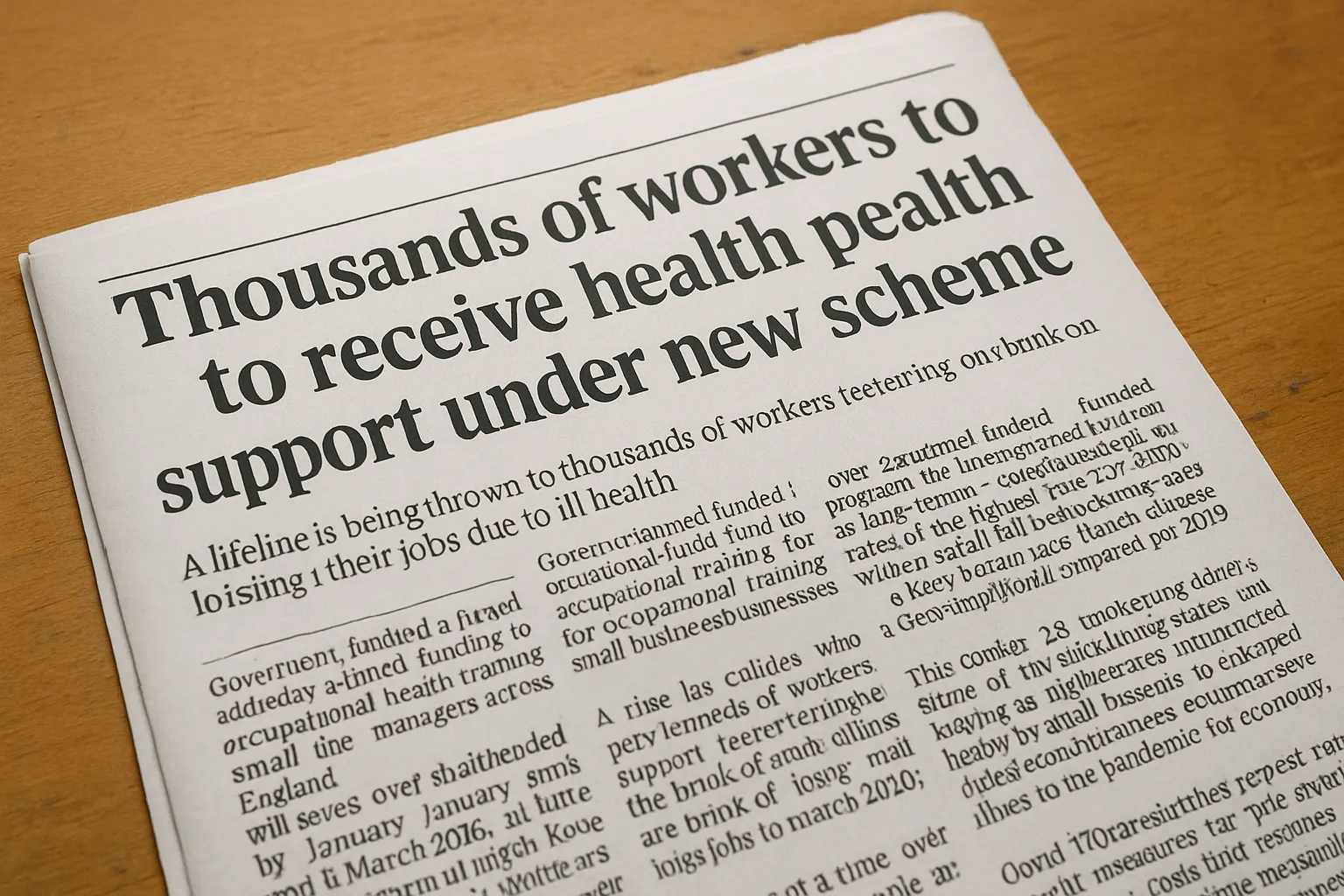
A new initiative aimed at supporting workers facing job losses due to health issues has been launched by the Government. The scheme targets the growing concern of illness-related absenteeism in the UK workforce, with the Department for Work and Pensions (DWP) set to finance occupational health training for 5,000 line managers across small businesses in England. This effort is designed to retain employees in their roles rather than have them withdraw and rely on state benefits.
The free training is scheduled to take place from January to March 2026 as part of the Government’s strategy to reduce the number of individuals taking sick leave. Currently, there are over 2.8 million people classified as long-term ill in the UK, a figure that places Britain among the worst performers within the G7 nations. According to a review from Keep Britain Working, the situation has deteriorated significantly since the pandemic, with an additional 800,000 working-age adults now out of employment due to health issues compared to figures from 2019.
Under this new scheme, which is funded with £800,000 from the DWP, line managers at small and medium-sized enterprises (SMEs) will receive training to recognize early signs of health problems. Symptoms such as ongoing fatigue, changes in behaviour, and increased absenteeism are some of the indicators that managers will learn to identify. This early intervention is intended to prevent matters from escalating into more severe health issues.
The training will be delivered by the Institution of Occupational Safety and Health (IOSH) and is specifically tailored to address the needs of small enterprises. These companies often struggle with limited resources, making the health and wellbeing of their employees particularly pressing, especially when illnesses lead to staff turnover. Research shows that recruiting a replacement for a sick employee can cost SMEs over £11,000, and every day of employee absence can result in around £120 lost in profits.
Dame Diana Johnson, the DWP employment minister, commented on the challenges faced by smaller businesses, emphasizing that many are ill-equipped to deal with health-related issues affecting their workforce. She stated, “Too often, small businesses lose skilled staff to health issues without the tools to support them – and that doesn’t help anyone. This free training changes that. It gives line managers the confidence to have the right conversations and make the adjustments that could help keep people in work. When small businesses support their staff to stay at work healthy, everyone wins – employees, businesses, and our economy.”
While only 21% of SMEs currently provide health and wellbeing training for their line managers, a staggering 76% of larger employers have such initiatives in place. Evidence suggests that these training programmes can be effective; among those smaller firms that do offer training, 79% have reported success in preventing employee ill health.
The initiative has been welcomed by various business groups, acknowledging that rising costs have made it difficult for many smaller firms to afford relevant training. Tina McKenzie, Policy Chair at the Federation of Small Businesses, expressed her satisfaction with the DWP’s commitment to enhancing occupational health support for SMEs. She observed, “We are pleased to see DWP devoting funds to upskilling SMEs on occupational health issues for their staff. Employee welfare is a priority for small firms, but we know that training courses about it can be put out of reach at a time of rising cost pressures. We welcome that around 5,000 SMEs should be better placed to look after the health of their employees, avoid sickness absence, and help them thrive in the workplace.”
The IOSH programme is comprehensive, addressing matters such as referrals to occupational health services and providing assistance for employees grappling with physical and mental health conditions. It will also inform employers of their responsibilities under the Equality Act 2010, highlighting the necessity of making reasonable adjustments in the workplace.
David Tomlinson, Health and Safety Business Partner at the University of Lincoln, who has already partaken in the course, remarked, “It’s given us greater confidence to help us shape our approach to occupational health and wellbeing at work.”
Businesses interested in the training can pre-register until 31 December, with official registration beginning on 2 January. Participation in the programme is optional, allowing firms to assess its potential benefits before opting in.
This initiative forms part of a larger strategy within the Government’s Small Business Plan, which includes additional measures such as increasing the threshold for employers’ national insurance contributions, reducing energy bills by £150, freezing rail fares and prescription charges, as well as offering free apprenticeship training for employees under 25 at small businesses.
The launch of this training programme illustrates an important recognition by the Government that addressing health issues in the workplace is not just a matter of employee welfare, but a crucial component for the overall productivity and economic stability of small businesses in the UK. By strengthening the capacity of line managers to support their teams, it is hoped that this initiative will lead to healthier work environments and contribute positively to the nation’s economic recovery.
Our Thoughts
The recent initiative by the UK government to train line managers in small businesses on occupational health is a positive step towards addressing rising employee ill health. However, prior to this initiative, several preventative measures could have been taken to mitigate the issues now being faced. Firstly, compliance with the Health and Safety at Work Act 1974 mandates that employers ensure the health and safety of employees by providing adequate training and resources. Many small businesses currently lack such training, with only 21% offering health and wellbeing training for line managers. This suggests a breach of duties under UK health and safety legislation.
Key lessons include the necessity of proactive health management and the implementation of regular training to identify and address health issues early. Encouraging a culture of health and safety, including mental well-being, would help mitigate long-term absence and reduce economic impacts on businesses.
Going forward, increasing awareness and mandatory training on occupational health could prevent similar incidents, ensuring that small businesses are better equipped to handle employee health concerns. Furthermore, highlighting the importance of reasonable adjustments under the Equality Act 2010 within such training can foster a more supportive workplace environment.