

















Story Highlight
– EV hubs must provide non-charging parking spaces.
– Wi-Fi and mobile charging ports are required.
– Hub must be within a mile of SRN.
– Current signage rules hinder EV hub visibility.
– Industry advocates for flexible signage criteria changes.
Full Story
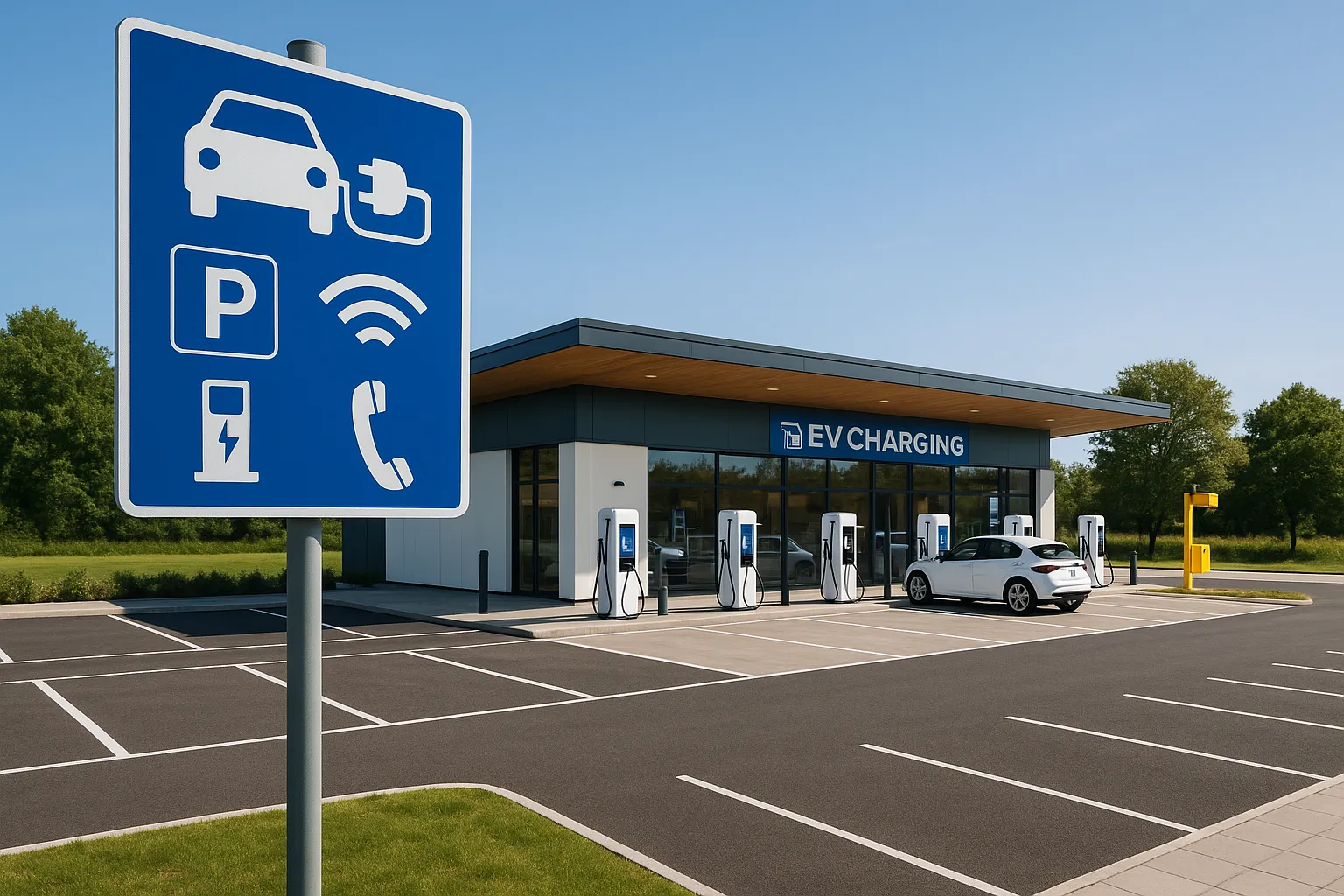
Electric vehicle (EV) charging hubs are encountering challenges in obtaining visibility on major roads due to stringent criteria imposed by transport authorities. Operators who wish to display signs on adjacent A-roads must adhere to several requirements that include providing a minimum of ten parking spaces for non-charging vehicles, ensuring access to Wi-Fi for customers, equipping the hub with mobile device charging ports, and offering a free emergency telephone service. Moreover, these facilities must be situated within one mile of the designated Strategic Road Network (SRN).
An example highlighting this issue can be seen at the Stevenage Electric Forecourt, located at junction 7 on the A1(M). According to a spokesperson for the facility, the forecourt represents a significant advancement in charging infrastructure, featuring high-powered charging stations, a dedicated driver lounge, as well as retail and dining options. However, despite its state-of-the-art capabilities, it does not meet the criteria necessary to qualify for motorway signage.
The primary obstacle is a regulation that mandates EV charging hubs to also supply fuel for internal combustion engine vehicles before they can be recognised as service stations eligible for motorway signage. This requirement effectively categorises them as traditional service areas, which undermines the distinct purpose of electric charging facilities.
Industry experts underscore the importance of public awareness of the charging infrastructure to foster confidence in the transition from petrol and diesel vehicles to electric ones. The transition hinges not only on the availability of charging points but also on the visibility of these points throughout the road network. Vicky Read, CEO of Charge UK, an organisation representing chargepoint operators, noted that discussions are ongoing with the Department for Transport to renegotiate signage criteria to better serve the evolving needs of electric vehicle drivers. She remarked, “This is a real opportunity to not only help current EV drivers but build others’ confidence in switching to electric as the infrastructure becomes more visible. We are optimistic that we will start to see this shift happening soon.”
This sentiment is echoed by several stakeholders within the electric vehicle industry, who argue that making the charging infrastructure more prominent is essential to encourage a broader embrace of electric vehicles. In addition to increased signage, there are calls for enhanced government support to stimulate investment in EV charging networks, particularly in more rural or underserved areas where charging points are less prevalent.
The growth of the electric vehicle market has been accompanied by an increasing demand for accessible and reliable charging options. This has prompted numerous chargepoint operators to expand their offerings, not only to meet the needs of electric vehicle users but also to boost the confidence of potential buyers still hesitant to make the switch to electric. As the UK aims to phase out petrol and diesel vehicles, which are expected to be banned from sale by 2030, a seamless transition will rely heavily on widely available and well-communicated charging facilities.
In light of these developments, it will be crucial for infrastructure providers and policymakers to work collaboratively to adjust regulations that potentially hinder the growth of electric vehicle charging hubs. By broadening access and support for these facilities, the shift to electric vehicles may accelerate, helping to reduce carbon emissions and achieve national climate goals.
As the conversation around electric vehicles continues to evolve, clear and consistent messaging regarding the available infrastructure will be vital. The potential for expanded charging signage could pave the way for wider adoption of electric vehicles, addressing concerns about range anxiety and accessibility that have been prevalent among drivers. The forthcoming changes in government regulation could, therefore, be a pivotal moment for the electric vehicle market in the UK, marking a significant step towards a more sustainable automotive future.
Key Takeaways
– EV hub operators must provide up to 10 non-charging parking spaces, Wi-Fi, device charging ports, and a free emergency phone to qualify for signage on A-roads.
– EV hubs must be located within a mile of the strategic road network (SRN).
– Current criteria for motorway signage restrict EV hubs that don’t offer fuel for internal combustion cars.
– Industry leaders stress that increasing visibility of EV charging infrastructure is key to building consumer confidence in electric vehicle adoption.
– Discussions with the Department for Transport aim to make criteria for signage more flexible.





Ensuring clear and consistent motorway signage for EV charging hubs is essential for road safety and user confidence. If drivers cannot reliably see where they can charge, they may make unsafe decisions, such as last minute lane changes or detours. Requirements that force EV hubs to include facilities for internal combustion vehicles risk delaying the transition to zero emission transport and reduce the incentive to develop EV specific services. Regulators should focus on signage standards that prioritise road safety, route planning and predictable information for drivers while allowing EV only hubs to qualify. Practical measures could include distance to services, clear symbols, and availability updates so drivers can plan stops without compromising safety.
These rules make it harder for drivers to find dedicated EV facilities and risk slowing uptake of electric vehicles. Signage should reflect the evolving nature of road user needs and recognise that EV hubs do not need to replicate petrol station services to be useful. Requiring non charging parking and services tailored to fossil fuel cars adds cost and complexity that could deter operators from investing. Revising the criteria to allow motorway signing for genuine EV hubs would improve visibility, support driver confidence and help deliver cleaner travel without undermining safety or network standards.
These rules risk discouraging investment in dedicated electric vehicle facilities and make it harder for drivers to plan longer journeys confidently. Requiring EV hubs to provide services for combustion vehicles to qualify for motorway signage ignores the different operational needs and user expectations of EV charging. Signs play a crucial role in driver decision making, especially on motorways where opportunities to stop are limited. Revising the criteria to allow clearly signed EV only hubs would improve route planning, reduce range anxiety and support the rapid transition to cleaner transport.
These rules risk making it harder for drivers to find dedicated EV facilities when they need them most. Requiring services meant for petrol and diesel vehicles forces EV operators to compromise their design and operating model and may deter specialist investment. Sightlines and clear motorway signage are essential safety measures to reduce driver distraction and last minute lane changes. Criteria should focus on accessibility, clear wayfinding and the reliability of charging rather than on irrelevant services so electric drivers can plan journeys confidently and safely.