















Story Highlight
– NHS England now oversees national vaccination programmes in England.
– Data processing supports eligible citizen identification and vaccination invitations.
– Immunisation safety, efficacy, and delivery effectiveness are monitored.
– Personal data sharing complies with UK GDPR and health regulations.
– Citizens can manage vaccination invitation preferences via service.
Full Story
NHS England has been assigned the vital role of managing various vaccination schemes across England by the Secretary of State for Health and Social Care. This oversight encompasses the whole range of vaccinations available within the UK, with comprehensive information accessible via the NHS website. The support of numerous healthcare entities and agencies is crucial to successfully implement these immunisation initiatives.
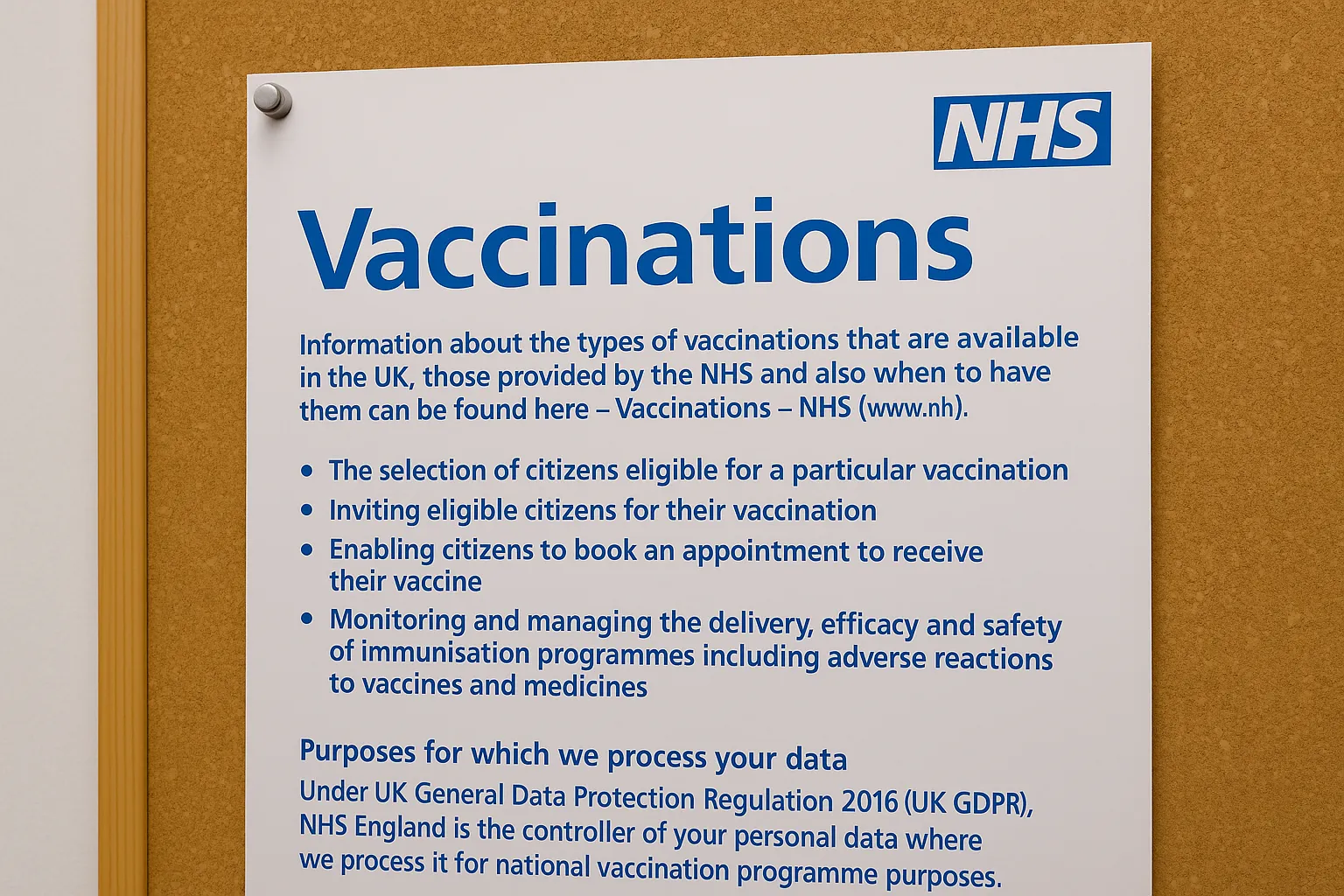
The current transparency notice outlines how NHS England is taking a coordinated national stance across several vaccination-related activities. These responsibilities include determining who is eligible for certain vaccines, sending invitations to eligible individuals, facilitating appointment bookings, and tracking the effectiveness as well as safety of immunisation programmes. This includes managing potential adverse reactions to vaccines and related medicinal products.
One of the primary purposes for collecting and processing citizens’ personal data is to identify those who qualify for vaccinations, adhering closely to the directives of the Joint Committee on Vaccination and Immunisation (JCVI). Individuals can find further information regarding the JCVI’s work on the official government website. The data processing activities undertaken by NHS England reflect a commitment to public health, facilitating the delivery of necessary vaccines to those who will benefit from them.
Details about the personal data gathering process reveal a structured approach. NHS England aims to streamline the vaccination journey for citizens. This includes being able to send out national vaccination invitations, coordinating with general practitioners (GPs) and other vaccination providers, and maintaining the necessary correspondence to ensure smooth appointments and follow-ups. Citizens may expect reminders aimed at encouraging vaccinations, ensuring essential procedures are adhered to.
Additionally, NHS England guarantees that vaccination records are securely sent to GPs electronically, assuming individuals are registered at an English GP practice. The organisation takes significant steps to ensure accessibility to vaccines, while closely monitoring areas where vaccine uptake is lower than expected. This may involve anonymising data to respect individual privacy but still enabling targeted support.
The management of personal data underpins NHS England’s responsibility within the national vaccination landscape. Designated as the controller of personal data, NHS England operates under the guidelines set forth by the UK General Data Protection Regulation (UK GDPR) as well as the Data Protection Act 2018. The prerogative for processing data stems from ensuring public health interests are upheld in compliance with specified statutory obligations.
Essentially, NHS England is tasked with promoting and safeguarding public health by orchestrating vaccination initiatives. Legislative provisions empower this role, with specific sections of the National Health Service Act 2006 detailing the responsibilities assigned to NHS England for public health functions. The overarching duty includes delivering immunisation services, with particulars enumerated in agreements made between the Secretary of State and NHS England.
Alongside compliance with various legislative measures, NHS England’s data processing also adheres to stringent confidentiality standards, ensuring that sensitive patient information is handled appropriately. Regulations established to manage patient confidentiality highlight how data can be processed to monitor and respond to public health trends efficiently, including the tracking of communicable diseases and vaccine safety.
In the context of the ongoing COVID-19 resurgence and seasonal influenza management, NHS England has been directed under Public Health directives to develop robust information systems and IT frameworks. This initiative also encompasses the legal requirement to process personal data under UK GDPR stipulations, especially in connection with COVID-19-related vaccination programs.
The collection of personal data varies depending on the specific vaccination programme. NHS England outlines which types of personal information are typically processed, including but not limited to NHS numbers, names, dates of birth, and contact details. Given the sensitive nature of these data, special attention is awarded to compliance processes, especially surrounding health-related information.
How NHS England acquires data is methodical, leveraging existing records to determine vaccination eligibility. Data collected at vaccination points is seamlessly integrated into patient healthcare records maintained by GPs. This system enables a comprehensive view of individual vaccination statuses allowing healthcare providers to offer tailored medical guidance.
Moreover, NHS England supports vaccination recording across various healthcare settings including community pharmacies and maternity services, ensuring that details of administered vaccines are captured adequately. Collaborations with organisations such as the Department for Education enable a holistic approach by integrating school vaccination data for better tracking of immunisation rates.
Procedure for data management encompasses multiple facets, including processing that aids in the organisation and monitoring of vaccines. Invitations for vaccinations may be directed using an array of communication methods, including text messages and emails, while national monitoring systems evaluate vaccine uptake and assess programme efficiency.
The sharing of data between NHS England and relevant healthcare providers is another critical component; data is exchanged to guarantee that those responsible for vaccination understand the context of each appointment. This involves not just sharing data with GPs, but also educational and public health departments to optimise health outcomes across populations.
Importantly, NHS England’s data management also aligns with public health evaluations, where aggregated, de-identified data may be utilised for research efforts aimed at improving vaccine strategies and public health engagement.
As part of NHS England’s pledge to transparency and accountability, citizens can infer that their data will only be retained for as long as necessary, adhering to best practices in records management. Data concerning the COVID-19 pandemic will be retained longer to comply with legal requirements associated with the ongoing public inquiry.
In summary, NHS England’s central role in managing vaccination programmes reflects a comprehensive approach to public health. Its responsibilities are framed within a legal context that prioritises citizen data protection and effective immunisation strategies, ensuring that the population is better protected against infectious diseases. As new vaccination programmes develop, NHS England will continue adapting its frameworks to meet emerging health challenges effectively.
Our Thoughts
The article outlines the responsibilities of NHS England in delivering vaccination programmes. Key improvements to avoid potential issues could involve enhancing transparency and communication regarding vaccination processes to the public, ensuring citizens are fully informed about their rights under the UK GDPR and Data Protection Act 2018.
A critical safety lesson is the necessity for robust data protection measures in handling personal health information to comply with the common law duty of confidentiality, as established in the Health Service (Control of Patient Information) Regulations 2002. There is also a potential risk of breaches to privacy that could arise if data sharing protocols between NHS entities are not stringently monitored.
Relevant regulations that may have been breached include those surrounding the processing and use of personal health data under the UK GDPR, particularly regarding how data is obtained and stored. To prevent similar incidents, NHS England should implement regular audits of data handling practices and provide ongoing training to all staff involved in vaccination data processes. Collaboration with data protection officers can ensure adherence to legal obligations and mitigate risks associated with data management.