















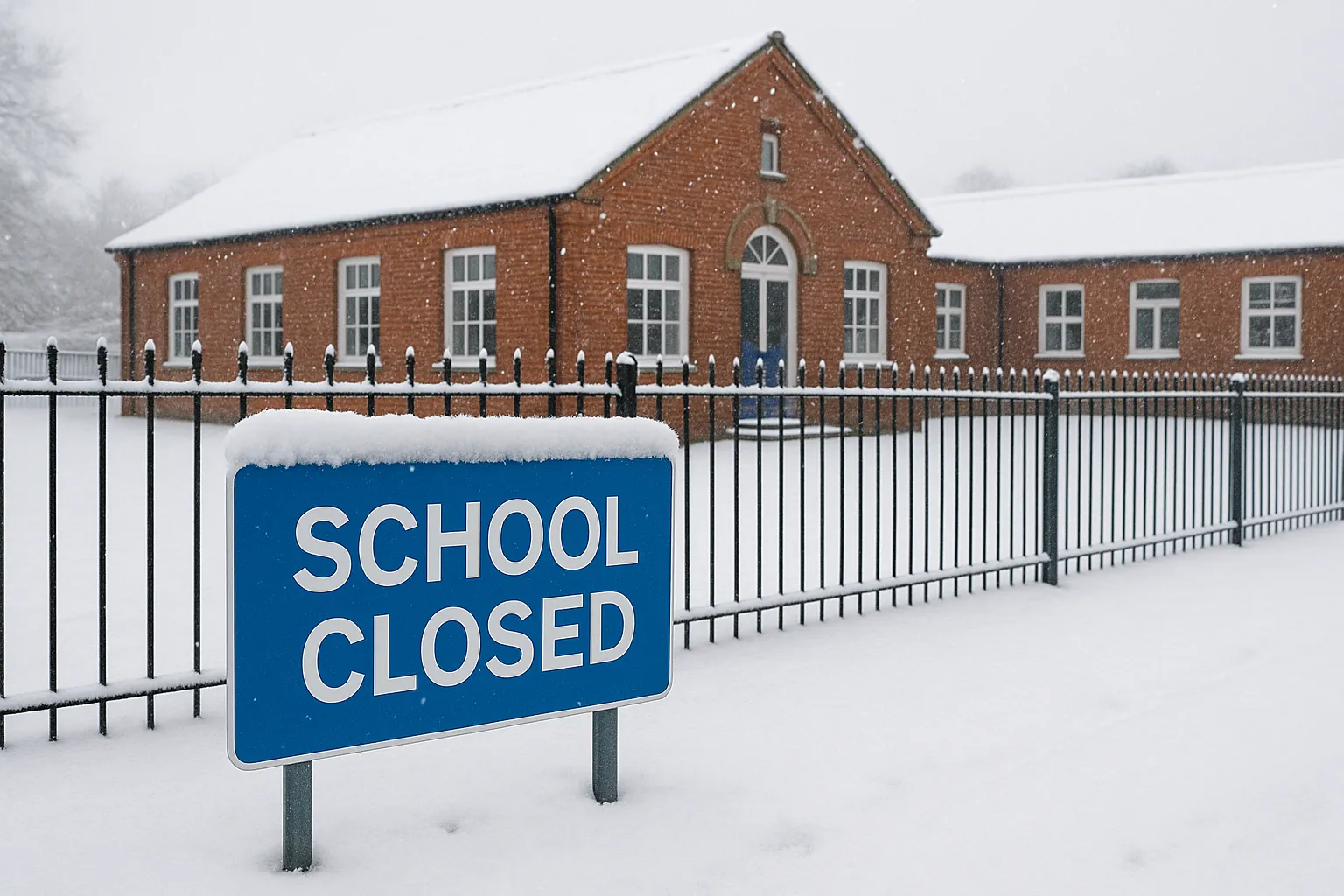
Story Highlight
– North East schools closed due to snowfall delays.
– Yellow weather warning for snow and ice issued.
– Seahouses Primary closed due to dangerous road conditions.
– Embleton Vincent St Edwards closed from boiler leak.
– St Annes CofE Primary has no heating, remains closed.
Full Story
Several schools across the North East are experiencing closures today, resulting in delays for students returning from their Christmas holidays. This disruption has been caused by adverse weather conditions, including heavy snowfall, prompting a Yellow weather warning for snow and ice issued by the Met Office.
Although many institutions are not scheduled to reopen until Tuesday, January 6, certain schools that were prepared for Monday’s resumption have been compelled to close temporarily due to deteriorating road conditions which have made travel unsafe for both staff and students.
At Seahouses Primary School, the management stated that the decision to remain closed was due to “treacherous road conditions and road infrastructure staff are unable to travel to school today”. This sentiment was echoed by Ellingham C of E Vol Aided Primary School located in Chathill, where officials cited “the unsafe road conditions preventing staff and pupils getting to school” as the reason for their closure.
Additionally, Embleton Vincent St Edwards C of E Primary School has faced its own challenges, announcing on social media that they were closed because of “a water leak in the boiler house and no heating”, further complicating the return to school for the local community.
In Blyth, Gilbert Ward Academy has declared it will remain shut until Wednesday, January 7. The school has been dealing with significant issues following a “boiler leak which has flooded the school”, a situation that has been ongoing since it was first reported on New Year’s Eve. The decision about closures was disseminated to the public through the Northumberland County Council’s official communications channels, ensuring that parents and guardians were informed promptly.
St Annes CofE Primary School in Bishop Auckland, County Durham, has also confirmed that it would not be opening today due to the lack of heating facilities in the school. This adds to the list of institutions facing operational difficulties as the area grapples with severe winter weather.
The snow has created hazardous conditions across the region, prompting local authorities to advise caution for those who must travel. Many families are assessing their own circumstances in light of the closures, with some discussing alternative arrangements for childcare and schooling while they await further updates from the schools involved.
While many schools are urging families to stay safe and consider their options responsibly, the situation remains fluid. Parents and carers are encouraged to keep an eye on official communications from school authorities, especially as weather predictions suggest the potential for further snowfall.
Local educational authorities and transport services are working diligently to manage the consequences of the weather, but they stress the importance of safety above all else. Decisions regarding school closures are not taken lightly and are made with the safety of pupils and staff as the foremost consideration.
As snow continues to fall in some areas, additional updates will be provided by the relevant school authorities and local councils, ensuring the community stays informed about their children’s educational environment.
Experts in weather and local infrastructure highlight that such weather events are becoming more frequent and extreme, raising questions about preparedness and response strategies for schools in the face of increasing climatic unpredictability. Enhanced measures may be necessary to deal with future instances of severe weather, not only for the immediate safety of students but for the long-term functioning of schools during winter months.
As this winter unfolds, families and educational institutions alike are reminded of the need for vigilance in preparing for potential disruptions, particularly in light of worsening weather patterns. The hope remains that conditions will soon improve, allowing students to return to their educational routines with minimal further interruption.
In the meantime, communication will be key, with parents urged to remain in contact with their respective schools for the latest developments regarding reopening dates and any further emergencies that may arise.
Our Thoughts
The school closures due to adverse weather conditions highlight the need for better contingency planning and risk assessment under the Management of Health and Safety at Work Regulations 1999. Schools should conduct thorough risk assessments related to extreme weather and ensure that measures are in place to maintain safe access for both staff and pupils.
Key safety lessons include the importance of effective communication with parents and staff regarding potential closures well in advance, allowing for safer travel planning. Additionally, the Provision and Use of Work Equipment Regulations (PUWER) 1998 emphasize the need for regular maintenance and checks of infrastructure, such as heating systems and boiler facilities, to prevent disruptions from equipment failures.
Ensuring that appropriate emergency protocols are in place for closures and maintenance issues can help mitigate similar incidents in the future. Lastly, engagement with local authorities to enhance road safety measures during severe weather could further prevent unsafe travel conditions for school access.