














Story Highlight
– Parents criticize councils for sourcing meat globally.
– Welsh councils report high percentages of imported chicken.
– Local farmers demand support for Welsh produce.
– Protests highlight impact of cheap foreign imports.
– Councils claim compliance with food safety standards.
Full Story
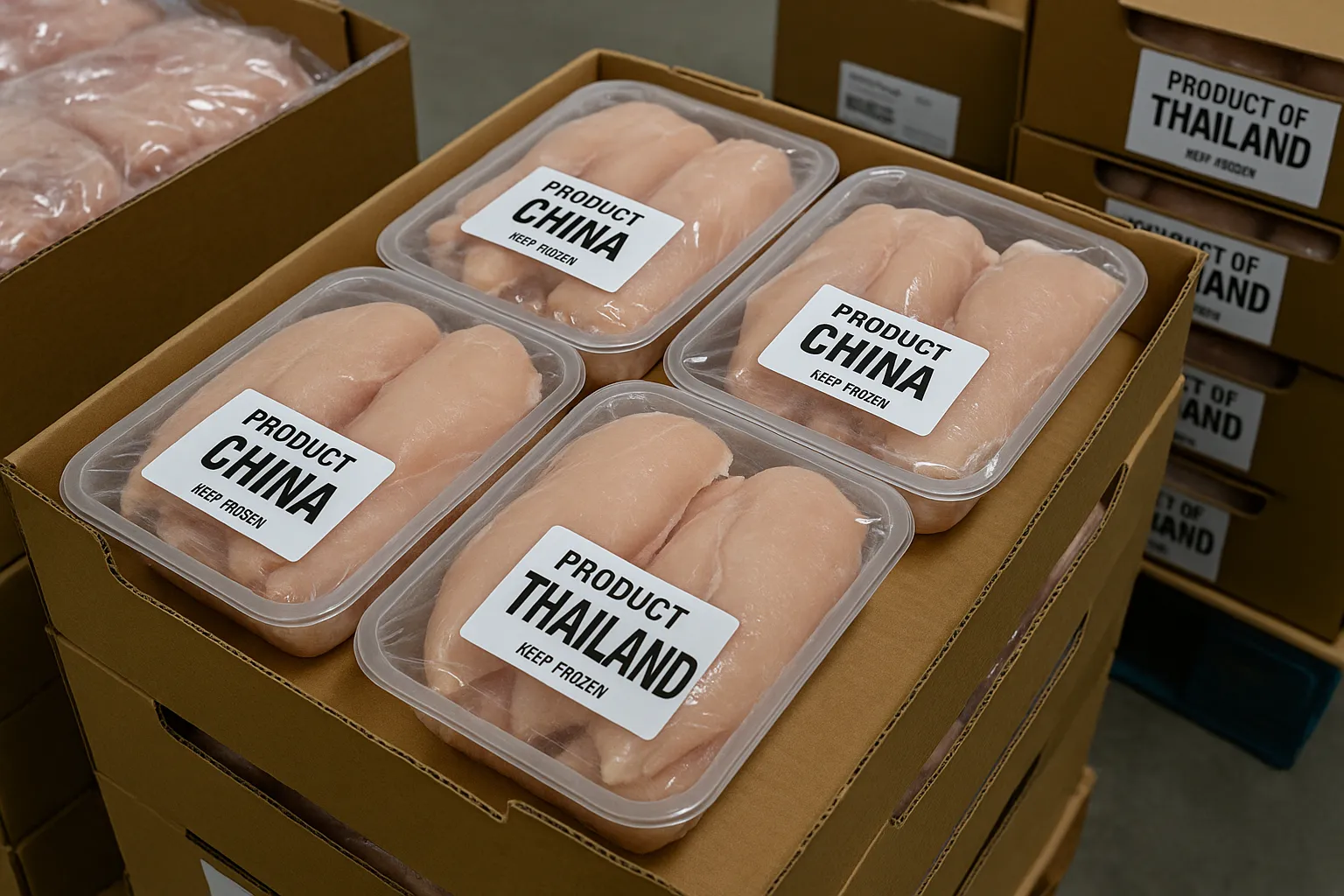
Parents across the UK are expressing their outrage over local councils’ decisions to source school lunch meat from distant countries, rather than supporting local agriculture. A recent study conducted by the Countryside Alliance has shed light on the extent of this issue in Wales, revealing that a significant portion of the chicken provided in schools comes from as far away as China and Thailand.
In a striking finding, Merthyr Tydfil Council reported that an astonishing 99.35% of the chicken served in local schools is imported from these two countries. Meanwhile, data from Gwynedd Council shows that approximately 87.62% of school lunch chicken is sourced from China, Thailand, and Brazil. Other regions, including Conwy and Caerphilly, also revealed troubling statistics, with 94% and 87.32% of their school chicken supplies being acquired from outside the UK and the EU. Alarmingly, only two out of the 21 councils in Wales reported sourcing all school chicken domestically.
Farmers and parents alike are voicing their discontent, claiming that this trend undermines both local food security and the health of students. Hefin Jones, a farmer and parent of three, lamented the councils’ approach, describing it as “nonsensical” in terms of food security, animal welfare, and environmental impact. He stated, “At the same time as high-quality food production here in Wales is being reduced, we’re apparently expected to accept lower-quality food being shipped halfway around the world. We should be backing Welsh farmers and Welsh produce, and ensuring our children are fed high-quality food that does not compromise their health.”
In her comments, Rachel Evans, director of Countryside Alliance Wales, also expressed her surprise and disappointment regarding the sourcing of chicken for school meals. Evans, who identifies as both a mother and farmer, pointed out that despite the availability of high-quality Welsh and British produce—where chickens are raised under some of the best welfare standards in the world—much of the chicken fed to children originates from abroad. “So much of the chicken our children are eating is being shipped in from the other side of the world,” she noted, highlighting the irony of the situation.
The issue has sparked protests among farmers across the UK, as they advocate against cheaper imports that threaten local producers. In recent months, demonstrations have taken place outside distribution centres and ports, where farmers are calling for attention to the challenges posed by foreign competitors. A farmer from Somerset, who participated in one of the protests in Bristol, remarked on the dire situation: “I see first-hand how cheaper foreign imports are pushing British producers to the brink, even though around 40% of our food is already imported. If we lose any more of our home-grown farming, the UK becomes dangerously reliant on overseas food, and when global crises hit, prices rise fast, and ordinary shoppers pay the price for decisions that drove the farmers out.”
In response to the growing concerns over food sourcing practices, a spokesperson for the Welsh Local Government Association defended local councils, highlighting that they procure food for school meals through formal public contracts. They assured that all chicken served in schools adheres to stringent UK food safety and hygiene regulations, irrespective of its origin. The spokesperson also explained that councils are actively seeking to enhance sustainability and support local supply chains when feasible, all while maintaining the safety, affordability, and availability of school meals.
Despite these official assurances, the sentiment among parents and farmers suggests a growing frustration that continues to build. Many parents are questioning whether local councils are prioritising the health and wellbeing of children over financial considerations. The reliance on overseas imports not only raises questions about food quality but also about the carbon footprint associated with transporting food from distant locations.
As debates surrounding food sourcing intensify, advocates for local produce are urging councils to consider the implications of their purchasing decisions on local economies, health, and the environment. They argue that investing in local agriculture can have far-reaching benefits, not just for immediate health concerns but also for community resilience and sustainability in the face of global challenges such as climate change.
Furthermore, experts in the field are calling for greater transparency in food sourcing decisions made by local authorities. They encourage parents to demand clarity on where their children’s food is sourced and to advocate for changes that would enable schools to prioritise local produce over cheaper imports. “It’s vital for parents to be informed and to engage with local councils about school meal provisions. Our children deserve the best possible nutrition that is also environmentally responsible,” said one food policy analyst.
In conclusion, the controversy surrounding school lunch meat sourcing has opened a larger conversation about food security, local economies, and health standards. As communities grapple with these issues, the call for local produce in school meals continues to gain momentum, positioning food policy at the forefront of parental and agricultural advocacy efforts across Wales and beyond.
Our Thoughts
The article highlights significant concerns regarding the sourcing of school lunch meat from distant countries, raising issues around health, safety, and local food security. To mitigate these risks, councils should prioritize sourcing food from local producers, thus supporting UK agriculture and ensuring higher welfare and safety standards for school meals. Relevant regulations under the UK Food Safety Act 1990 mandate that food sold must be safe and of suitable quality, which could potentially be jeopardized when sourcing from far-flung locations.
Key safety lessons include the importance of evaluating not just cost but the quality and origin of food supplied to vulnerable populations, such as schoolchildren. Establishing stringent local procurement policies could ensure compliance with the Health and Safety at Work Act 1974 by fostering a safer food environment. Councils might also examine contractual obligations under public procurement regulations to focus on sustainability and local industry support.
Preventive measures against similar incidents could involve enhancing transparency in supply chains, promoting awareness of local food options, and potentially enacting local legislation to limit external sourcing, thereby bolstering food security and public health resilience.