
















Story Highlight
– Premier Modular completed a sports facility in six weeks.
– Facility includes clubhouse, shower block, catering amenities.
– Project supports local football club during park redevelopment.
– Premier received 2026 International Safety Award recognition.
– Commitment to health and safety enhanced workplace wellbeing.
Full Story
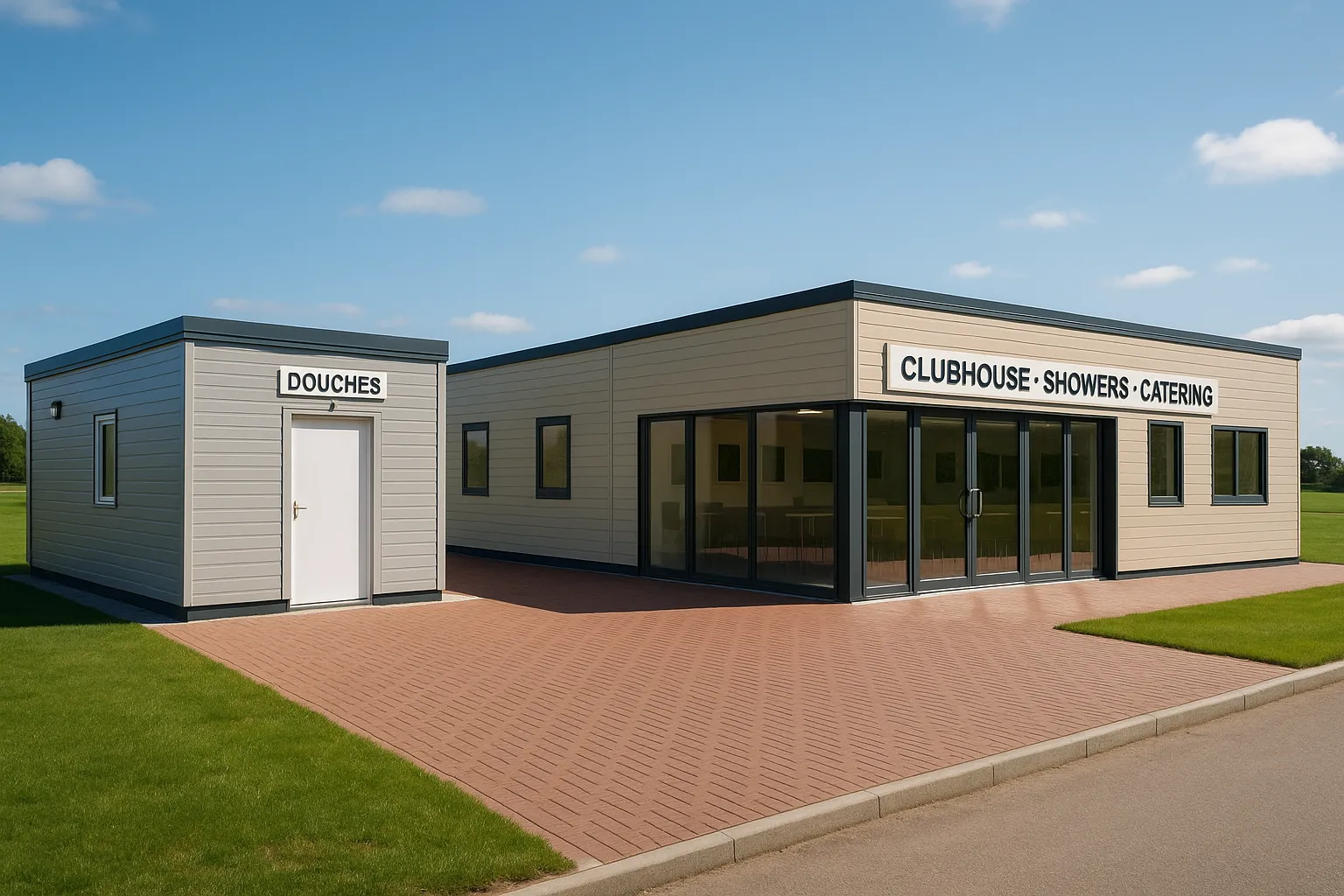
Premier Modular, a notable offsite manufacturer based in Brandesburton, East Yorkshire, has recently completed a significant project in the Netherlands. The firm rapidly developed a comprehensive sports facility that includes essential amenities like a clubhouse, a shower block, and catering facilities, all delivered within an impressive six-week timeframe. This project was commissioned by the Municipality of Enschede, which manages the city of the same name along with its surrounding areas.
The newly constructed modular facility is poised to serve as a temporary solution for the local football club, Surinaamse Voetbal Vereniging 1991 (SVV ’91), for the next three years while their primary sports venue undergoes significant redevelopment. SVV ’91 participates in the District East, Saturday League five, which is part of the Dutch amateur football league system, underscoring the necessity for a seamless transition during the construction phase to ensure continuous access to sporting facilities.
Premier Modular’s project entailed the design and installation of two distinct structures within a total area of 220 square metres. The first module serves as a dual-bay shower and changing block, providing separate facilities for home and away teams. The second module functions as a community centre, featuring a clubhouse, meeting rooms, multipurpose spaces, a bar, and catering services. With a ceiling height of 2.7 metres, both buildings were constructed as part of a tailored design approach, especially regarding the challenging layout of the shower blocks which required an open-plan configuration, raised flooring, and a central drainage system.
Jesper Wielinga, who is the project manager for the Municipality of Enschede, expressed the importance of the project’s design and execution. He stated, “We had very specific requirements for the project. The site sits on the boundary of a large residential housing estate, so the facility had to be aesthetically pleasing and constructed with minimal disruption to local residents.” His comments highlight the balancing act required in urban construction projects, especially those embedded within residential communities.
Premier Modular’s quick turnaround and adherence to the project requirements didn’t go unnoticed. Wielinga noted the firm’s ability to deliver a facility that not only met but exceeded expectations, remaining within budget constraints. “Premier Modular rapidly delivered a high-quality facility that met the club’s requirements and provided flexibility while staying within budget. We couldn’t be more satisfied with the collaboration,” he added, illustrating the efficacy of the partnership.
David Oakley, the general manager at Premier Modular, elaborated on the company’s commitment to contemporary, sustainable building practices. He remarked, “At Premier Modular, our focus is on delivering modern, sustainable buildings that support communities. On this project, our team’s meticulous planning and offsite expertise enabled us to overcome the site’s constraints and complete the installation and fit-out in just three days.”
This project exemplifies Premier Modular’s emphasis on precision and efficiency. By merging offsite manufacturing techniques with effective on-site project management, the company managed to deliver a high-quality facility that not only adhered to the project timeline but also aligned with sustainability objectives. Oakley further explained, “Our modular solutions support a circular economy by reducing material waste, minimising carbon emissions, and ensuring buildings can be repurposed, reconfigured, or recycled at the end of life.” This perspective aligns with broader trends in construction, wherein sustainable building practices are becoming increasingly crucial.
In addition to the Enschede project, Premier Modular has recently been honoured with a prestigious accolade—the 2026 International Safety Award from the British Safety Council. This recognition underscores the firm’s unwavering commitment to ensuring the well-being of its workforce and the safety of its workplace environments.
The company’s modern facility, situated in Brandesburton across a 37-acre site, has garnered attention not only for its innovative construction methods but also for its dedication to workplace health and safety. This is the fourth consecutive year that Premier Modular has been acknowledged by the British Safety Council. The awards celebrate organisations around the globe that demonstrate a solid commitment to preventing workplace injuries and health issues, evaluated by independent judges.
In the pursuit of enhancing workplace safety, Premier Modular has adopted various measures. These actions include increasing visibility through signage, offering continuous training programmes, monitoring the use of personal protective equipment (PPE), conducting factory audits, and engaging in weekly discussions about health and safety matters. Such initiatives reflect a proactive approach to workplace wellbeing and an intent to foster a culture prioritising safety among employees.
In summary, Premier Modular’s recent achievements in both the Netherlands and in workplace safety underscore its role as a significant player in the modular construction sector. The swift completion of the sports facility in Enschede illustrates the firm’s adeptness at responding to immediate community needs through innovative, flexible building solutions. The firm’s recognition by the British Safety Council further solidifies its reputation for excellence and commitment to sustainability and safety in the construction industry.
Our Thoughts
The article highlights Premier Modular’s successful completion of a project in the Netherlands and their recognition for health and safety compliance. However, to further enhance safety and prevent potential incidents, a few measures could be emphasized.
First, conducting thorough risk assessments prior to the project’s initiation would comply with the Management of Health and Safety at Work Regulations 1999, ensuring all hazards are effectively identified and mitigated. Additionally, enhancing worker training specifically for offsite and modular construction techniques as per the Construction (Design and Management) Regulations 2015 could provide further safeguards.
Communication with local residents about construction activities should have been more robust, ensuring minimal disruption while maintaining compliance with the Health and Safety at Work Act 1974, which mandates consideration for public safety.
Furthermore, implementing a formal mechanism for feedback from workers on health and safety practices could help identify areas of improvement, fostering an ongoing commitment to workplace safety. Though the article notes their commendable safety measures, continual assessment and adaptation of health and safety protocols can further prevent incidents in future projects.