












Story Highlight
– Multiple food recalls issued for safety concerns.
– Waitrose recalls water for possible glass contamination.
– Disaronno recalled due to glass in bottles.
– Tesco and B&M recall crisps for undeclared allergens.
– Iceland recalls vegetable lasagne due to plastic risk.
Full Story
A series of product recalls are currently impacting a variety of food and drink items across the UK, with consumers urged to remain vigilant about safety concerns, including potential contamination risks from foreign materials such as glass and plastic, as well as mislabeling of allergens. These recalls encompass several well-known brands and products, posing potential health risks for those who have purchased them.
### Waitrose’s Bottled Water Recall
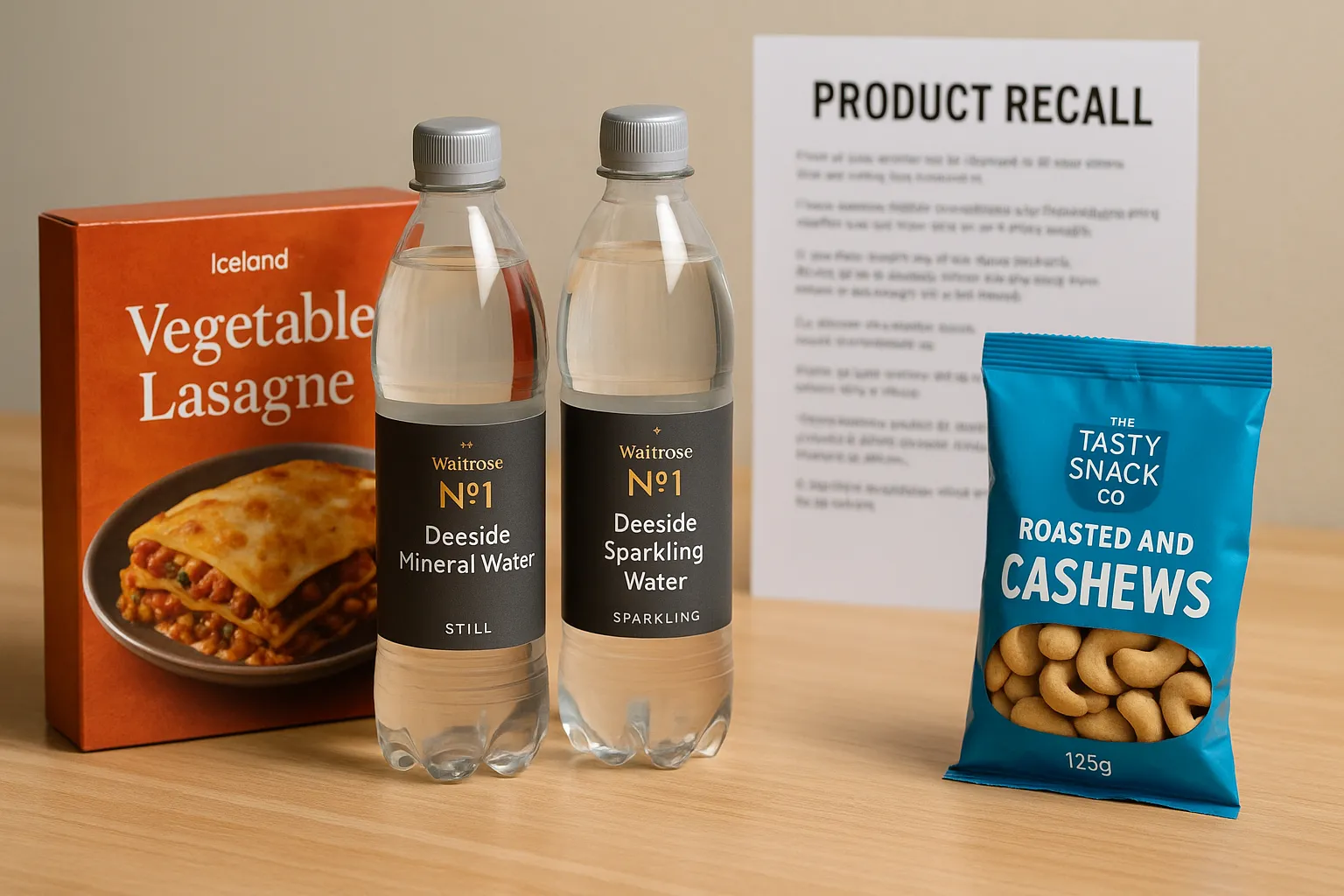
Waitrose has issued an urgent recall for specific batches of its bottled water, citing a risk of glass contamination that renders certain products unsafe for consumption. The affected items include Waitrose No1 Deeside Mineral Water and Waitrose No1 Deeside Sparkling Water. Shoppers are strongly advised against consuming these drinks and should return any purchased items to their local Waitrose store for a full refund.
A spokesperson for Waitrose stated, “We are recalling the above lines due to potential glass contamination. We apologise that it has been necessary to recall this product and for the inconvenience caused.” The recall affects various batch codes: for the mineral water, these include Nov2027 28, DEC2027 01, DEC2027 02, DEC2027 10, DEC2027 11, and DEC2027 16. The sparkling water varieties affected are the batches DEC2027 01, DEC2027 03, DEC2027 12, DEC2027 15, and DEC2027 25. To ensure customer awareness, point-of-sale notices will be displayed throughout participating stores, providing guidance on the steps to follow if purchases were made.
### Disaronno’s Christmas Recall
The festive season has prompted another significant recall, this time concerning the well-known liqueur, Disaronno Originale. Concerns have been raised regarding the potential presence of glass fragments within the 700ml bottles, which has led Illva Saronno S.p.A to initiate a recall. The specific batch codes being recalled include 25374, 25375, 25381, 25382, 25435, 25442, and 25444.
A Food Standards Agency representative elaborated on the situation, stating, “Illva Saronno S.p.A is recalling the above product. Point of sale notices will be displayed in all retail stores that are selling these products.” Customers are advised not to consume any affected bottles and to return them for a full refund or replacement. Illva Saronno has expressed apologies for any inconvenience caused, emphasising that consumer safety remains paramount.
### Tesco and B&M Crisps Recall
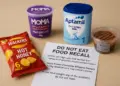
In an additional recall affecting snack products, Tesco and B&M have raised alarms over Calbee crisps. Specific varieties, namely the Hot & Spicy Chips and Pizza Chips, have been found to include undeclared allergens—mustard and celery, respectively. Such omissions can pose significant risks for individuals with allergies.
The recall includes all packet sizes for the Hot & Spicy Chips with best before dates up to and including June 5, 2026, and the Pizza Chips with best before dates up to April 28, 2026. Both retailers ask consumers to refrain from consuming these products and to return them for a full refund. A Food Standards Agency spokesperson noted, “This means the products are a possible health risk for anyone with an allergy to mustard or celery.”
### Poundland and Lidl Warnings
Poundland has also announced a recall for its Tasty Snack Co. Roasted and Salted Cashews after potential glass contamination was detected. Customers holding these products are encouraged to return them without needing a receipt for reimbursement. The impacted batch includes the code 56T 25255, with a best before date of July 19, 2026.
Similarly, Lidl is recalling its Simply Roasted and Salted Cashews over similar contamination concerns. A representative from Lidl stated, “We apologise for any inconvenience caused and thank you for your cooperation.” These cashews were sold in 125g packs and have a best before date of June 28, 2026. Customers are advised to return any affected items to their local store to receive a full refund.
### Marks & Spencer Recall
Marks & Spencer has identified a health risk concerning its product, M&S Milk Chocolate Honeycomb, which has potentially undeclared peanuts. The pack size affected is 120g, with a specific lot number of 5242 and a best before date of May 12, 2026. Shoppers who are allergic to peanuts should not consume this item and are urged to return it for a full refund.
### Iceland’s Plastic Contamination Alert
Lastly, Iceland Foods has issued a warning regarding its Vegetable Lasagne, which may contain plastic pieces. The affected products hold best before dates of July 23, 2026, and July 30, 2026. In light of the potential danger, consumers are advised against consumption and encouraged to return the lasagne to stores for a full refund.
### Understanding Product Recalls
Product recalls are initiated when safety concerns arise about food items, necessitating their withdrawal from shelves or recall from consumers. The Food Standards Agency provides necessary notifications concerning product recalls and withdrawals, including directives for local authorities. In some instances, they may issue a ‘Food Alert for Action’, which outlines specific actions that local authorities are required to undertake.
### Conclusion
Consumers are advised to stay informed about these recalls and take all appropriate actions if they have purchased any affected products. The safety of food items is paramount, and ongoing vigilance is essential to prevent health risks associated with contaminated or improperly labelled foods.
Our Thoughts
To prevent the incidents described in the article, several health and safety measures could be strengthened. Firstly, rigorous quality control processes should be implemented along the entire production and bottling lines to detect any foreign contaminants like glass and plastic before products reach consumers, in compliance with the Food Safety Act 1990 and General Food Law Regulation (EC) 178/2002.
Food businesses should ensure proper labeling and allergen management to avoid undeclared allergens, as highlighted by the allergen-related recalls. The Food Information Regulations 2014 require that food labeling must not mislead consumers, particularly regarding allergens, necessitating better traceability and communication with suppliers.
Regular training for staff in hazard identification and reporting protocols can also significantly reduce risks. Companies must adopt a proactive safety culture, embracing the principles of the Health and Safety at Work Act 1974, which mandates them to ensure, as far as reasonably practicable, the health and safety of employees and consumers alike throughout the supply chain.
Overall, by enhancing quality assurance, ensuring compliance with labeling laws, and fostering a safety-focused workplace culture, similar incidents can be minimized in the future.