













Story Highlight
– Urgent health alert issued due to Kent meningitis outbreak.
– 20 confirmed cases, with numbers expected to rise.
– Vaccination rollout for 5,000 students at University of Kent.
– Two students died; public urged to seek medical help.
– High demand for private meningitis vaccines amid concerns.
Full Story
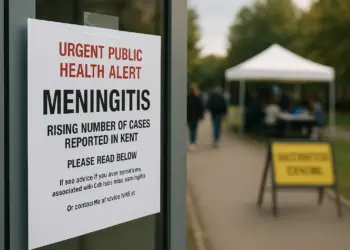
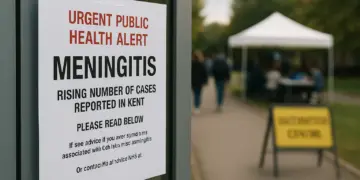
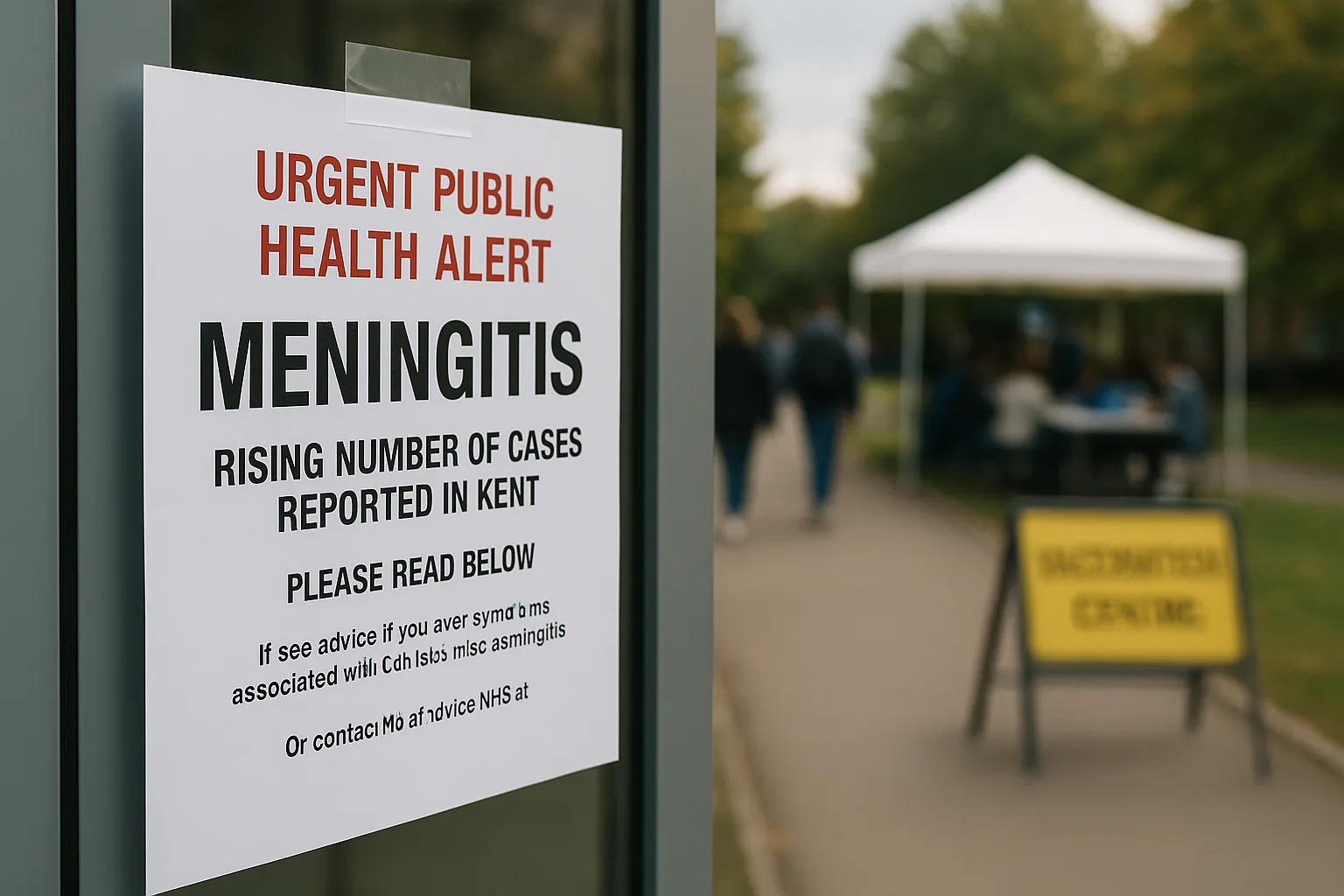
The UK Health Security Agency (UKHSA) has issued an urgent public health warning in response to a concerning rise in meningitis cases reported across Kent. This alarming development follows the confirmation of multiple instances of meningitis at two universities and several secondary schools in the region, with additional cases noted in London and even France.
Professor Robin May, the chief scientific officer at UKHSA, shared that the agency confirmed 20 cases of meningitis as of yesterday, with other instances under investigation. He emphasised that the tally is expected to increase. “We confirmed yesterday 20 cases, so far. We have several other cases under investigation. That number will be updated later when we know a bit more about that,” he stated during a BBC Breakfast interview.
The urgency surrounding this outbreak is heightened by the tragic loss of two individuals who succumbed to the disease. An 18-year-old student from a local school and a 21-year-old at the University of Kent were confirmed as victims of meningitis B. The UKHSA’s investigation indicates that the majority of these cases seem to trace back to a specific event linked to a nightclub in Canterbury, raising alarms about the outbreak’s unusual scale.
The number of confirmed cases could soon escalate. On Wednesday alone, the UKHSA reported five new incidences, bumping the total under investigation to 20. Additional updates are anticipated as health officials work to assess the situation further.
At the University of Kent, a vaccination campaign commenced this week, where hundreds of students flocked to receive the MenB vaccine. On its first day, 600 vaccinations were distributed, part of a broader initiative aimed at administering 5,000 doses to students. This effort is crucial as many of those affected by the outbreak are within the university demographic, typically at higher risk for meningitis infections.
Health Secretary Wes Streeting is actively addressing the outbreak and is scheduled to visit one of the vaccination centres. His remarks reflect the seriousness of the situation, describing the recent surge in cases as “unprecedented.”
Professor May characterised this outbreak as “very unusual,” noting that such a large cluster of meningitis cases typically does not arise from a single event. “Usually, we expect sporadic instances of meningitis, generally involving individual patients. What is particularly remarkable about this case is the significant number of cases originating from what seems to be a singular occurrence,” he explained. The professor speculated on two possible explanations: the behaviours of individuals at the implicated event and the potential evolution of the bacteria that could enhance its transmission.
Additionally, the UKHSA established a hotline to provide information and assistance to individuals who may have come into contact with confirmed cases but are not exhibiting symptoms themselves. The hotline operates from 9 am to 5 pm, aiming to alleviate concerns among those affected and provide guidelines for recommended actions.
Recent data also sheds light on the vaccination landscape. Since the introduction of the MenB vaccine in 2015, the incidence of infections has reportedly decreased by approximately 75% among those vaccinated. However, those over the age of 11 are not automatically protected unless they received the vaccine privately, a situation that has alarmed parents and advocates alike.
Among the voices calling for widespread vaccination is Marrissa Mullans, who tragically lost her son, Alfie, to meningitis less than a year ago. In light of the current outbreak, Mullans urged the government to extend the MenB vaccination programme to all young people. “It was only after Alfie’s passing that we realised that he hadn’t had the meningitis B vaccination,” she lamented.
As private vaccine demand surges, pharmacies are struggling to meet the rush. Boots and Superdrug report overwhelming interest, with Superdrug conveying that bookings for their meningitis vaccination service have soared to levels 65 times higher than the previous week.
For students at the University of Kent, staying safe has become a priority. Several have chosen not to return home for fear of spreading the infection. Among them, 21-year-old student Jack Rossington expressed his concerns and commitment to responsible behaviour: “I’m going to get the vaccine and hopefully I’ll be alright. It’s not something you’re not going to be worried about, but as long as you’re sensible you should be alright.”
The public health warning has not only affected students but has also drawn significant attention within the local communities. Health experts highlight that the outbreak poses varying levels of risk. The NHS reiterated that the risk of MenB to individuals outside Kent remains low, urging that antibiotics are only recommended for those who have been in close contact with confirmed cases.
Local health authorities are monitoring the situation closely. In France, officials confirmed a hospitalisation linked to the outbreak but stated that no other cases had emerged within their jurisdiction at this time.
As the investigation continues, many are left grappling with the implications of this outbreak, both personally and collectively. Experts are now tasked with tracking the potential spread and making informed decisions on further preventive measures, including the possibility of extending vaccination efforts to encompass a broader segment of the population.
Our Thoughts
To prevent the meningitis outbreak linked to a nightclub in Kent, several measures could have been implemented. Firstly, stricter adherence to health and safety regulations regarding public health, such as the Health Protection (Notification) Regulations 2010, could facilitate prompt reporting of contagious diseases, allowing for quicker public health responses. Educational campaigns focusing on menB vaccination, particularly targeting young adults in high-risk environments like universities and nightclubs, would promote awareness and vaccination uptake.
Additionally, improving measures at venues such as the nightclub to ensure that guests are educated on the symptoms of meningitis and vaccination options would be beneficial. Enhanced hygiene practices and crowd management could minimize transmission risks in such settings.
Furthermore, ensuring that all eligible individuals are vaccinated in a timely manner, as outlined in the Immunisation Against Infectious Disease guidelines (Green Book), could greatly reduce the number of cases. The health system could strengthen the distribution and availability of vaccines for young adults, particularly targeting university populations.
Key lessons include the importance of rapid communication regarding outbreaks, proactive vaccination strategies, and maintaining public health safety measures to mitigate such incidents in the future.