













Story Highlight
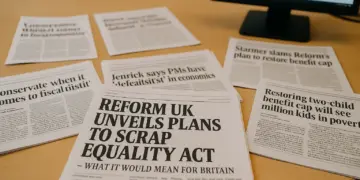
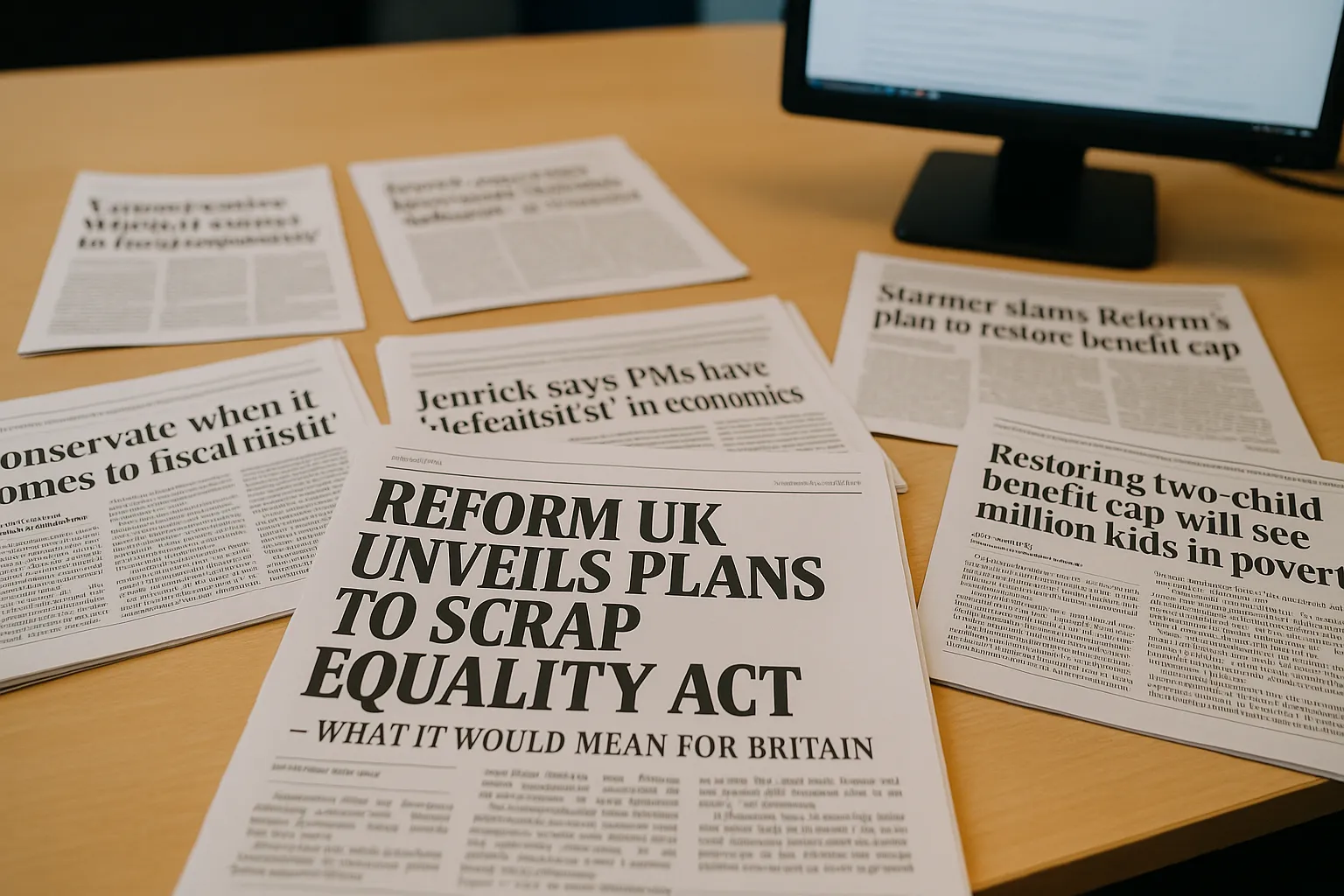
– Reform UK plans to restore two-child benefit cap.
– PM accuses Reform of increasing child poverty levels.
– Starmer and Labour criticize two-child benefit cap move.
– Jenrick avoids setting immediate fiscal rules or tax cuts.
– Jenrick claims recent PMs have lacked economic vision.
Full Story
Reform UK, a political party seeking to reshape the UK’s welfare policies, has proposed the reinstatement of the controversial two-child benefit cap, a move that has drawn sharp criticism from political opponents. During a press conference held in London, Robert Jenrick, the party’s Treasury spokesman, outlined the rationale behind this decision, emphasising the need for fiscal restraint. He stated, “We want to help working families have more children. But right now, we just cannot afford to do so with welfare. So it has to go.”
The two-child benefit cap, which limits the number of children for whom families can claim financial support, has been a contentious issue since its introduction. Critics assert that this policy exacerbates child poverty. Sir Keir Starmer, Leader of the Labour Party, took to social media to denounce the proposed reinstatement, labelling the cap as “cruel” and “shameful.” Anna Turley, who chairs the Labour Party, echoed Starmer’s sentiments, declaring that such a measure would contribute to a generational crisis affecting children across the nation.
The political discourse surrounding the proposal highlights deep divisions in the UK’s approach to welfare and economic policy. Starmer expressed frustration, arguing that the government has a duty to alleviate child poverty rather than entrenching it. His comments reflect ongoing concerns in the Labour party regarding the socio-economic impacts of welfare cuts.
In a wider context, the matter intertwines with discussions about the responsibilities of prominent figures in shaping public policy. Rachel Reeves, the Chancellor, brought attention to Andrew Mountbatten-Windsor, stating he has “a lot of questions to answer” about his relationship with Jeffrey Epstein. Reeves pointed out that the former royal should provide clarity on what he knew regarding the treatment of victims, a matter that resonates with the public’s desire for accountability and transparency in elite circles.
Amidst these unfolding events, Robert Jenrick underscored the party’s commitment to re-evaluating fiscal strategies. He refrained from committing to specific fiscal rules during his initial announcements, stating, “I’m not going to make up fiscal rules on my first day in the job.” Instead, he suggested a more measured approach, stating, “We’re going to talk to market participants and we’re going to develop strict world-class fiscal rules ahead of the next general election.” This cautious methodology indicates a departure from past government practices, where fiscal rules were frequently altered or disregarded.
Political correspondent Millie Cooke further examined Jenrick’s stance, noting that despite serving under Liz Truss, whose brief tenure involved significant economic disruption, he intends to prioritise fiscal responsibility. Jenrick asserted, “We’re going to be conservative when it comes to preserving what’s important, like fiscal responsibility and stability in the economy.” He concluded that while some reforms are necessary, the party would avoid repeating past mistakes associated with economic mismanagement.
The announcement regarding the two-child benefit cap comes against a backdrop of recent political developments, including the government’s recent decision to postpone a swath of local council elections. Sir Keir Starmer clarified that this postponement was a response dictated by local councils, which had sought delays amid legal consultations. He defended the government’s actions, suggesting that the various local authorities, including those governed by Labour, Conservative, and Liberal Democrat parties, all played a role in the decision.
As the political landscape shifts, Jenrick’s refusal to commit to any immediate tax cuts has drawn attention. He emphasised the importance of creating fiscal headroom before making promises to the electorate, indicating a pragmatic approach as the party navigates its economic policies. Jenrick stated, “We will never make promises we can’t keep to the British people. So we’ll only cut taxes when we have generated the fiscal headroom necessary to make those tax cuts sustainable.”
The implications of Reform UK’s policies on minimum wage are also a topic of concern. Jenrick criticised proposals to equalise the minimum wage for younger and older workers, terming these potential changes as “economically harmful”. He pointed out that the youth unemployment rate has surged in the UK, surpassing that of many EU countries. His assertion reflects an urgent need to reassess employment strategies to better support young individuals entering the workforce.
The overall sentiment within Reform UK appears to be a clarion call for significant economic reforms while adhering to fiscal conservatism. Political analysts and commentators will be observing how these policy announcements play out, particularly in light of public reaction and the potential long-term consequences for families and children across the UK.
As debates continue around welfare reform and economic policy, the opposition is likely to leverage these proposals to highlight the impact on vulnerable populations, further intensifying the scrutiny on Reform UK’s intentions and capabilities. The next few months will be critical as the party positions itself ahead of upcoming elections, setting the stage for a significant clash over the country’s economic future and welfare system.
Our Thoughts
The article discusses the political implications of Reform UK’s announcement to restore the two-child benefit cap, a measure criticized for potentially increasing child poverty. While this matter isn’t directly related to health and safety incidents, one key lesson pertains to the importance of thorough impact assessments before implementing significant policy changes.
A lack of risk assessment and evaluation of potential socio-economic impacts could lead to breaches of the Health and Safety at Work Act 1974, particularly where vulnerable groups, such as low-income families, are concerned. Ensuring that policies do not adversely affect the health, safety, and welfare of individuals, especially children, is crucial.
To prevent similar issues in the future, a more comprehensive approach involving stakeholder consultations and impact assessments would be beneficial. Ensuring alignment with the Equality Act 2010, which mandates consideration of protected characteristics including socio-economic status, is vital in mitigating potential negative outcomes of policies that may lead to increased vulnerability among the population.