















Story Highlight
– Scientists urge health warnings for bacon and ham.
– Nitrites in processed meats linked to cancer risk.
– Colorectal cancer cases rising among young people.
– EU regulates nitrites; UK urged to follow suit.
– Reform advocates call for improved food labeling.
Full Story
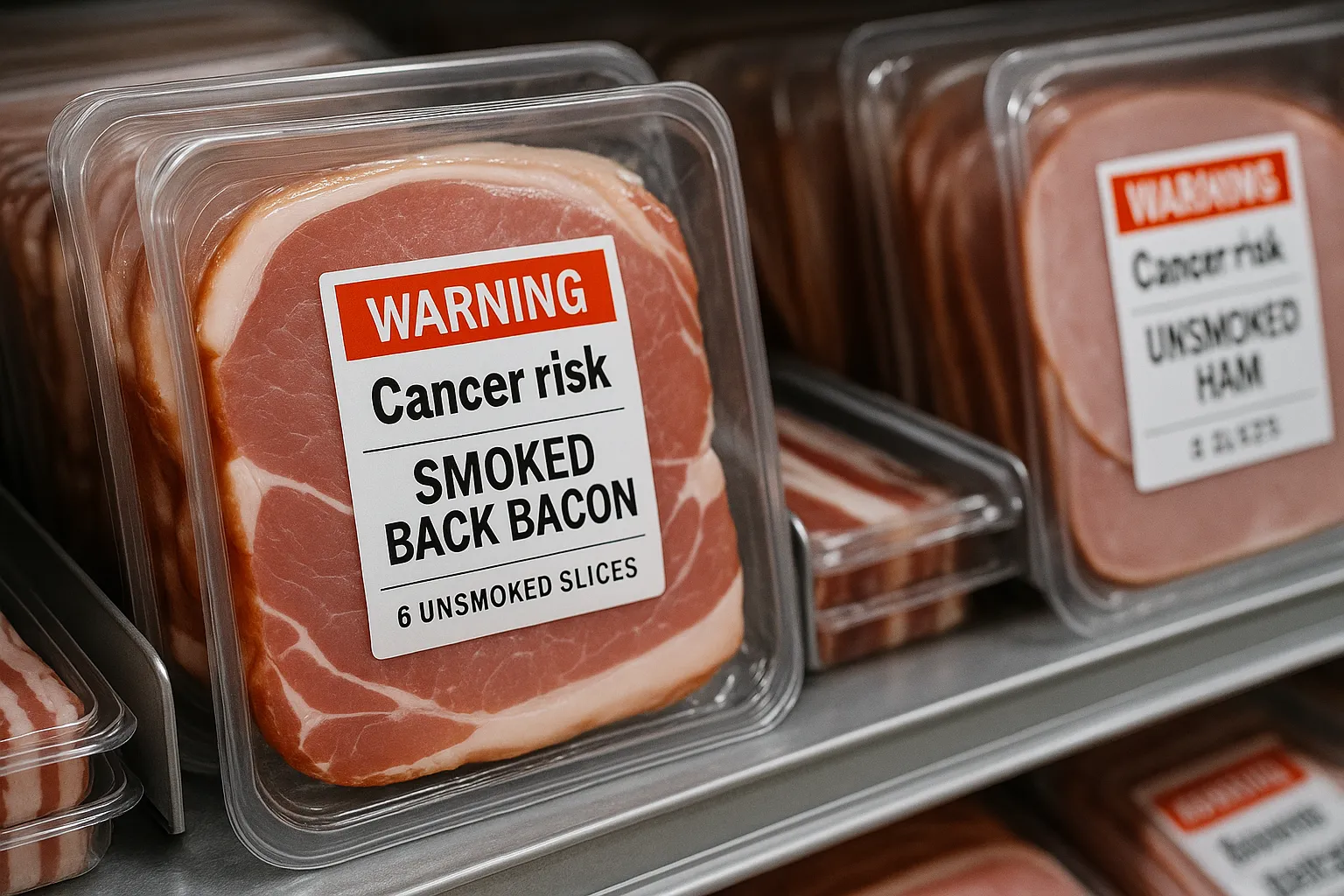
A collective of UK scientists has urged the government to mandate health warnings for bacon and ham products, akin to those found on cigarette packaging. This appeal highlights their concern regarding potential cancer risks associated with these meats, particularly due to the presence of nitrites, chemicals commonly used in the preservation of processed meat products. The scientists assert that the UK government has not adequately responded to the accumulating evidence linking the consumption of these foods to an increased risk of various cancers, notably bowel cancer, which has seen a concerning rise among younger populations.
According to the experts, the origins of this increase in bowel cancer remain enigmatic, despite intensified research efforts aimed at uncovering the underlying causes. The urgency of their plea is underscored by the World Health Organization’s International Agency for Research on Cancer (IARC) classification of processed meats as a Group 1 carcinogen nearly ten years ago. This classification aligns processed meats with known carcinogens such as tobacco and asbestos, solidifying the need for effective governmental action.
The use of nitrites in products like bacon and ham serves multiple purposes, such as enhancing flavour, maintaining colour, and preventing spoilage. However, the risk posed by these additives is significant, potentially contributing to thousands of cancer cases annually within the UK. When ingested, nitrites can convert into nitrosamines, powerful carcinogens that harm DNA. This interaction can lead to the formation of DNA adducts in the liver, which distort genetic material and can initiate a cascade of genetic errors. These errors subsequently may result in uncontrolled cell division, leading to the formation of tumours, especially in the colon.
Scientific research estimates that nitrites in processed meat have been implicated in approximately 54,000 cases of colorectal cancer in the UK over the past decade. The consensus among scientists regarding the adverse links between processed meat consumption and cancer risk has strengthened since the IARC’s announcement in 2015. Further studies have not only reaffirmed the connection to colorectal cancer but have also raised concerns about a potential link to breast cancer, suggesting that women who consume processed meats regularly may face an elevated risk compared to those who do not.
In response to growing health risks, the European Union has enacted more stringent regulations, reducing the allowable levels of nitrites in processed meats. This proactive stance underscores the EU’s commitment to consumer safety and cancer prevention, promoting the transition to safer production methods. However, some food industry groups oppose the elimination of nitrites, arguing it could jeopardise food safety by increasing bacterial contamination risks. Contrarily, a notable segment of scientists and food safety experts maintains that with advancements in refrigeration and hygiene practices, safe and stable nitrite-free cured meats can be produced without increased risks.
One significant voice in the conversation is Professor Justin Stebbing, a Biomedical Sciences specialist at Anglia Ruskin University, who notes that European producers have been successfully selling nitrite-free meats for years without any recorded food poisoning incidents. This evidence challenges the argument that nitrites are indispensable for ensuring food safety.
The discussion around nitrites in processed meats transcends scientific inquiry, as it raises important issues regarding the balance between public health, industry interests, and consumer safety. Advocates for reform insist that the government must take decisive action by phasing out harmful additives and enhancing food labelling to empower consumers in making informed dietary choices. They highlight that, since Brexit, the UK has fallen behind the EU in terms of food safety standards, particularly regarding nitrogenous additives.
From a public health perspective, dietary carcinogens like nitrites represent an avenue for cancer prevention. A reduction in exposure to these harmful substances could significantly alleviate the national cancer burden and lessen the strain on healthcare services. Given the established link between diet and cancer risk, coupled with related issues such as obesity, reducing processed meat consumption could serve as a significant step toward improving overall public health.
In conclusion, scientists and health advocates assert that it is imperative for policymakers to acknowledge the substantial cancer risks associated with nitrite-laden processed meats. The amalgamation of growing scientific evidence and rising public concern calls for prompt governmental action. Implementing bans or phases out of these identified carcinogenic additives, mandating cancer warnings on product packaging, and encouraging safer production alternatives could potentially save countless lives and enhance public health outcomes.




Clear, evidence based information is vital. Processed meats can contribute to cancer risk and consumers should know that, especially given rising colorectal rates. Tighter controls on additives and stronger labeling would help people make informed choices. Any changes should be practical, backed by robust risk communication and supported by measures that help manufacturers reformulate and make healthier options accessible.
Clear, evidence based information for consumers is essential. Processed meats contain additives and compounds that can increase cancer risk, so better labelling and public education would help people make informed choices. Policymakers should consider aligning with tighter controls and targeted guidance, especially for younger age groups, while supporting industry and public health measures to reduce harmful exposures and promote safer alternatives.
Clear, evidence based information on the risks associated with processed meats is overdue. Strengthening labeling and reducing nitrite levels would help people make informed choices and could contribute to reducing colorectal cancer rates. Any policy change should be accompanied by public education and support for industry to adopt safer preservation methods.
Clear information helps people make safer choices. Labelling that explains risks associated with regular consumption of processed meats and the role of nitrites would support informed decisions and could encourage industry change. Any policy should be based on the best available evidence, include practical advice on reducing risk and consider realistic timelines for implementation so both consumers and producers can adapt.