















Story Highlight
– Strong support for mandatory eye tests among UK adults.
– 71% favor eye test evidence for first-time license applicants.
– Nearly 70% support tests at each license renewal.
– Higher support for older drivers needing mandatory tests.
– Public agrees on improving road safety through regular checks.
Full Story
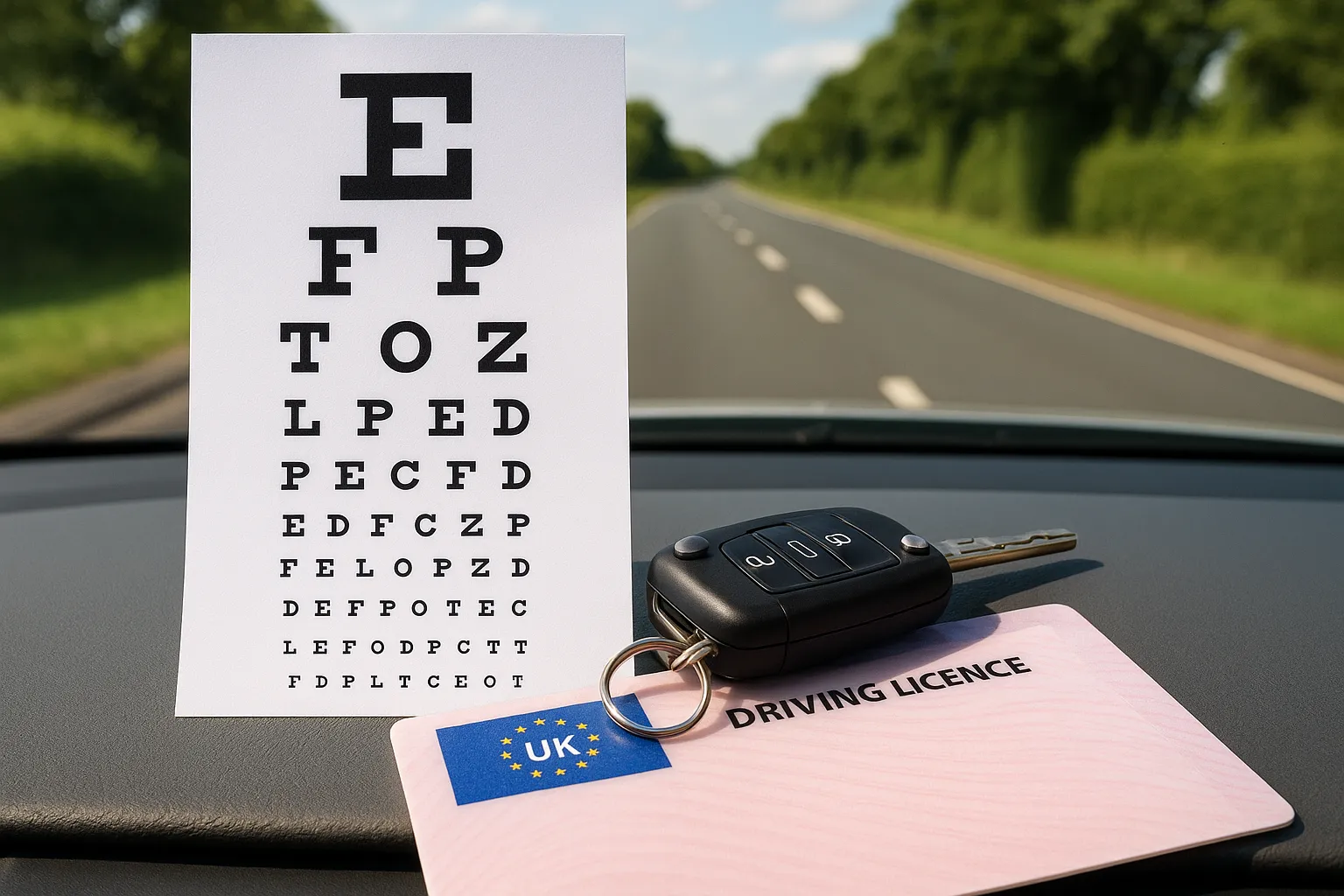
A recent survey across the United Kingdom indicates widespread backing for the implementation of mandatory eye tests for drivers. According to data from the College of Optometrists and the Association of Optometrists, existing vision assessments do not align with the necessary standards to ensure road safety.
The survey, which engaged 2,000 adults in the UK, revealed that 70% of participants advocate for mandatory eye tests at both the initial driving licence application and during renewals. This significant public support reflects a growing consensus on the imperative to enhance vision standards for motorists, as emphasised by the College and Association’s stance that routine eye testing is crucial for safeguarding all road users.
Findings from the study show that 71% of those surveyed believe new drivers should present proof of a recent eye test demonstrating compliance with vision requirements when applying for a driving licence for the first time. Additionally, close to 70% of respondents feel that this requirement should also extend to licence renewals. Among drivers aged over 55, the advocacy for compulsory eye tests during renewals is particularly pronounced, with 72% in favour.
The data further highlights that a considerable number of older individuals recognise the necessity of these tests. Specifically, 51% of people think that mandatory eye tests should be enforced for those aged 40 and older. This figure rises to 59% for drivers aged 50 and above, reaching 70% for those aged 60 and over, and an impressive 76% among drivers aged 70 and older.
In light of these findings, both the College of Optometrists and the Association of Optometrists have repeatedly urged legislative changes aimed at enhancing road safety across the UK. Their proposed reforms include obligatory evidence of recent eye tests during initial licence applications and at every subsequent renewal—every ten years for younger drivers and every three years for those over the age of 70, as these age groups are more prone to vision deterioration and associated eye conditions.
Daniel Hardiman-McCartney, a clinical advisor for the College of Optometrists, commented on the survey results, stating, “These findings highlight the public recognises that current vision checks aren’t keeping pace with what’s needed to keep everyone safe on the road. Requiring a simple eye test when people apply for and renew their driving licence is a practical step that would support road safety and improve the nation’s eye health. Importantly, regular eye tests would help detect problems earlier so that more people, including older drivers, can drive safely for longer, while also preventing avoidable sight loss.”
As it stands, the NHS covers eye tests for all individuals over the age of 60 in the UK, with additional eligibility criteria for certain groups. In Scotland, NHS-provided eye tests are accessible to everyone, ensuring that no one is left without the opportunity to maintain their eye health.
Dr. Peter Hampson, clinical and policy director at the Association of Optometrists, stressed the gradual nature of vision changes, which often escape drivers’ notice until significant deterioration has occurred. “Sight changes often happen so gradually that drivers don’t realise their vision has deteriorated. Yet we know that poor eyesight can cause people to react more slowly and compromise safe driving, which can be the difference between recognising a hazard and having a collision with tragic consequences,” he said. “Vision-related accidents could be avoided with simple, evidence-based updates to the current legislation in the UK. This latest research shows that the majority of the public agree that change is needed.”
The joint principles proposed by the College and the Association aim to create a fair and consistent system that ensures a driver’s vision is evaluated by a qualified health professional. This proactive measure is seen as a common-sense approach that brings the UK in line with many European nations, where such regulations are already in place.
The public’s acknowledgement of the need for reform reflects a broader concern for safety on the roads. As driving regulations evolve and the population ages, the necessity of regular vision assessments is becoming increasingly evident. The call for mandatory eye testing emerges not only as a preventive measure but as an essential aspect of public health, ensuring that drivers remain capable and safe handlers of vehicles.
In summary, the findings from this survey spotlight a pivotal issue within UK transport policy, one that intertwines public safety with health management. Advocates for mandatory eye tests argue that such measures will foster an environment where both drivers and pedestrians can feel more secure, reducing the risk of preventable accidents as a result of compromised vision. As discussions continue within governmental and health sectors, the consensus among the public may push for a legislative shift that prioritises vision health as an integral part of driving standards.
Our Thoughts
The article emphasizes a significant public consensus on the need for mandatory eye tests for motorists, underscoring existing gaps in UK driving safety legislation. To prevent potential road incidents caused by poor vision, the introduction of mandatory eye tests during initial license applications and subsequent renewals is critical. This recommendation aligns with the Health and Safety at Work Act 1974, which mandates that employers and relevant stakeholders ensure the health and safety of individuals, including the public.
Key safety lessons include the importance of regular health assessments to mitigate risks associated with deteriorating eyesight, particularly in older drivers who are more susceptible to vision changes. The current lack of mandatory eye tests constitutes a breach of the duty of care as prescribed by UK health and safety regulations.
To avert similar incidents, immediate legislative action should be taken to enforce regular eye examinations for drivers, thereby ensuring compliance with safety standards and protecting road users. Enhancing public awareness of vision health and establishing compulsory testing can significantly reduce vision-related accidents and maintain road safety.