












Story Highlight
– Multiple food recalls due to contamination and labeling issues.
– Lidl recalls Deluxe Red Cabbage over undeclared milk content.
– Waitrose recalls bottled water due to potential glass contamination.
– Tesco and B&M recall crisps for undeclared allergens.
– Poundland and Iceland issue recalls for glass and plastic risks.
Full Story
A series of recalls has been announced for various food products across the UK, following concerns about potential health risks linked to contamination or mislabeling. Shoppers are being urged to check their purchases against the recall notices and to adhere to the guidelines provided by retailers to ensure their safety.
**Lidl’s Vegetable Product Recall**
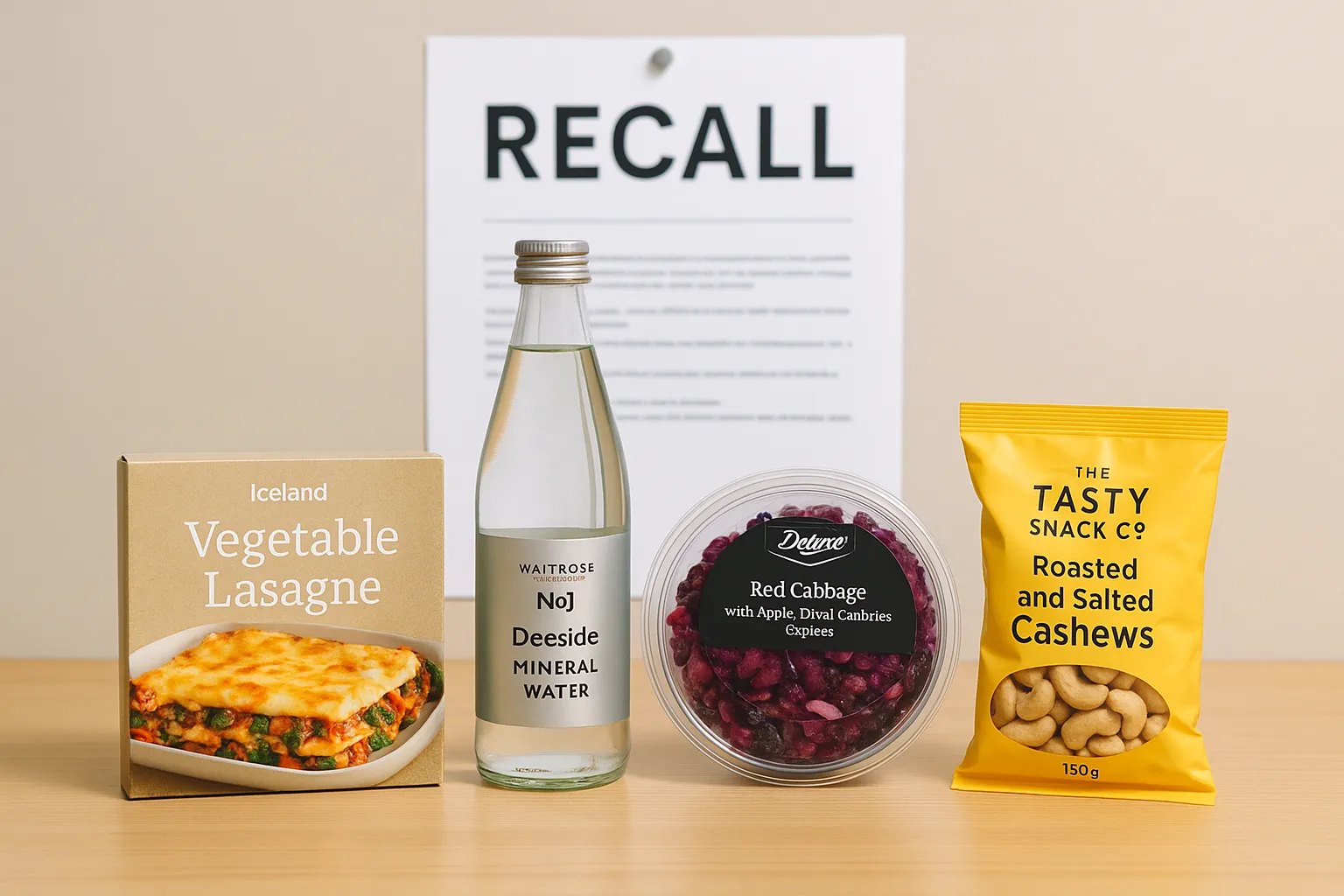
Lidl’s Deluxe Red Cabbage with Apple, Dried Cranberries & Spices is at the centre of a recall due to the presence of unlabelled milk, which poses a significant risk for individuals with milk allergies. This recall encompasses all date and batch codes for the 480g packs of the product.
In a statement, a representative from the Food Standards Agency (FSA) confirmed, “Lidl GB is recalling the above product from customers and has contacted the relevant allergy support organisations, which will inform their members about the recall.” Customers are advised not to consume the product and are encouraged to return it to the point of purchase for a full refund. Further enquiries can be directed to Lidl’s customer service team via email or phone.
A spokesperson for Lidl expressed regret over the situation, stating, “We apologise for any inconvenience caused and thank you for your cooperation.”
**Waitrose Water Products Recall**
In a separate incident, Waitrose has issued a recall for certain batches of its No1 Deeside Mineral Water and No1 Deeside Sparkling Water products over safety concerns regarding potential glass contamination. Customers are specifically warned against consuming the impacted batches, which could pose a serious danger.
A spokesperson elaborated on the issue: “We are recalling the above lines due to potential glass contamination.” Customers can return their purchases to any Waitrose & Partners branch for a refund. The FSA has indicated that notices explaining the recall will be displayed in stores, advising customers on how to proceed.
The relevant batch codes for the products are listed, with specific emphasis on the need for returns if purchased.
**Crisp Recall by Tesco and B&M**
Tesco and B&M have also issued an important recall notice regarding certain flavours of Calbee crisps. The recall stems from undeclared ingredients that could trigger severe allergic reactions in sensitive individuals.
The affected lines include Calbee Hot & Spicy Chips and Calbee Pizza Chips, both of which have been found to contain mustard and celery, respectively, without these ingredients being indicated on the packaging.
Customers are urged to cease consumption of the crisps and to return them for a full refund. A representative from the Food Standards Agency stated, “Calbee Group UK Ltd is recalling Calbee Hot & Spicy Chips because they contain mustard and Calbee Pizza Chips because they contain celery which are not mentioned on the label.” The recall applies to packets with specific best before dates leading up to 2026.
**Poundland’s Cashew Recall**
Poundland has taken precautionary steps to recall The Tasty Snack Co. Roasted and Salted Cashews due to potential glass contamination. A spokesman for the retailer advised customers with existing stocks not to consume the product, but instead to return it, stating that no receipt would be required for the refund.
The batch under scrutiny has been specifically identified to prevent any health risks to shoppers. The FSA has reiterated the importance of returning recalled items for consumer safety.
**Marks & Spencer Chocolate Honeycomb Recall**
Marks & Spencer has announced a recall of its Milk Chocolate Honeycomb product due to concerns that it might contain peanuts, a detail not disclosed on the packaging. This poses a health risk for customers who have peanut allergies.
The specific pack size and batch number have been communicated to the public, with M&S advising consumers to return the affected product to stores where they were purchased, highlighting their commitment to customer safety.
**Iceland’s Vegetable Lasagne Recall**
Iceland Foods has also issued a warning regarding its Vegetable Lasagne product, which might contain pieces of plastic. Customers holding products with specified best before dates are cautioned against consumption and are advised to return the items to stores for a refund.
The FSA spokesperson has reinforced the importance of following these recall instructions carefully to avoid any health hazards associated with these products.
**Understanding Product Recalls**
Product recalls are crucial in maintaining public safety by ensuring that products pulled from shelves due to health risks are returned by consumers to prevent use. The Food Standards Agency plays a pivotal role in overseeing these processes, issuing both Product Withdrawal and Recall Information Notices to inform the public and appropriate authorities of such issues.
In light of this recent wave of recalls, customers are encouraged to be vigilant about their purchases, check for any affected products, and follow the guidance provided by retailers to minimise health risks associated with contaminated or mislabelled goods.
Our Thoughts
The recent food product recalls highlight critical lapses in food safety and labeling regulations under the UK Health and Safety legislation, particularly the Food Safety Act 1990 and the General Food Law Regulation (EU) 178/2002.
To prevent such incidents, companies should implement more rigorous quality control and verification processes to ensure accurate labeling of allergens and potential contaminants. A systematic approach to traceability, ingredient sourcing, and monitoring production lines could significantly reduce the likelihood of contamination with foreign materials like glass or plastic.
Education and training for staff on allergen management and food safety protocols are essential to avoid mislabeling and to ensure that all ingredients are properly disclosed. Regular audits and compliance checks would also support adherence to safety standards.
The failure to properly label allergens poses significant risks to consumers with specific dietary restrictions and breaches consumer protection regulations. Establishing a more proactive risk management system could enhance safety outcomes, mitigate health risks, and protect both consumers and brands from the repercussions of recalls.