

















Story Highlight
– Tesco issues ‘do not eat’ notice for mislabelled pâté.
– Three pâté products at risk of microbiological contamination.
– Customers can return products for full refund, no receipt needed.
– Food Standards Agency warns about potential hazards.
– Recall effectiveness relies on clear communication and execution.
Full Story
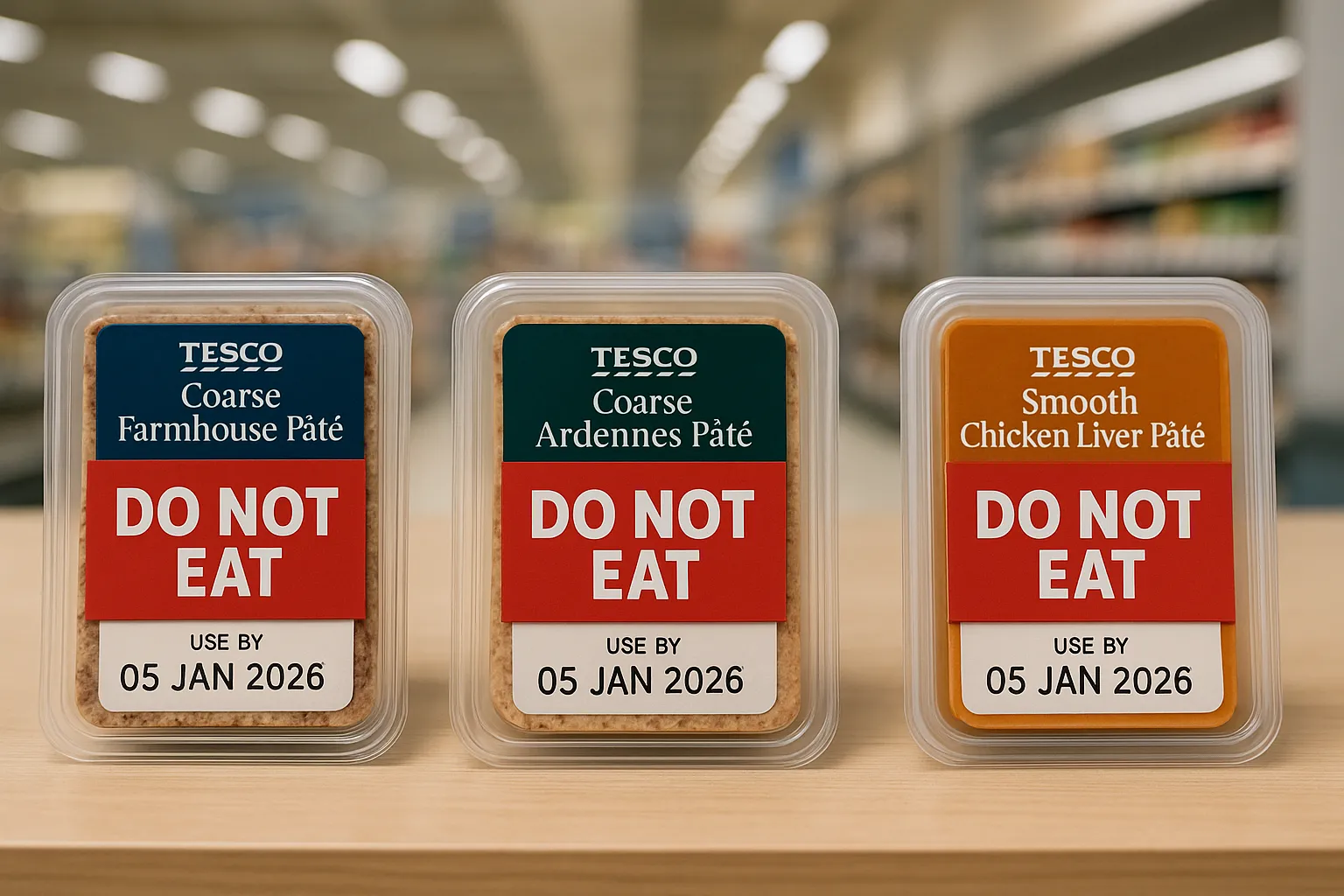
Tesco has taken immediate steps to safeguard consumer health by issuing a critical ‘do not eat’ notice for three of its own-brand pâté products. This action follows the discovery of incorrect labelling related to their use-by dates. The supermarket chain has initiated a prompt recall of the affected items over concerns regarding potential microbiological contamination.
The products involved include 170-gram packs of Tesco Coarse Farmhouse Pâté, Coarse Ardennes Pâté, and Smooth Chicken Liver Pâté, all bearing the same erroneous use-by date of 5th January 2026. Customers who have purchased these items are urged to return them to stores for a full refund, and notably, a receipt is not required for this process.
This incident highlights an important aspect of food safety and the relationship of trust between supermarkets and their clientele. Accurate labelling is fundamental to consumer confidence; it provides the reassurance needed that products are safe for consumption. However, lapses such as this can transform what is meant to safeguard public health into a source of anxiety.
The significance of use-by dates cannot be understated. These dates are not just suggestions but rather legally mandated indicators that designate the timeframe during which a product is deemed safe to eat. Once a food item surpasses its use-by date, the risk of harmful bacteria proliferating rises sharply. These bacteria are often undetectable by regular means, eluding smell or taste, necessitating laboratory analysis for identification.
As a precautionary measure, the Food Standards Agency (FSA) has issued a warning regarding the potential microbiological hazards linked to foods marked with a use-by date. However, it has refrained from specifying which specific bacteria could be involved, adding an element of disquiet regarding the situation. Mislabeling products is not a minor oversight; it poses serious health risks and must be rectified at the earliest opportunity.
The recall operation by Tesco shines a light on an alarming trend where routine mistakes can culminate in severe consequences for consumers. Errors in product labelling may appear negligible, yet they can lead to significant health risks across homes in the UK. A simple misprint in a use-by date could convert a safe food item into a dangerous one, underscoring how minor slips can carry major ramifications.
In recent years, heightened scrutiny has been directed towards the food safety practices and labelling integrity of retailers. With increased consumer vigilance, the pressure has mounted for supermarkets to ensure rigorous compliance with safety protocols. Many retailers have responded by implementing automated systems aimed at efficiently handling the intricacies of large-scale production and diverse supply chains.
A recent example that underscores these challenges involved Waitrose, which initiated a recall of specific bottled mineral and sparkling water due to concerns about potential glass contamination. Such incidents indicate that adhering to food labelling and safety regulations is not merely advisable but essential for maintaining public trust.
Managing risks within extensive retail networks—encompassing hundreds of outlets and a plethora of product offerings for millions of consumers—is an increasingly intricate task. Tesco’s rapid response to alert customers and facilitate refunds is likely to be viewed as a model of accountability and transparency in such crises.
Amid the prompt recall, questions linger regarding the extent of the issue. It remains unclear how many packages have been consumed or how many consumers may unwittingly have ingested the mislabelled products. Thus far, no illnesses have been reported in relation to the affected pâtés, which is a positive development. However, the effectiveness of the recall hinges on its execution.
Successful product recalls rely heavily on clear and effective communication with the public, readily visible signage in stores, staff training to ensure awareness, and efficient return procedures. If managed appropriately, a well-executed recall can help restore consumer trust. Conversely, any mismanagement could further erode confidence in the retailer.
Tesco’s adherence to protocols—including customer notifications, in-store signage, and a straightforward refund process—will play a significant role in determining the overall impact of this incident. Retailers understand that a handled recall can reassure consumers, while a poorly executed response can lead to lingering consequences for an organisation’s reputation.
As this situation unfolds, it serves as a broader reminder of the crucial importance of vigilant food safety practices and the implications that arise from even the smallest of administrative oversights. Supermarkets are not just food dispensers; they are custodians of public health, and consumers expect them to uphold the highest standards. This incident will undoubtedly provoke ongoing discussions about responsibility, transparency, and the measures needed to maintain public confidence in the food supply chain.
Our Thoughts
The incident with Tesco’s incorrect labelling of pâté products highlights several key areas for improvement in food safety compliance to prevent similar occurrences in the future. Firstly, a more stringent control system for labelling and date verification should be implemented to ensure accuracy before products reach consumers, as mandated by the Food Labelling Regulations 1996 and the General Food Law Regulation (EC) No 178/2002, which require safety considerations in food production and distribution.
Additionally, Tesco could enhance staff training on the importance of food labeling and safety standards under the Food Safety Act 1990, ensuring all employees understand the implications of errors. Automated systems for tracking expiry dates should be regularly audited to mitigate human error.
While Tesco acted quickly with recalls, the effectiveness of such actions hinges on clear communication and consumer awareness. The incident serves as a reminder of the necessity for consistent adherence to food safety regulations and an effective crisis management plan, as failure in these areas threatens public trust and health. Regular internal audits and reviews of safety protocols, alongside consumer education initiatives regarding food safety, could further safeguard against microbiological hazards stemming from labelling errors.