

















Story Highlight
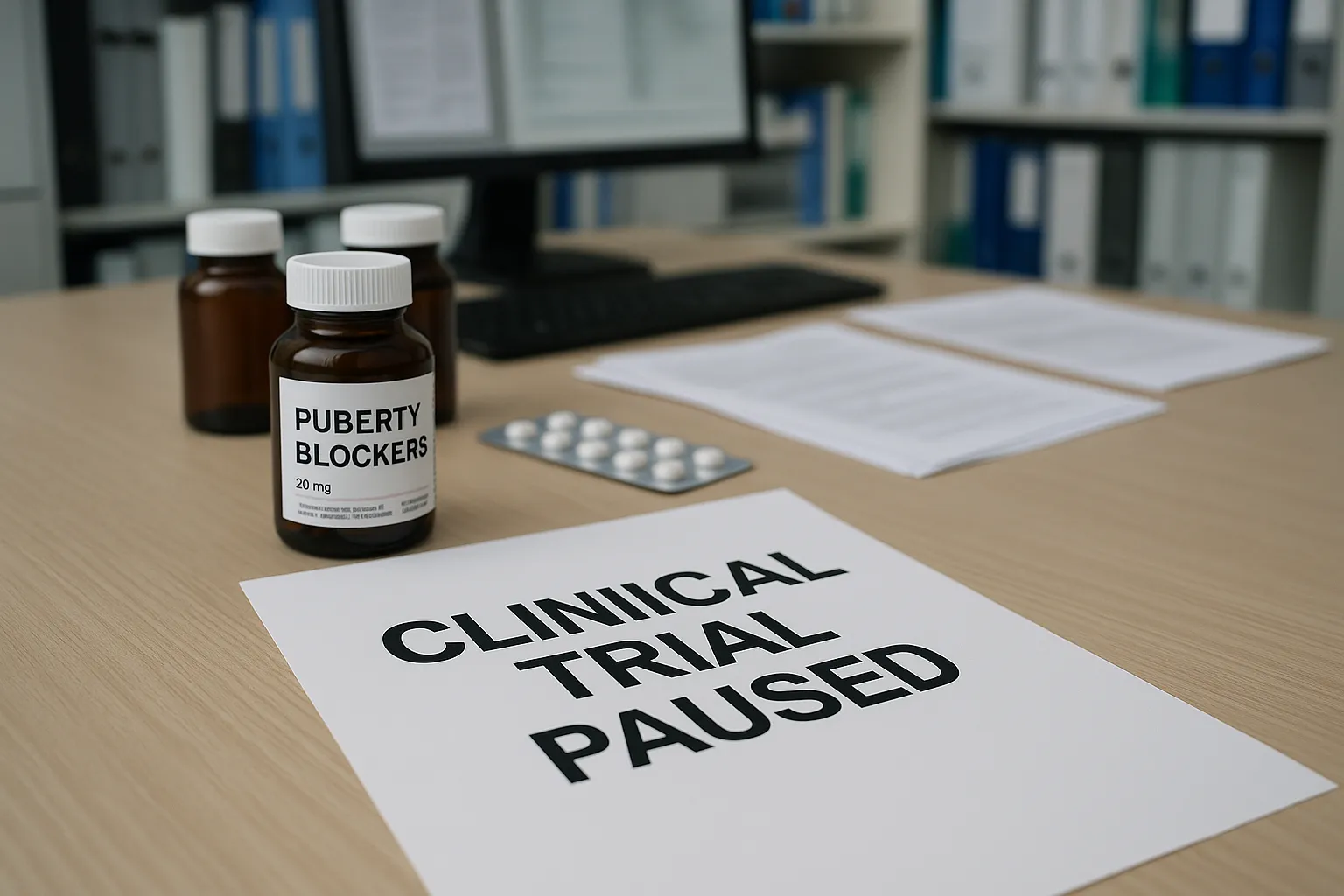
– Clinical trial on puberty blockers paused due to safety concerns.
– MHRA to discuss issues with King’s College researchers.
– Trial involved over 220 children aged 11 to 15.
– Minimum age for participants may be raised to 14.
– Legal action taken against trial for ethical concerns.
Full Story
A clinical study evaluating the advantages and potential hazards of administering puberty-blocking medications to children exploring their gender identity has been temporarily halted due to safety apprehensions raised by the UK’s medical regulatory body. The Medicines and Healthcare Products Regulatory Agency (MHRA) announced it would be meeting with researchers from King’s College London, who are spearheading the trial, to discuss these concerns.
The trial, which was initially unveiled in November following the receipt of approvals from both the MHRA and the Health Research Authority, intended to involve over 220 participants aged between 11 and 15. An MHRA representative noted that ensuring the “safety and wellbeing” of the subjects—who have yet to be recruited—is of utmost importance.
In 2024, the use of puberty blockers for under-18s grappling with gender identity issues was prohibited. These drugs, often referred to as puberty-suppressing hormones (PSH), are typically used to delay or avert the onset of puberty. The study, identified as Pathways, was designed to assist children who might be experiencing distress regarding their gender identity and currently seek help from gender service providers. The focus of the trial was to assess the drugs’ effects on the participant’s physical, social, and emotional welfare.
However, in light of new information, the MHRA is advocating for an adjustment in the minimum age requirement for participants, suggesting it should be raised to 14 years. Additionally, there is a call for more comprehensive monitoring of bone density and an improved consent framework for the participants involved.
In a recently published letter on the government’s official website, the MHRA highlighted its reservations concerning the age limit established for trial participants. The correspondence stated, “Given that there may be significant, yet unquantified risks of long-term biological harm to participants, biological safety has not been conclusively demonstrated in this proposed cohort. There should be a graded, stepwise approach, starting with those aged 14 as the lower limit of eligibility.”
Following this, an MHRA representative clarified that continuous review of clinical trials is standard procedure and that ongoing scientific discussions with the trial sponsors are expected. “Concerns pertaining to the wellbeing of participants have been raised and will be addressed through scientific dialogue,” they remarked.
The Department of Health and Social Care has confirmed that no participants will be enrolled in the trial until the issues raised by the MHRA are satisfactorily addressed. A department spokesperson reinforced that the primary focus remains on ensuring the safety and wellbeing of involved children and young individuals, and that the trial will proceed only if scientific advice affirms its safety and necessity.
In response to the situation, a representative from King’s College London declared that the health and wellbeing of youth dealing with gender incongruence, along with their families, is the institution’s foremost priority. They emphasized the importance of both rigor and ongoing scientific discourse in a trial, particularly one as intricate as Pathways.
There exists a segment of the medical community that questions the necessity of conducting this trial. Furthermore, advocates are pursuing legal action against the MHRA, the government, and various parties linked to the trial, arguing that it raises ethical concerns and that minors cannot provide fully informed consent for treatments that could impact their future fertility.
A review carried out by Dr. Hilary Cass in 2024 revealed that gender medicine has been operating on “shaky foundations” regarding treatment evidence, prompting the restriction on puberty blockers for minors. However, Dr. Cass argued in a recent dialogue that it is crucial for the trial involving puberty blockers for those under 16 to proceed, warning that failure to do so could lead to unregulated distribution of medications through less responsible avenues, particularly online.
Hannah Barnes, an investigative journalist and editor at The New Statesman, described the MHRA’s correspondence as considerably impactful. In an interview on BBC Radio 4’s Today programme, she noted, “If one scrutinises it closely, almost every part effectively challenges the current structure of the trial.”
If revisions are to occur, Barnes stated that refinements would need to ensure a safer approach and enhanced monitoring for these vulnerable participants. Reflecting on the study’s current framework, she expressed doubt regarding its future viability, declaring, “I believe the trial in its present form is essentially finished.”
As the discussion surrounding puberty blockers and the treatment of gender identity continues to evolve, the outcomes of the MHRA’s deliberations with King’s College London will be pivotal in shaping future protocols and safeguarding practices for minors exploring their gender identity. The intersection of medical ethics, patient safety, and responsible therapeutic practices remains a critical focal point within this sensitive area of healthcare.
Our Thoughts
The pause of the clinical trial on puberty-blocking drugs raises significant safety concerns under UK health and safety legislation. To enhance safety and avoid such incidents, more comprehensive risk assessments should have been conducted prior to trial approval, particularly regarding the potential long-term impacts on participants aged under 14. The regulations related to clinical trials, including the MHRA’s guidelines, emphasise the necessity for robust monitoring of participant safety and informed consent processes.
Key lessons include the importance of establishing a minimum age limit that better reflects the vulnerability of the participants, along with the requirement for detailed monitoring of biological impacts, like bone density. The trial’s initial approval may not have sufficiently considered these aspects, leading to the MHRA’s intervention.
The MHRA’s concerns indicate that the trial may have breached ethical standards for conducting research involving minors, particularly in relation to safeguarding their wellbeing as outlined in the UK Clinical Trials Regulations and the Declaration of Helsinki. Future trials should involve more stringent oversight and continual review to adapt to emerging data on the risks associated with hormonal treatments in children.