













Story Highlight
– Underground fire in Coatbridge has been extinguished successfully.
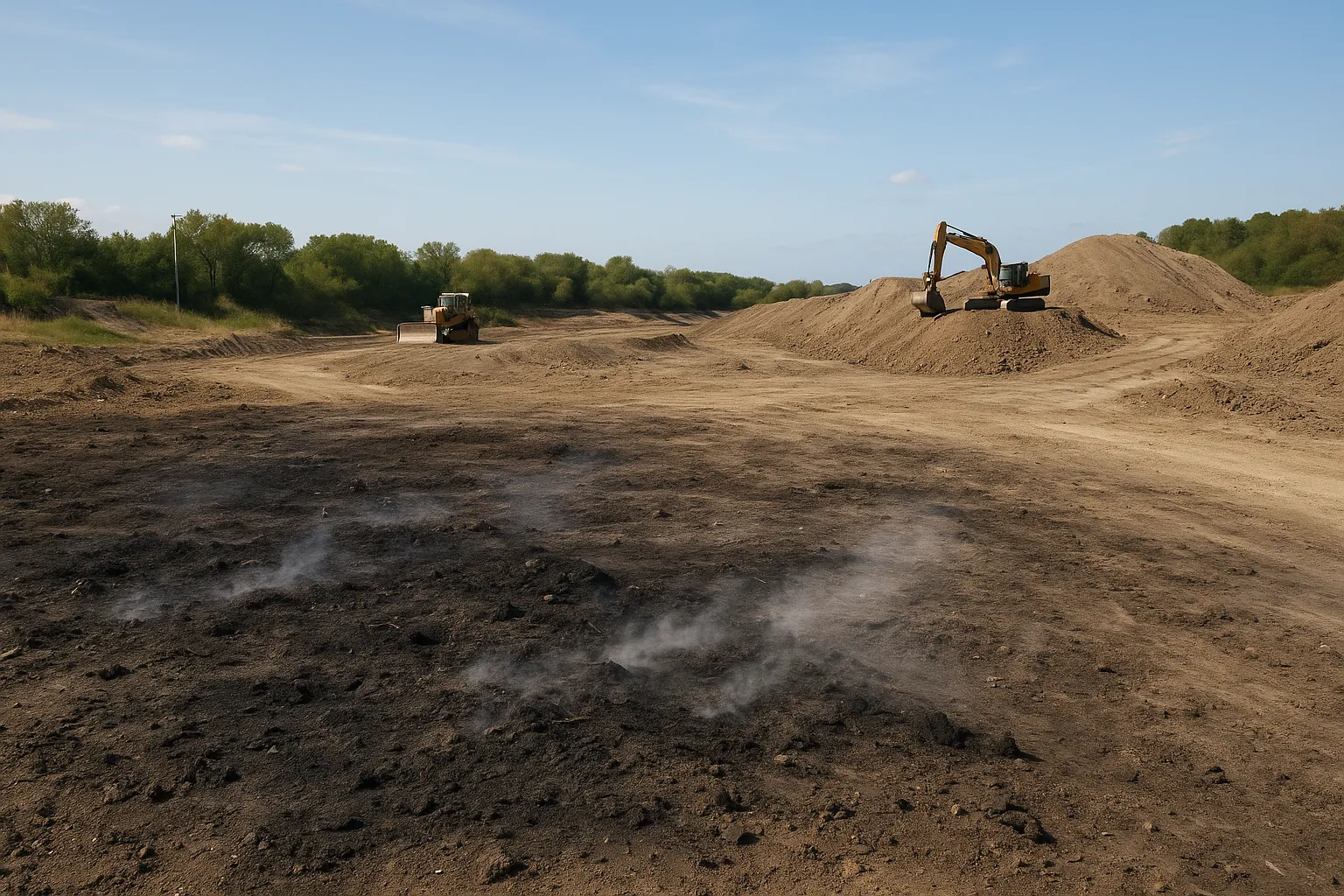
– Area previously lush, now a wasteland post-fire.
– Residents kept windows shut due to health concerns.
– Extensive excavation and testing have been conducted.
– Remediation and restoration efforts are now underway.
Full Story
An underground fire in Coatbridge, which has been smouldering since last summer, has reportedly been successfully extinguished, according to North Lanarkshire Council. The incident, located near Burleigh Street, has resulted in significant damage to the local environment, transforming a previously vibrant area filled with trees and wildlife into a desolate wasteland. Residents in the vicinity have been compelled to keep their windows closed since the start of the fire due to health concerns linked to smoke and pollutants.
On Thursday, North Lanarkshire Council provided a positive update to local residents, stating: “We are now confident that the underground burning has been successfully extinguished. This is a significant milestone.” The council officials elaborated that verification measures, including further geothermal imaging and testing across the affected site, are currently underway.
Describing the operation to tackle the fire, officials acknowledged its complexity. Approximately 30,000 tonnes of material have been excavated, highlighting both the scale of the issue and the challenges associated with the firefighting efforts. “From the outset, our immediate priority has been to safely stop the burning,” council representatives noted.
As the situation evolves, the council’s focus is shifting towards the safe remediation and restoration of the embankment area. Recent developments include the successful demolition of a historic railway weighbridge, executed without complications. The next steps involve benching and reinstating the clay of the embankment, supported by the use of specialised machinery on site. While the fire has been extinguished, officials have warned that some dust may still be generated during the ongoing excavation and restoration work, with suppression measures to be employed if necessary.
Throughout this operation, air quality monitoring has been maintained consistently and will continue as the new phase of remediation progresses. The cooperation among various agencies has been instrumental in these developments. The council has worked closely with specialist contractors and geotechnical experts, including WSP and Hochtief, alongside NHS Lanarkshire and the Scottish Fire and Rescue Service, all of whom have played pivotal roles in managing this complex situation.
“We have hugely appreciated the understanding, patience, and support shown by residents and local elected members throughout this complex first phase,” the council’s statement acknowledged. “Safety remains our priority, and we would remind residents to continue following the health and safety guidance in place as the next stage of remediation continues.”
Drone footage of the affected area has starkly illustrated the extent of the damage, revealing a site that, for many locals, is now an unsightly reminder of the fire’s impact. The footage captures the charred ground behind residential properties, with smoke still occasionally wafting from the scorched earth. This environmental disaster has disrupted daily lives, leaving gardens—once vibrant with children’s toys and trampolines—covered in soot.
Several residents have expressed their frustration and concern regarding the health implications of the extended exposure to smoke and soot. Among them is April Murdoch, a mother of two young boys, who has been unable to allow her children to play in their back garden since the fire erupted in July. Murdoch shared her concerns with Glasgow Live, stating, “It can’t be okay to be breathing burning coal fumes in all the time. And it’s not like I’m even concerned for myself. It’s my two boys who have had constant colds and chest infections, which could be a coincidence. But our house and our car, the full street’s cars are covered in this black soot. I’m worried that they’re going to end up with asthma.”
This incident has raised wider questions about environmental management and safety protocols in urban settings. Experts in urban health have emphasised the need for thorough risk assessments and proactive measures to prevent similar situations arising in future, particularly in areas where urban development collides with natural landscapes.
Local authorities are now faced with the task of not only managing the immediate aftermath of the fire but also ensuring the long-term health and safety of communities affected by the pollution. As they focus on remediation efforts, it will be essential to engage with local residents and incorporate their voices into plans for restoration and future land use.
Moreover, the situation underscores the importance of collaborative efforts between local councils, environmental agencies, and public health officials, who must work together effectively to address the challenges posed by urban fires and their impact on public health and local ecosystems.
As Coatbridge navigates this recovery process, the commitment to restoring the area—both environmentally and socially—will be crucial. Residents have shown remarkable resilience amid these ongoing challenges, but their continued involvement in the recovery will be key to rebuilding a safe and healthy community in the years to come.
Our Thoughts
The underground fire in Coatbridge highlights several areas for improvement in health and safety management. Firstly, proactive risk assessment and monitoring of potential fire hazards should have been implemented to identify and mitigate risks associated with underground fires, in line with the Health and Safety at Work Act 1974. Regular inspections and maintenance of the area could have alerted authorities to the fire before it escalated.
Additionally, ensuring proper communication and emergency response protocols is essential. The lack of immediate action led to prolonged exposure for residents, potentially breaching the Control of Substances Hazardous to Health Regulations (COSHH), as residents were continuously exposed to harmful fumes.
Key safety lessons include the importance of community engagement and timely intervention in fire management. The need for effective air quality monitoring throughout such incidents is also vital. To prevent similar occurrences, local authorities should establish comprehensive fire prevention strategies, ensuring that both environmental considerations and public health are prioritized to minimize risks associated with urban development in potential fire zones.