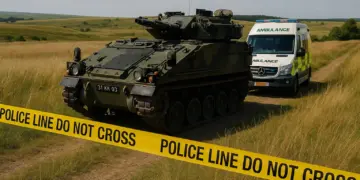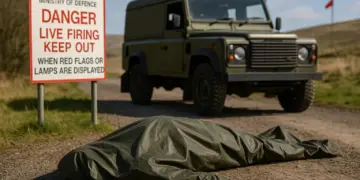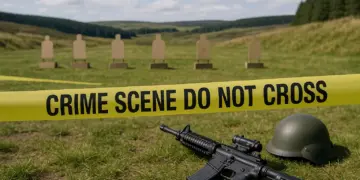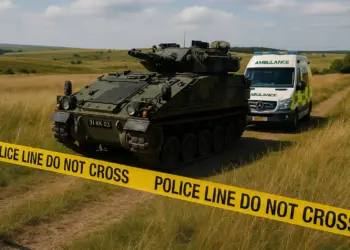
Military inquest opens into death of Captain Muldowney at training exercise
An inquest has commenced into the tragic death of Captain Philip Gilbert Muldowney, aged 25, following a gunshot wound sustained...
Read moreDetailsAn inquest has commenced into the tragic death of Captain Philip Gilbert Muldowney, aged 25, following a gunshot wound sustained...
Read moreDetails


Last updated: 8 October 2025
Author: Jade Anderson, Senior Reporter — UK-Safety.News
Any place where a person could fall and be injured—above or below ground level. Includes ladders, scaffolds, MEWPs, fragile roofs, pits, and excavations.
Do it from the ground (long-reach tools, redesign, remote methods).
Collective protection first (guardrails, towers), then personal systems (restraint, fall arrest).
Nets, airbags, debris control; secure tools and materials.
Use suitable equipment for the task: checked ladders, towers built to spec, certified MEWPs, harnesses with compatible anchor points and rescue plans.
✅ Permits and method statements
✅ Weather and ground conditions
✅ Exclusion zones and toe boards
✅ Fragile surface signage and access control
✅ Rescue plan understood and tested

Copyright © 2025 UK Safety News