
















Story Highlights
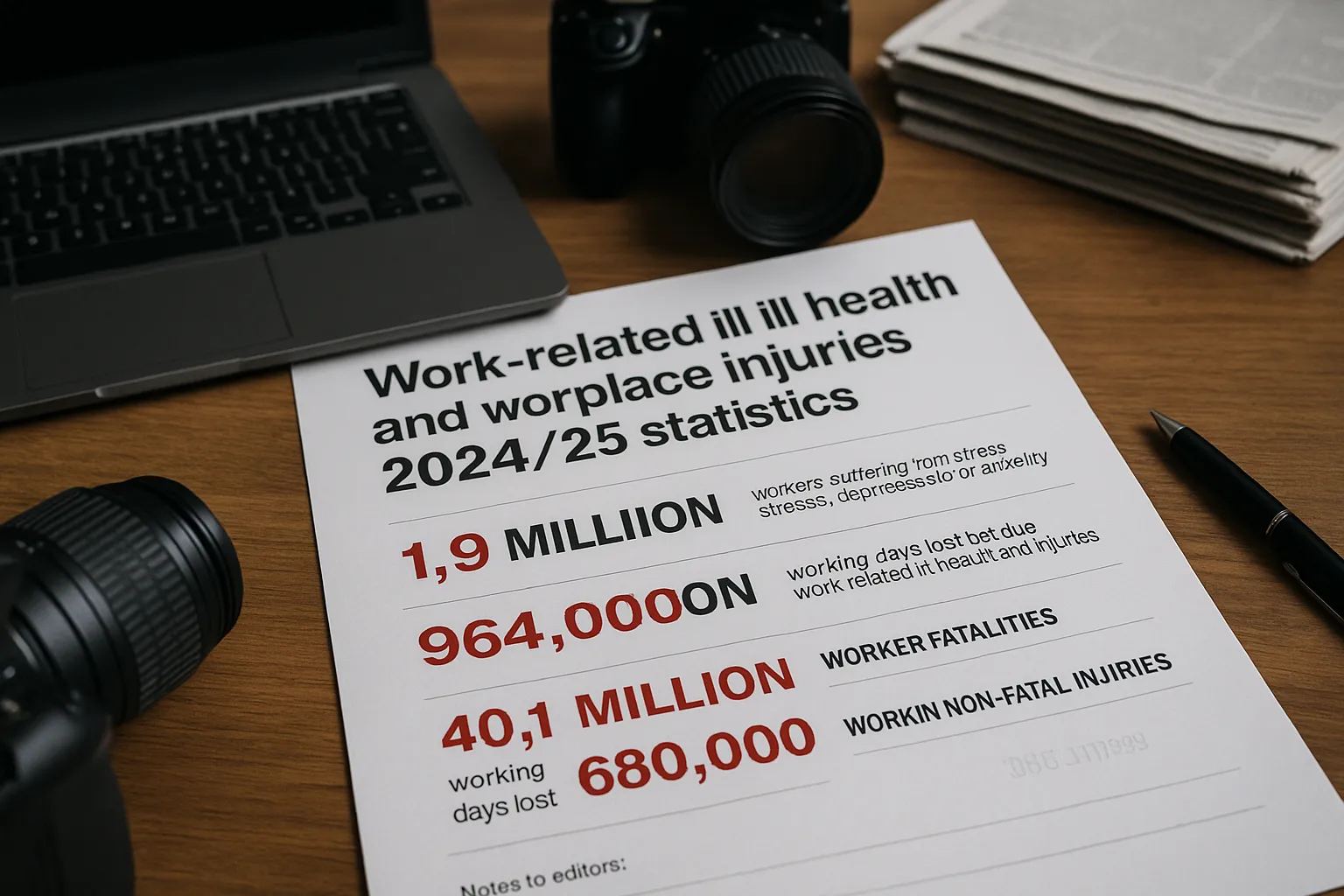
– 1.9 million workers reported work-related ill health in 2024/25.
– Mental health issues drive rising work-related ill health cases.
– 40.1 million workdays lost due to health and injuries.
– £22.9 billion annual cost for workplace health issues.
– 124 worker fatalities and 680,000 non-fatal injuries reported.
Full Story
The Health and Safety Executive (HSE) has released its latest annual report detailing the state of work-related health and safety for the year 2024/25. This report reveals that there remains a significant proportion of the workforce affected by health issues linked to their jobs, underscoring the ongoing challenges faced in workplace environments across the United Kingdom.
According to the data, an estimated 1.9 million employees reported suffering from health problems attributable to their work during the 2024/25 period. This figure has shown consistency with similar statistics recorded in recent years. However, despite this consistency, the prevalence of such ill health remains higher than levels seen prior to the pandemic, particularly in 2018/19.
Mental health challenges continue to represent the most prominent cause of work-related health issues. In particular, 964,000 individuals indicated they experienced stress, depression, or anxiety that was either caused by or exacerbated by their work conditions. This persistence in mental well-being challenges indicates a troubling trend that has intensified over recent years.
The impact of these health-related issues is also evident in the substantial number of working days lost. The report estimates that approximately 40.1 million days were missed in 2024/25 due to work-related health problems and injuries, creating significant repercussions for both employees and employers. The economic implications of these statistics are stark, highlighting the burden placed on businesses as well as the individuals affected by these conditions.
Sarah Albon, Chief Executive of the HSE, commented on the findings, stating, “Great Britain maintains its position as one of the safest places to work globally, built on more than 50 years of health and safety regulation. However, these statistics demonstrate that workplace health challenges persist, particularly around mental health.” Her remarks emphasise the complexity of maintaining workplace safety standards while addressing the nuanced health concerns that many workers face.
Financially, the economic effects of injuries and newly reported instances of work-related ill health are significant. The estimated annual cost associated with these workplace issues for the year 2023/24 is recorded at £22.9 billion, mirroring the estimates that were calculated for the previous year. This financial burden highlights the necessity for ongoing investment in workplace health and safety systems to reduce these costs and improve worker well-being.
The statistics also shed light on injury rates in the workplace, reporting a total of 124 fatal accidents, alongside an estimated 680,000 reported non-fatal injuries across the country in 2024/25. These figures serve as a sobering reminder of the dangers that still exist in various workplace settings, despite the regulations in place to mitigate such risks.
In addition to presenting these figures, the HSE also reiterates its commitment to fostering safer work environments. Initiatives such as the ‘Working Minds’ campaign aim to raise awareness and provide support for mental health issues in the workplace, acknowledging that mental health is as crucial as physical safety in ensuring a healthy work environment.
For further information, details regarding HSE’s long-term strategy can be accessed, showcasing their ten-year plan aimed at enhancing health and safety standards throughout the UK until 2032. The updated statistics from the HSE particularly underline the need for businesses to engage with these health and safety frameworks proactively, ensuring that both physical and mental health considerations are integrated into workplace policies.
The HSE continues to call for a concerted effort among employers to create healthier workplaces that prioritise the well-being of all staff members. By adhering to safety regulations and implementing robust health initiatives, companies can contribute to a culture that values employee health and mitigates risks associated with workplace-related illnesses.
In conclusion, the data revealed in the HSE’s annual report serves as a crucial reminder of the ongoing challenges pertaining to work-related health and safety in the UK. Mental health remains a significant concern, and the need for effective strategies to address these issues is paramount. As the economy continues to adapt to evolving workplace dynamics, the findings stress the importance of prioritising health and safety in the workplace to safeguard employees’ well-being and ensure a productive working environment for all.


This report is a stark reminder that workplace health cannot be treated as a secondary issue. With nearly two million workers affected and mental ill health driving much of the burden, organisations must strengthen prevention and early intervention. Practical steps include better risk assessments that explicitly cover psychosocial hazards, training managers to recognise and respond to signs of stress, and ensuring access to occupational health and counselling services. Tracking absence and ill health trends at company level and acting on the data will help target resources where they are most needed. Regulatory compliance remains important but is not enough on its own; leaders need to make employee wellbeing a core part of business planning to reduce lost working time and the wider cost to the economy.
This report is a stark reminder that workplace health cannot be treated as a secondary issue. The scale of ill health and lost working days shows gaps in early intervention, risk assessment, and support for employees experiencing stress and other mental health problems. Employers should review workload, management practices, and access to occupational health and counselling services, and strengthen training for managers to recognise and respond to signs of distress. Regulators and industry need to work together to share effective prevention measures and ensure resources reach high risk sectors. Investing in preventative action now will reduce human suffering and the long term economic burden.
This report is a clear indicator that preventing work related ill health must be a priority. High levels of stress anxiety and depression point to systemic issues in workload management workplace culture and access to support. The scale of lost working days and the economic cost underline that investment in proactive health strategies including risk assessment early intervention training for managers and genuine employee engagement is not optional it is essential. Regulatory progress has helped but organisations need practical measures to reduce hazards improve job design and make mental health support accessible and effective.
This report is a clear call to action. The scale of work related ill health and the surge in mental health problems show that current measures are not keeping pace with changing workplace pressures. Employers need to move beyond compliance and embed prevention through practical risk assessment, manager training, employee involvement and access to timely support. Early intervention and sensible adjustments can reduce absence and cost while protecting people. Regulators and industry should share what works and focus on sectors with the highest harm so resources are targeted where they will have the greatest impact.