














Story Highlight
– New 15mph limit implemented on guided busway maintenance track.
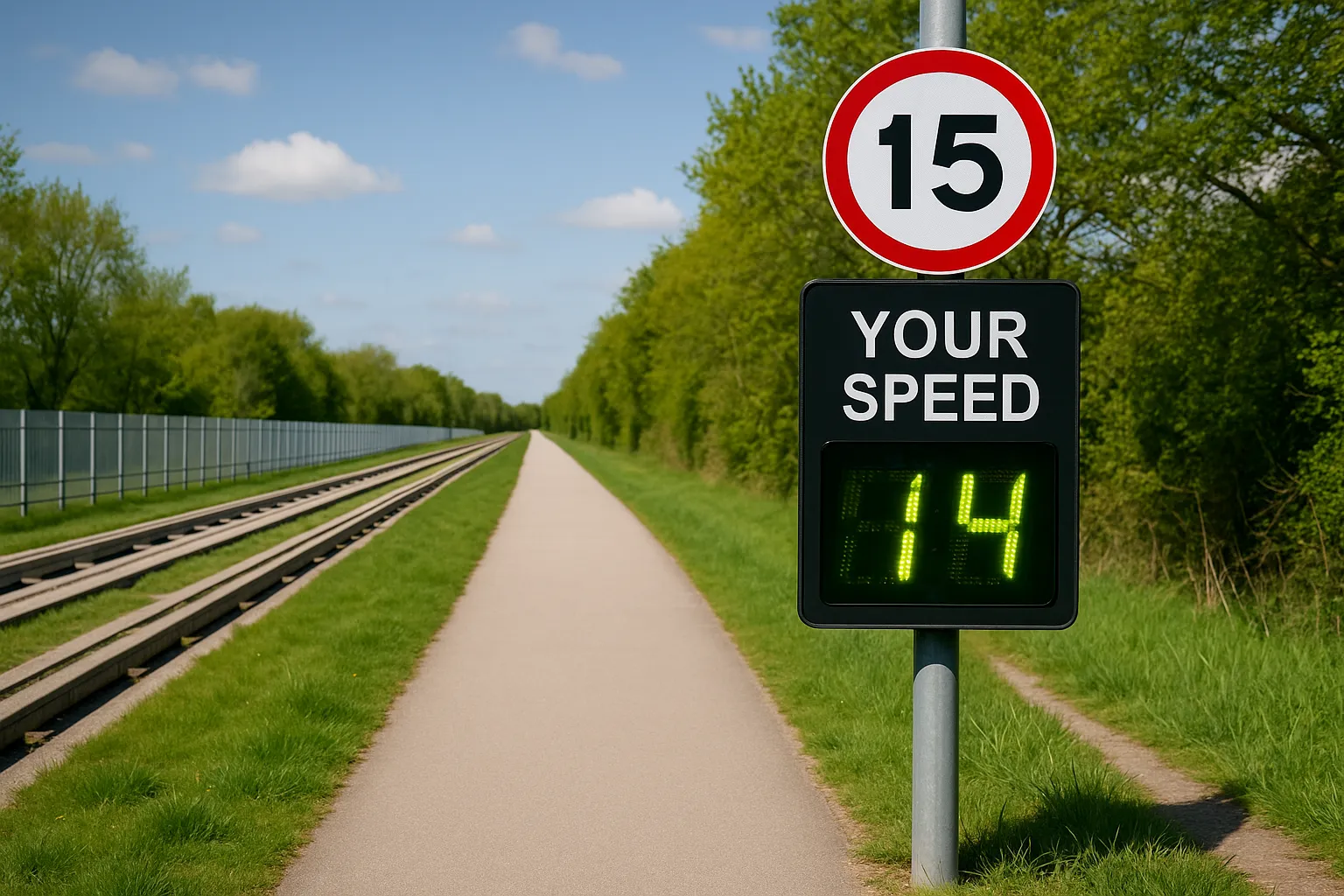
– Speed activated signs installed for cyclists and e-vehicle users.
– Temporary reduced speed limit on buses during construction.
– Concerns raised about enforcement without speedometers on vehicles.
– Additional safety measures and signage planned for track users.
Full Story
New measures have been introduced along the maintenance track adjacent to the guided busway between St Ives and Cambridge as a response to safety concerns. This includes the installation of speed-activated signs aimed at informing cyclists and electric vehicle users about a newly imposed speed limit of 15mph (approximately 24km/h), which the Cambridgeshire County Council has deemed necessary during ongoing construction work.
The council is undertaking a project that involves the installation of safety fencing alongside the busway, prompting the need for a temporary speed reduction for buses along the entire route. Additionally, motorcyclists have been prohibited from using the path while these safety improvements are implemented.
Councillor Ros Hathorn, who represents the Liberal Democrats in Histon and Impington, expressed concerns at a highways and transport committee meeting held on 2 December. She pointed out that while the speed limit for electric bikes and scooters participating in government-sanctioned trials — including services provided by Voi in the Cambridge area — is 25km/h, this translates to approximately 15.5mph. Cllr Hathorn raised a critical question regarding how enforcement of the new 15mph limit would occur, particularly for users who may not have a speedometer to monitor their speed.
“How is it going to be governed, implemented and managed?” she queried, highlighting the potential difficulties in ensuring compliance among users without proper monitoring equipment.
In response, Jamie Cooke, the council’s service director for transport and connectivity, acknowledged that the converted speed limit from kilometres per hour to miles per hour exceeds the established threshold slightly. He indicated a willingness to examine this discrepancy further. “We can calibrate our equipment differently,” he remarked, suggesting that adjustments could be made to ensure clarity and compliance.
Mr Cooke explained that a combination of measures would be necessary to enforce the 15mph speed limit effectively. This would potentially involve the implementation of Traffic Regulation Orders in designated areas. He emphasised the urgency behind establishing these speed controls, noting significant concerns regarding speed-related risks to the public. The intent is to ensure the safety of all users of the shared maintenance track, which accommodates cyclists, equestrians, pedestrians, and users of various other vehicles.
To aid in this enforcement, the council has installed vehicle-activated flashing signs along the southern segment of the maintenance track. These signs are intended to provide immediate feedback to users about their speed, enabling them to determine if they are adhering to the new limit. Mr Cooke added that there are plans to expand the number of these signs along the entire length of the busway, rotating their positions for maximum effect.
In further discussing safety measures, he shared that the council’s traffic management team is equipped with speed guns, which will be used to monitor compliance with the newly established limits. “We can advise people if they are going over the limit,” he stated, underlining the proactive approach the council is taking to mitigate potential safety hazards.
The shared nature of the maintenance track has drawn attention from other council members. Cllr Darren Green raised concerns about the absence of lane markings, which could lead to confusion among users, as cyclists and pedestrians utilize the path in both directions. Recognising the varied user demographics—ranging from children to adults and equestrian riders—Mr Cooke affirmed the importance of swiftly implementing control measures to ensure safe coexistence among all trail users.
He revealed that the maintenance track had been a focal point of discussions with the Health and Safety Executive (HSE), particularly during site visits. As a result of these discussions, signage has been installed at four critical multi-use crossing points where cyclists, pedestrians, equestrians, and motorists converge. Additional signage and lane markings are also being introduced in the southern section to clarify routes and priorities where the maintenance track meets other cycle paths.
“There’s a lot more for us to do on the maintenance track, recognising its shared-use nature,” Mr Cooke remarked, conveying the council’s commitment to enhancing safety measures along this vital pathway.
As construction continues and safety measures are further established, the council aims to foster a safer environment for all users of the maintenance track, balancing the needs of both human and vehicular traffic. The successful implementation of these initiatives will be closely monitored, ensuring that safety enhancements keep pace with the evolving demands of the busway and its surrounding facilities.
Our Thoughts
To mitigate risks associated with the new 15mph speed limit on the maintenance track beside the guided busway, several key safety improvements could have been implemented. Firstly, proper signage indicating both the 15mph speed limit and instructions for cyclists and electric vehicle users should have been established prior to enforcing the limit. This aligns with the Management of Health and Safety at Work Regulations 1999, which require employers to inform workers of risks and how to manage them.
Additionally, conducting a thorough risk assessment in conjunction with the Health and Safety Executive (HSE) before implementing the speed limit would have allowed for a complete understanding of the shared-use environment, which is vital under the Health and Safety at Work Act 1974. Effective measures such as clear lane markings and designated zones for different user types can reduce confusion and enhance safety.
Moreover, ensuring that all maintenance track users are aware of the speed limitations through public engagement and proper outreach prior to the changes would have improved compliance and reduced potential conflicts. Considering these lessons can help prevent similar incidents in shared-use areas in the future.